Joseph Diedrich - University of Wisconsin-Madison

Most Americans honestly believe they live in a free society. They’re wrong.

That’s the notion behind libertarian leader Jacob Hornberger’s “Civil Liberties, Foreign Policy, and the War on Terrorism” speech, given via Skype to a group of University of Wisconsin students recently.

In his talk, Hornberger – founder and president of the libertarian The Future of Freedom Foundation – criticized the Obama and Bush administrations, accusing the presidents of abusing executive power, violating due process, and conducting warrantless searches.

The crux of his argument was this: since 9/11, the federal government has asserted the right to treat terrorists—domestic and foreign—as either enemy combatants or criminal defendants, which in effect nullifies the protections of the 4th, 5th, 6th, and 8th Amendments. Civil liberties have gradually been diminishing ever since.

“Crises are a dictator’s best friend,” he said.

While not a fan of the National Defense Authorization Act or the PATRIOT Act, Hornberger pointed out that individuals who think that repealing these laws will restore civil liberties are misguided. These laws only codify what the executive branch had already claimed the power to do.

Drawing a medical analogy, Hornberger said that the NDAA was a “cancerous tumor on the body politic, but the big cancer is the national security state itself.”

As a remedy for the erosion of civil liberties precipitated by the War on Terror, Hornberger called for a rejection of interventionist foreign policies and the abolishment of the NSA and the CIA, organizations he considers to be relics of the Cold War.

Hornberger called the lack of concern for civil liberties and a penchant for warfare a “moral crisis.”

While the consciences of older generations have “rusted shut,” said Hornberger, young people need to exercise their consciences immediately and to the fullest extent.

“Conscience can stop a country in its tracks,” he added.

Hornberger founded The Future of Freedom Foundation in 1989. He is a graduate of the Virginia Military Institute and University of Texas Law School. He also was an adjunct professor at the University of Dallas, where he taught law and economics.

After a dozen years practicing law, he began working at the Foundation of Economic Education, a career decision that eventually led to the genesis of the Future of Freedom Foundation.

Fix contributor Joseph Diedrich is a student at the University of Wisconsin-Madison. He is also Director of Operations of Young Americans for Liberty at UW, and a columnist for Washington Times Communities.

CLICK HERE to Like The College Fix on Facebook.

IMAGE: The Comedian/Flickr

{ 0 comments }

While universities are the institutions that research and identify the problems of sexual assault, they are at the same time reluctant and unlikely to develop programs that combat it – partly due to fear of negative publicity.

So says Dr. David Lisak, a renowned clinical psychologist and rape expert who gave a two-hour presentation earlier this month at the University of Wisconsin–Madison during its Sexual Assault Awareness Month.

Universities need to reassess their “leadership and commitment” when it comes to preventing sexual assault on campus, Lisak said, while also stressing that “single individuals can force enormous change” on their own.

Lisak, a former professor at the University of Massachusetts–Boston, currently acts as a consultant to law enforcement, an expert witness in death penalty trials, and conducts training and workshops on sexual assault prevention across the country. His research focuses primarily on non-stranger rape and assault.

According to Lisak, those ages 18 to 24 are at maximum vulnerability for sexual assault, and because of that, sexual assault “is a grim reality on college campuses,” he said.

In his own study of 1,882 male U-Mass students, 120 were found to be rapists—near the national average for all men. Of the 120 rapists, 76 were serial offenders, who combined to commit more than 1,000 abusive acts.

The U-Mass stats are common at other college campuses across the nation, Lisak has found.

At one point, Lisak shared a video reenactment of an interview he conducted with a study subject who had admitted to committing rape.

The subject, a Duke student, relayed a story of how he and his fraternity brothers would “target” vulnerable girls and make them feel special by inviting them to a party later in the week.

At these parties, the “targets” would be given drink after drink until they were near or at the point of unconsciousness. The subject went on to describe one particular “target” with whom he forcibly engaged in sexual intercourse.

The story was shared with a patently cavalier tone and narcissistic attitude, something Lisak said is common among repeat offenders.

Among other things, the video served as an illustration that, according to Lisak, alcohol is “not a cause,” but rather “a weapon.” That is, sexual assault is not caused by liquor; rather, predatory individuals strategically use alcohol to manipulate, disorient, and weaken their “targets.”

Fortunately, the public has an especially keen perceptivity when it comes to sexual violence, he said.

“Nothing will bring the CNN trucks faster than sexual assault,” quipped Lisak.

The majority of Lisak’s presentation focused on non-stranger rape—what some refer to as “date rape.”

The psychologist began by dispelling myths about rape and then shared what he described as “realities of offenders” – there is no “profile” of a sex offender; most offenders are serial offenders; most assaults are committed by serial offenders; and serial offenders are predatory, manipulative, and exploitative. Additionally, most rapes are premeditated.

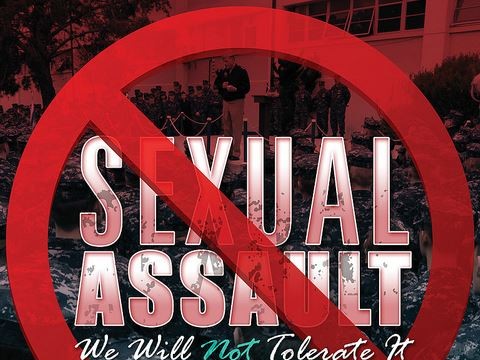
A 2009 study performed by the U.S. Navy yielded similar results.

While perhaps prima facie disheartening, Lisak emphasized the fact that these studies, which are representative of the larger population, highlight the fact that 94 percent or more of men are not rapists, a fact he remains “doggedly optimistic” about.

For the final portion of his presentation, Lisak focused on prevention.

Beyond “aggressively investigating and prosecuting core sex offenders,” Lisak suggested that outliers’ beliefs must be changed. Awareness of the problem must be increased via the implementation of bystander education programs; for example, the Air Force has a bystander-intervention program. Also, as with drunk driving, social norms must change such that sexual assault is more profoundly condemned.

Fix contributor Joseph Diedrich is a student at the University of Wisconsin-Madison. He is also Director of Operations of Young Americans for Liberty at UW, and a columnist for Washington Times Communities.

CLICK HERE to LIKE The College Fix on Facebook.

IMAGE: U.S. Navy/Flickr

{ 0 comments }

Sen. John McCain recently took to the Senate floor and lambasted Sen. Rand Paul for his political “stunt” of a filibuster.

McCain also read extensively from a Wall Street Journal editorial, which opined, “If Mr. Paul wants to be taken seriously, he needs to do more than pull political stunts that fire up impressionable libertarian kids in college dorms.”

But Mr. McCain misses the point—the libertarian kids are impressionable, and Rand Paul knows that. If those dorm-dwellers are impressed enough, they’ll vote for him in 2016.

Paul will almost assuredly run for president in 2016; it seems almost inevitable now. To win, he’ll have to unite a fractured Republican base for both a dog-eat-dog primary and a face-off with whoever happens to be the Left’s favorite hero at the time.

That’s the thing about the Left—they vote for heroes. Barack Obama had no political clout and no experience whatsoever when he emerged victorious in 2008. What he did have was a heavy dose of charm and a whole lot of impressionable kids in college dorms. Some of them were even libertarians who rejected the Bush-era Republican rhetoric of perpetual war and complete disregard for civil liberties.

Obama turned out to be as bad as or worse than Bush in every way, including on war and civil liberties. That’s what Paul’s filibuster was all about—not a mere “stunt” to prevent an Obama nominee from getting confirmed, but a sincere plea for an honest, non-partisan discussion about battle technology, due process, and the rule of law.

It caught the attention and earned the respect of Republicans of all kinds, from Ted Cruz to Marco Rubio to Rush Limbaugh. It was truly a unifying moment.

It caught the attention of the entire world. #StandWithRand was trending on Twitter for hours upon hours.

And of course, it caught the attention of “impressionable libertarian kids in college dorms.” The youth—perhaps even more so than the Left—embraces a romantic hero come election time. Writing at Mediaite, Noah Rothman proclaimed that Rand Paul shattered the “Democratic monopoly on romance” and captured “the hearts of the young voter.”

Rothman added, “The young conservative, instinctively attracted to the struggle against perceived injustice, must always wrestle with and overcome their heart first in order to join the conservative movement. This is a fundamental impediment to the [R]ight’s ability to speak to the young voter.”

True enough. Conservatism ostensibly tries to be the political ideology of reason and pragmatism, often seeking to divorce emotion from policy. While conservatives often fail miserably at achieving this noble objective, the perception remains. Young people simply aren’t attracted to stuffy curmudgeon-esque conservatism.

Everyone knows the Republican Party needs to draw the youth vote to win an election. To do so, they’ll need a charismatic hero who can harmoniously incorporate the young with the traditional.

“Impressionable libertarian kids in college dorms” certainly aren’t going to vote for anyone like John McCain. But they just might vote for Rand Paul.

Fix contributor Joseph Diedrich is a student at the University of Wisconsin-Madison. He is also Director of Operations of Young Americans for Liberty at UW, and a columnist for Washington Times Communities.

CLICK HERE to Like The College Fix on Facebook.

IMAGE: Lolly Knit/Flickr

{ 1 comment }

The usual suspects will speak this week at the Conservative Political Action Committee confab, a.k.a. CPAC, during which thousands of Republicans, conservatives and libertarians converge to brainstorm, network and strategize.

Launched in 1974 with Ronald Reagan as its first featured speaker, the annual March event, organized by the American Conservative Union, has grown ever since.

However, as much as CPAC attempts to rally, galvanize, and unify conservatives, it often ends up exposing serious rifts and disagreements within the movement. This year’s slate of speakers promises to do the same.

The usual suspects will all be present. Mitt Romney’s silver sideburns will be seen in a major public venue for the first time since his defeat in the November election. It will be interesting to see if his tone and rhetoric have undergone any changes; perhaps a more believable and relatable as person will emerge.

Romney’s running mate, Paul Ryan, will also be there. He’s been relatively quiet and arguably soft lately. He could really use a hard-hitting, passionate speech filled with great ideas to help regain some of the relevance and credibility he once enjoyed.

Then, for entertainment purposes, CPAC has also invited Sarah Palin, whose relevance and credibility are certainly in their twilight hours.

As mentioned above, CPAC is often a microcosm of intraparty battles. There are two emerging factions within the Republican Party; we’ll call them the “conservatives” and the “libertarians.”

Marco Rubio has enjoyed a meteoric rise in the conservative ranks. Elected to the Senate in 2010, he has earned a place of prominence and is widely viewed as one of the top contenders for the 2016 presidential nomination. Earlier this year, he delivered the official Republican response to the State of the Union address, during which he lunged for a now infamous water bottle.

Contrast Rubio with another first-term senator, Rand Paul of Kentucky. Paul, a polished and subdued version of his father, is the face of the libertarian wing of the Republican Party. While Rubio’s and Paul’s speeches at CPAC will likely contain a lot of the same messages, Paul will likely differ on issues of war, defense spending, and civil liberties. We’ll most likely also hear him call for an audit of the Pentagon.

One of Paul’s closest allies in the senate is Mike Lee, a quieter and less controversial libertarian, although many might consider him more principled from an ideological perspective. He is one of a few potential surprises that we may see this year at CPAC.

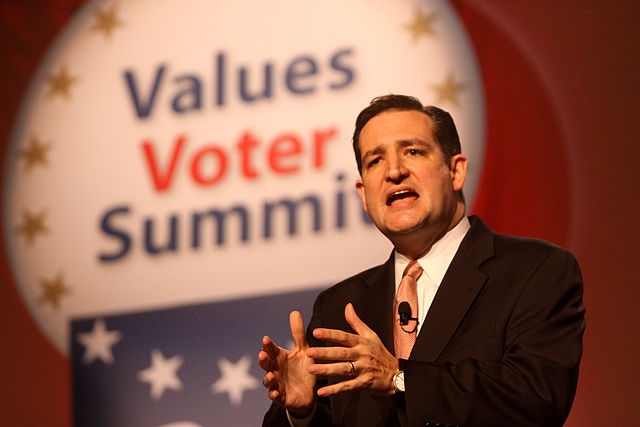
Ted Cruz, only a few months in to his freshman senate term, has already made a name for himself for his boisterous and often blockading views and votes. As an ethnic minority, like Rubio, he could potentially become a Very Important Person as Republicans seek to adapt to modern demographics.

One more senator, Tim Scott of South Carolina, will make his first influential national speech at CPAC. He is well-known in his home state for being exceptionally hawkish on fiscal issues, and it will be interesting to see how well he introduces himself to conservatives across the country.

Finally, Dr. Ben Carson is poised to become the next Herman Cain, hopefully with a few more brain cells. This Johns Hopkins powerhouse will certainly be a favorite of the anti-Washington-insiders crowd.

CPAC 2013 will also feature a number of young political and ideological rising stars.

Jeff Frazee is the founder and Executive Director of Young Americans for Liberty (YAL), an organization that boasts a membership of over 125,000 people and possesses a network of over 380 local chapters on college campuses nationwide. Their stated goal is to “identify, educate, train, and mobilize young people on the ideals of liberty and the Constitution.”

A similar organization, Students for Liberty (SfL), which was founded in 2008, is led by Alexander McCobin, who will also speak at CPAC. SfL’s biggest claim to fame is their annual international conference, which draws thousands of youngsters from around the world. Both Frazee and McCobin are expected to deliver speeches with libertarian themes; McCobin’s may prove to be the most libertarianesque of all the speeches at CPAC.

Francesca Chambers is the editor of Red Alert Politics, a popular conservative online news site geared toward college students. Chambers and the two young men represent the future of conservatism in America.

Perhaps the most interesting aspect of the speaking line-up is who will not be present. The ACU was wise to not include the likes of Donald Trump, to be sure, but many are left scratching their heads at the exclusion of Chris Christie.

Fix contributor Joseph Diedrich is a student at the University of Wisconsin-Madison. He is also Director of Operations of Young Americans for Liberty at UW, and a columnist for Washington Times Communities.

CLICK HERE to Like The College Fix on Facebook.

IMAGE: Gage Skidmore

{ 1 comment }

President Barack Obama’s call for the minimum wage to be increased to $9 an hour during the recent State of the Union address is a bad idea for many reasons, not the least of which are potential harmful effects to the economy, according to several professors and economists.

One such economist is Art Carden, economics professor at Samford University and a regular contributor at Forbes, who said in an interview with The College Fix that employees who produce at a $9-an-hour level would benefit from a minimum wage increase, however workers who are not worth that wage would suffer as their jobs disappear.

Basically, Carden said that increasing the minimum wage would “reduce the quantity of labor demanded, create at least some unemployment, and privilege the more-productive at the expense of the less-productive.”

He’s one of many smart people to think as much.

Writing in The Free Market, economist Murray Rothbard once declared, “In truth, there is only one way to regard a minimum wage law: it is compulsory unemployment, period. The law says: it is illegal, and therefore criminal, for anyone to hire anyone else below the level of X dollars an hour…Remember that the minimum wage law provides no jobs; it only outlaws them; and outlawed jobs are the inevitable result.”

But Obama touted lofty notions and feel-good sentiments during his address to make the case for a minimum wage increase.

“We know our economy’s stronger when we reward an honest day’s work with honest wages. Tonight, let’s declare that, in the wealthiest nation on Earth, no one who works full time should have to live in poverty—and raise the federal minimum wage to $9 an hour,” Obama said last Tuesday. “For businesses across the country, it would mean customers with more money in their pockets.”

Not necessarily, some professors warn.

Antony Davies, an economics professor at Duquesne University, said in an interview with The College Fix that when businesses—especially small businesses—are faced with increased labor costs due to minimum wage hikes, less valuable jobs are eliminated. After that, the extra workload is doled out to remaining employees, he said.

“Either the work becomes part of other employees’ responsibilities or the work gets foisted onto the consumer,” he said, adding small businesses have the worst go of it.

“Because small businesses tend to have fewer employees, it is harder for them to pass the work load from eliminated jobs on to other workers,” he said. “They will tend to feel the pain more than larger businesses.”

Davies offered this anecdote to help illustrate his point: “Once upon a time, when you pulled up to a gas station, someone pumped you gas for you. It turns out that that service isn’t worth $7.25 an hour to consumers, so gas stations stopped hiring workers to perform this task and instead let customers do it for themselves.”

Davies’ assessment echoes a recent LearnLiberty video, in which Professor Steven Horwitz of St. Lawrence University describes how small businesses can be harmed by minimum wage increases: “A few years ago, Wal-Mart came out in favor of raising the minimum wage. Why would they do that? Well, one reason is Wal-Mart pays above the minimum wage, while a lot of their competition pays right at the minimum wage. If government raises the minimum wage, those competitors face higher costs and Wal-Mart benefits as a result.”

In effect, having fewer competitors creates more favorable conditions for giant corporations.

Another unintended and unfortunate consequence of the minimum wage law is its negative effect on minorities, especially African-Americans.

A 2011 Economic Policies Institute Study by William Even and David Macpherson found that wage mandates created a considerable disparity in economic well-being between blacks and whites.

Studying 16-to-24 year-old males lacking a high school diploma, the study showed that, for each 10 percent increase in a federal or state minimum wage, employment decreased by 2.5 percent. For black males sans a diploma, however, employment decreased by 6.5 percent—more than twice as much.

Additionally, the study found that the consequences of the minimum wage on black young adults “were more harmful than the consequences of the recession.”

Underscoring this, the argument businesses are trying to stiff their employees with the least amount of pay possible doesn’t hold water, educators told The College Fix.

“This isn’t true and it’s easily demonstrated,” Davies said. “If it were true, then all jobs would pay exactly the minimum wage. Why do employers voluntarily pay more than the minimum wage?”

Competitive markets, when allowed to function without interference, are the true source of higher pay, professors argued.

“Wages are determined by workers’ opportunities and their productivity; markets are pretty competitive,” Carden said, adding employers must pay a worker as much as he/she is worth, “because if they don’t, someone else will.”

When asked whether or not there should be any minimum wage at all, both Carden and Davies bluntly said: “No.”

Yet, despite mountains of historical and empirical evidence to the contrary, most people view the minimum wage law as an unquestionably positive force.

Why is this so?

Henry Hazlitt may have put it best way back in 1946 in his Economics in One Lesson: “Thinking has become so emotional and so politically biased on the subject of wages that in most discussions of them the plainest principles are ignored. People who would be among the first to deny that prosperity could be brought about by artificially boosting prices, people who would be among the first to point out that minimum price laws might be most harmful to the very industries they were designed to help, will nevertheless advocate minimum wage laws, and denounce opponents of them, without misgivings.”

Fix contributor Joseph Diedrich is a student at the University of Wisconsin – Madison.

CLICK HERE to Like The College Fix on Facebook.

IMAGE: Refracted Moments/Flickr

{ 0 comments }

Politicians take note: Loosening America’s intellectual protection laws could help jumpstart the economy.

Several countries with weak intellectual protection laws have the fastest growing emerging economies, meanwhile the United States – which has some of the strictest IP rules – is stuck in a Great Recession.

Recent empirical evidence and policy analysis have revealed the reason for that is tough intellectual property laws inhibits competition, and economic growth is hindered by their existence.

Last month, the Global Intellectual Property Center in conjunction with the U.S. Chamber of Commerce released a report evaluating intellectual property laws in eleven different countries using categories such as patent law, copyright law and trademark law.

The United States ranked the highest of those studied, meaning its IP protection is the strongest in the world; worst among the eleven were Russia, Brazil, China, and India.

Yet Brazil, Russia, China, and India have something else in common. Despite weak IP protection, these four countries have the fastest growing emerging economies.

In a February 2012 report by Price Waterhouse Coopers, these four countries—the “BRIC” nations—had average annual growth rates between five and nine percent in terms of GDP, up to three times the growth rate of the U.S.

Another recent report issued by the Republican Study Committee indicates a shift in—or, at the very least, a questioning of—the general milieu surrounding IP protection.

The paper, “Three Myths about Copyright Law and Where to Start to Fix It,” was authored by Derek Khanna, who was later removed from the study committee amidst intense backlash from the entertainment industry.

Before being retracted, Khanna’s analysis concluded that overzealous copyright law was responsible for “retard[ing] the creation of a robust DJ/remix industry,…hampering scientific inquiry, [and] penalizing legitimate journalism and oversight.”

He also offered different ideas for IP reforms, including limiting the length of time a work can remain under copyright.

Khanna’s arguments support the notion that copyright and patent are nothing more than government-granted monopolies, and where monopolies exist, inefficiency abounds. IP inhibits competition, and empirical evidence suggests economic growth is hindered by its existence.

“Copyright violates nearly every tenet of laissez faire capitalism,” notes the Republican Study Committee report. “Under the current system of copyright, producers of content are entitled to a guaranteed, government instituted, government subsidized content-monopoly.”

Moreover, in the book “Against Intellectual Monopoly,” authors Michele Boldrin and David Levine conclude innovation is greater under free competition than in the presence of IP, and that IP is “damaging for society, as valuable productive capacity is literally destroyed and thrown away.”

Consider this: open-source software innovators willingly freely share their innovations and make no small amount of money doing so; authors use the Creative Commons to attribute their works to the public domain immediately, bypassing conventional copyright; and Korean pop sensation Psy is worth millions of dollars in no small part because he welcomes the unregulated sharing and “pirating” of his name and brand.

In contrast, in a recent example of squandered wealth, Carnegie Mellon University won a lawsuit worth $1.17 billion against Marvell Technology Group for infringing upon two of its patents.

While correlations between innovation, economic growth, and the number of patents and copyrights issued exist, calls more stringent IP protection on these grounds is fallacious, according to Stephan Kinsella, an intellectual property lawyer and libertarian legal theorist.

“The argument…assumes that innovation is critical to prosperity and economic development—true enough—and then correlates patents with innovation,” he states. “But not only is this correlation problematic—not all patents are innovative and not all innovation is patented—but even if patents are correlated with innovation, correlation does not prove causation. It is equally as plausible, in fact more plausible, that innovation persists despite, not because of, a patent system.”

Fix contributor Joseph Diedrich is a student at the University of Wisconsin-Madison.

Click here to Like The College Fix on Facebook.


IMAGE: Trusty Pics/Flickr


{ 6 comments }