Morning after pill

When it comes to the so-called “morning after pill,” there seems to be a concerted effort on the part of political liberals to separate parents from their children, to usurp parental authority, and to insert the government in between parents and children. How else can you explain this new effort by the FDA under president Obama (with a little help from an activist judge). They have made available powerful drugs that have the power to end the life of anewly conceived human being, OVER THE COUNTER TO 15-YEAR-OLD KIDS!

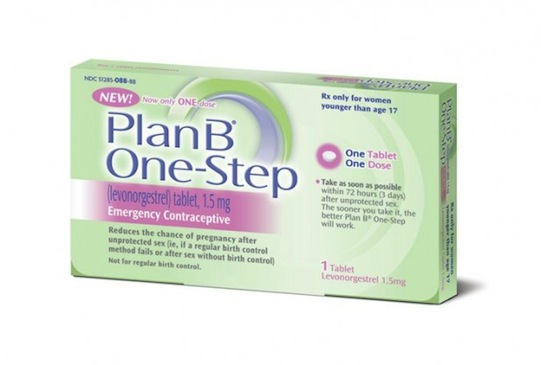
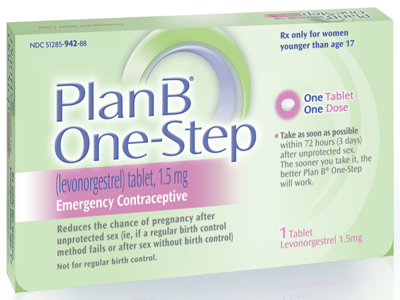
WASHINGTON — The Plan B morning-after pill is moving over-the-counter, a decision announced by the Food and Drug Administration just days before a court-imposed deadline.

Tuesday, the FDA lowered to 15 the age at which girls and women can buy the emergency contraceptive without a prescription — and said it no longer has to be kept behind pharmacy counters.

Instead, the pill can sit on drugstore shelves just like condoms, but that buyers would have to prove their age at the cash register.

Earlier this month, a federal judge had ruled there should be no age restrictions and gave the FDA 30 days to act.

You can’t even buy a beer at age 15 in America, but now you have the ability to make this kind of major health decision without so much as a consultation with a doctor or parent?

Like so many liberal policies, the move to make life-ending drugs available to minors, seems designed to dull parental influence, allowing instead for the social engineers in Washington D.C. to control the moral and social development of the nation’s youth. Obviously, this federal judge and those running the Food and Drug Administration believe they–and not doctors or even parents–know what’s best for teens. It’s arrogant and is a dangerous precedent.

Read more here.

Nathan Harden is editor of The College Fix and author of SEX & GOD AT YALE: Porn, Political Correctness, and a Good Education Gone Bad

Follow Nathan on Twitter: @NathanHarden

{ 0 comments }

Michael Bloomberg and the New York City public school system tried to keep this one quiet until now.

Handouts of the “morning-after pill” to sexually active students have skyrocketed under an unpublicized project in which health centers in public schools offer girls a full menu of free birth-control drugs and devices, records obtained by The Post show.

Last September, the city revealed it had started giving out Plan B and other birth control in the nurses’ offices of 13 high schools. At the time, officials said 567 girls had gotten Plan B.

But the birth-control blitz was much bigger than the city had acknowledged. About 40 separate “school-based health centers” doled out 12,721 doses of Plan B in 2011-12, up from 10,720 in 2010-11 and 5,039 in 2009-10, according to the newly released data.

Amazing how liberals always say there’s nothing wrong with abortion, or the morning-after pill. But when they go to hand it out these drugs to kids, they don’t want to tell anyone what they’re doing.

Why so secretive if there’s nothing wrong with it? Hmm?

Read more at FoxNews.com

Click here to Like The College Fix on Facebook.

{ 0 comments }

The College Fix has previously reported on president Obama’s efforts to force Catholic and other religious universities to provide contraceptives under Obamacare, contrary to the teachings of Catholic doctrine.

Obama his attorney general Eric Holder have made it clear that they do not believe that constitution protects religious institutions from acting against their own religious teachings when it comes to upholding the provisions of Obama’s health care reform bill.

In a similar case, now winding through federal courts, the Obama administration is determined to force the nationwide arts and crafts chain Hobby Lobby, which is owned by a family of evangelical Christians, to pay for contraceptives and abortion-inducing drugs.

CNS News reports:

In a legal argument formally presented in federal court in the case of Hobby Lobby v. Kathleen Sebelius, the Obama administration is claiming that the First Amendment—which expressly denies the government the authority to prohibit the “free exercise” of religion—nonetheless allows it to force Christians to directly violate their religious beliefs even on a matter that involves the life and death of innocent human beings.

Because federal judges—including Supreme Court Justice Sonia Sotomayor—have refused to grant an injunction protecting the owners of Hobby Lobby from being forced to act against their Christian faith, those owners will be subject to federal fines of up to $1.3 million per day starting Tuesday for refusing to include abortion-inducing drugs in their employee health plan.

Religious liberty and liberty of conscience can no longer be taken for granted in Obama’s America.

Read the fulls story at CNS News. (Via Fox Nation)

Click here to Like The College Fix on Facebook.

{ 0 comments }

A controversial vending machine will remain—at least for the present—at Shippensburg University. The Pennsylvania school recently drew national attention for offering the emergency contraceptive Plan B through a vending machine.

According to University Spokesman Peter Gigliotti, the university has made Plan B available for the last three years, after a student survey revealed that 85 percent of the student body approved.  The school reports selling between 300 and 400 doses per year.  About 7,200 undergraduate students and 1,300 graduate students attend Shippensburg University.

Plan B is available for $25 per dose, and university officials say that the university does not profit from sales.  The vending machine also dispenses condoms, pregnancy tests, and nasal decongestants.

According to the FDA, if fertilization does occur, Plan B works by preventing a fertilized egg from attaching to the womb. Critics argue that disbursing Plan B through a vending machine trivializes a drug with life-ending potential.

Commonly referred to as the “morning after pill,” Plan B is prohibited without a prescription or parental permission for girls under seventeen.  University President William Rudd responded to concerns that underage students may use the machine.

“The machine, which vends only health-related items, is in a private room in our health center and the health center is accessible only by students 17 and older and not the public,” Rudd said. “Students proceed to a check-in desk in the lobby and after checking in using appropriate identification are granted access to the private treatment area.”

In a February 9 statement, Rudd said that the university will review the method of dispensing Plan B and continue to offer the contraceptive via vending machine during the review processes.  Further discussions will involve Food and Drug Administration officials in addition to university faculty, officials, medical staff, and students.

According to Gigliotti, university officials have not reached a final decision.

The recently publicized decision has garnered a wide range of responses.  Many students report appreciation for the privacy the vending machine allows.  Shipnewsnow.com reported a campus protest of about 20 people who object to the university’s decision to offer Plan B on the basis that the pill also acts as an abortifacent.

When questioned about the controversy, Heather Shumaker, community affairs manager for Planned Parenthood of Northeast and Mid-Pennsylvania, described this type of contraception as “basic preventative care.”

“We know that virtually all women use birth control – and the Institute of Medicine recommends that birth control be included as a preventive health care benefit, because it is fundamental to improving women’s health,” Shumaker said.  “It saves lives, helps prevent unintended pregnancies, improves outcomes for children, and reduces abortion. Planned Parenthood believes all women – including college women – should have access to affordable contraception.”

Gerard Bradley, Notre Dame law professor who specializes in constitutional law and the study of law and religion, described the university’s decision as “reprehensible even if it is not entirely surprising.”  According to Bradley, university administrators should fight the trivialization of sex by trying “to teach students about the profound meaning and beauty of the sexual act.”

Bradley also tied the controversy to the U.S. Department of Health and Human services mandate which requires nearly all religious employers to offer health insurance covering contraception, sterilization, and abortion-inducing drugs.

“[The controversy] may be a perfect example of what the Obama administration is hoping to bring about via its own contraception mandate, namely, to make contraception a familiar piece of cultural furniture, no more remarkable but no less ubiquitous than chewing gum and bottled water,” he said.  “It is not that long ago when contraception was widely available, but considered to be a private matter, and not nearly trivial.”

Fix Contributor Claire Gillen is a senior at Notre Dame. 

Click here to Like The College Fix on Facebook.

{ 0 comments }