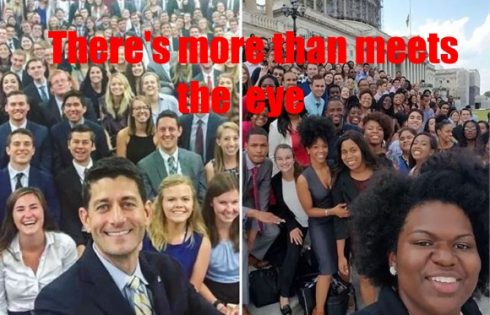
Paul Ryan

The usual suspects will speak this week at the Conservative Political Action Committee confab, a.k.a. CPAC, during which thousands of Republicans, conservatives and libertarians converge to brainstorm, network and strategize.

Launched in 1974 with Ronald Reagan as its first featured speaker, the annual March event, organized by the American Conservative Union, has grown ever since.

However, as much as CPAC attempts to rally, galvanize, and unify conservatives, it often ends up exposing serious rifts and disagreements within the movement. This year’s slate of speakers promises to do the same.

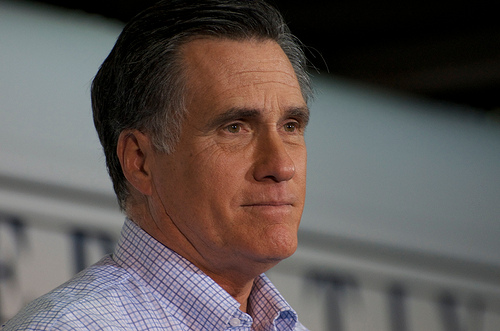
The usual suspects will all be present. Mitt Romney’s silver sideburns will be seen in a major public venue for the first time since his defeat in the November election. It will be interesting to see if his tone and rhetoric have undergone any changes; perhaps a more believable and relatable as person will emerge.

Romney’s running mate, Paul Ryan, will also be there. He’s been relatively quiet and arguably soft lately. He could really use a hard-hitting, passionate speech filled with great ideas to help regain some of the relevance and credibility he once enjoyed.

Then, for entertainment purposes, CPAC has also invited Sarah Palin, whose relevance and credibility are certainly in their twilight hours.

As mentioned above, CPAC is often a microcosm of intraparty battles. There are two emerging factions within the Republican Party; we’ll call them the “conservatives” and the “libertarians.”

Marco Rubio has enjoyed a meteoric rise in the conservative ranks. Elected to the Senate in 2010, he has earned a place of prominence and is widely viewed as one of the top contenders for the 2016 presidential nomination. Earlier this year, he delivered the official Republican response to the State of the Union address, during which he lunged for a now infamous water bottle.

Contrast Rubio with another first-term senator, Rand Paul of Kentucky. Paul, a polished and subdued version of his father, is the face of the libertarian wing of the Republican Party. While Rubio’s and Paul’s speeches at CPAC will likely contain a lot of the same messages, Paul will likely differ on issues of war, defense spending, and civil liberties. We’ll most likely also hear him call for an audit of the Pentagon.

One of Paul’s closest allies in the senate is Mike Lee, a quieter and less controversial libertarian, although many might consider him more principled from an ideological perspective. He is one of a few potential surprises that we may see this year at CPAC.

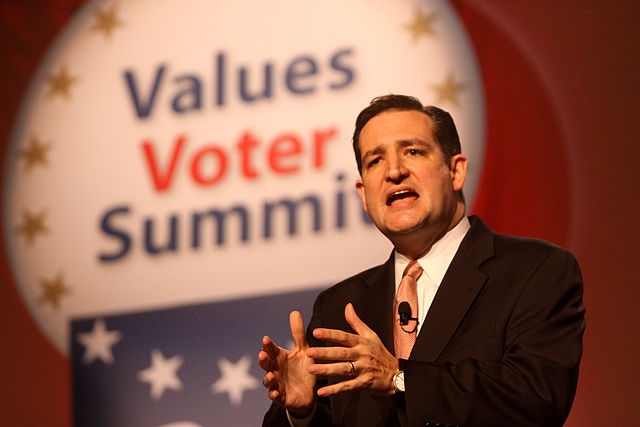
Ted Cruz, only a few months in to his freshman senate term, has already made a name for himself for his boisterous and often blockading views and votes. As an ethnic minority, like Rubio, he could potentially become a Very Important Person as Republicans seek to adapt to modern demographics.

One more senator, Tim Scott of South Carolina, will make his first influential national speech at CPAC. He is well-known in his home state for being exceptionally hawkish on fiscal issues, and it will be interesting to see how well he introduces himself to conservatives across the country.

Finally, Dr. Ben Carson is poised to become the next Herman Cain, hopefully with a few more brain cells. This Johns Hopkins powerhouse will certainly be a favorite of the anti-Washington-insiders crowd.

CPAC 2013 will also feature a number of young political and ideological rising stars.

Jeff Frazee is the founder and Executive Director of Young Americans for Liberty (YAL), an organization that boasts a membership of over 125,000 people and possesses a network of over 380 local chapters on college campuses nationwide. Their stated goal is to “identify, educate, train, and mobilize young people on the ideals of liberty and the Constitution.”

A similar organization, Students for Liberty (SfL), which was founded in 2008, is led by Alexander McCobin, who will also speak at CPAC. SfL’s biggest claim to fame is their annual international conference, which draws thousands of youngsters from around the world. Both Frazee and McCobin are expected to deliver speeches with libertarian themes; McCobin’s may prove to be the most libertarianesque of all the speeches at CPAC.

Francesca Chambers is the editor of Red Alert Politics, a popular conservative online news site geared toward college students. Chambers and the two young men represent the future of conservatism in America.

Perhaps the most interesting aspect of the speaking line-up is who will not be present. The ACU was wise to not include the likes of Donald Trump, to be sure, but many are left scratching their heads at the exclusion of Chris Christie.

Fix contributor Joseph Diedrich is a student at the University of Wisconsin-Madison. He is also Director of Operations of Young Americans for Liberty at UW, and a columnist for Washington Times Communities.

CLICK HERE to Like The College Fix on Facebook.

IMAGE: Gage Skidmore

{ 1 comment }

A series of miscalculations on voter turnout caused the Romney campaign to misread the polls in the final weeks of the campaign. When election results started coming in on Tuesday night, the numbers came as a shock, CBS News reports:

“There’s nothing worse than when you think you’re going to win, and you don’t,” said another adviser. “It was like a sucker punch.”

…Both wives looked stricken, and Ryan himself seemed grim. They all were thrust on that stage without understanding what had just happened.

“He was shellshocked,” one adviser said of Romney.

Romney and his campaign had gone into the evening confident they had a good path to victory, for emotional and intellectual reasons. The huge and enthusiastic crowds in swing state after swing state in recent weeks – not only for Romney but also for Paul Ryan – bolstered what they believed intellectually: that Obama would not get the kind of turnout he had in 2008.

They thought intensity and enthusiasm were on their side this time – poll after poll showed Republicans were more motivated to vote than Democrats – and that would translate into votes for Romney…

Those assumptions drove their campaign strategy: their internal polling showed them leading in key states, so they decided to make a play for a broad victory: go to places like Pennsylvania while also playing it safe in the last two weeks.

Those assessments were wrong.

What a bitter night for Romney after running for president almost non-stop for six years–and coming so close.

Indeed, what a bitter night for America.

Here at The College Fix, we believe standing for what’s right and true is always worthwhile, no matter the outcome. Liberty, freedom and opportunity, the right to life–these causes are the noble and just and worthy. In that sense, Romney, who may have worked harder than any man in history to become president, did not labor in vain.

And we who are of like mind must continue to work, and likewise do our utmost to defend those who cannot defend themselves, and to resist the attacks that, history shows, are ever being directed at human liberty.

Click here to Like The College Fix on Facebook.

{ 15 comments }

During the debate last night, while Paul Ryan talked about the ailing economy, persistent unemployment, and the nuclear threat in Iran, Biden could not keep himself composed.

What do you think? Did Biden have a crack up at the debate last night? You be the judge!


{ 0 comments }

Paul Ryan’s integrity is under attack. On multiple occasions, including at the Republican National Convention, the GOP vice-presidential candidate claimed President Barack Obama broke a very specific promise.

Ryan’s hometown of Janesville, Wisc., was home to a General Motors assembly plant for almost a century. The plant was idled in late 2008 and decommissioned the following year.

While campaigning in Wisconsin in 2008, Obama spoke to a large crowd of supporters, many of whom were manufacturers.

“I believe that if our government is there to support you, and give you the assistance you need to re-tool and make this transition, that this plant will be here for another hundred years,” he said. “The question is not whether a clean energy economy is in our future, it’s where it will thrive. I want it to thrive right here in the United States of America; right here in Wisconsin; and that’s the future I’ll fight for as your President.”

According to Ryan, the closure of the plant represents the fracture of a very explicit guarantee made by Obama: “I remember President Obama visiting it when he was first running, saying he’ll keep that plant open. One more broken promise.”

A firestorm erupted in the wake of Ryan’s allegations. Progressive pundits rushed to defend the president, pointing out that the GM plant had been slated for closure in June 2008, seven months before Obama took office. Even ostensibly neutral sources have considered Ryan’s comments dubious at best; Politifact rated his statement blatantly “false.”

Conservatives were quick to counter, taking the opportunity to make note of a recent report issued by the Treasury Department that estimates the U.S. will lose $25 billion as a result of the auto bailouts.

What has been almost completely forgotten, however, in the midst of this hollow partisan spectacle is the larger economic consequences of plant closure and manufacturing job loss. Both Ryan and Obama seem to agree that a plant closing is a negative thing. While such an occurrence may appear devastating at first, there is much more to the story.

The GM plant in Janesville closed—as it should have.

“Higher gasoline prices are changing consumer behavior, and rapidly,” said Rick Wagoner, then-Chairman of GM, in a 2008 news conference. “This is not a spike or a temporary shift, it’s permanent.”

The auto manufacturer failed to adequately anticipate shifts in demand, and as a result, the gluttonous SUVs being produced in Wisconsin were no longer needed.

Of course workers lost their jobs. They suffered and they sacrificed. But by freeing up resources (labor, capital, natural resources) used for the cars, other economic sectors eager to grow and expand were now granted access; a more efficient allocation of resources was achieved.

Today, Janesville is booming in many different sectors, most notably healthcare.

A Sept. 16 article in the Wisconsin State Journal states as much, detailing about 500 new jobs in the city’s expanding health care industry.

This is the essence of free-market process. When entrepreneurs succeed and fail based on their ability to satiate consumer demand in a competitive environment, resources are allocated efficiently and quickly.

It is a fallacy to believe there is a fixed number of manufacturing jobs. Those jobs may be lost to other geographical areas—different cities, different states, different countries—that enjoy a comparative advantage in that particular field. If the Chinese can make a product comparable in quality but cheaper than Americans, that benefits both China and America; we both now have less expensive goods, allowing money to be spent on additional needs and desires.

As we know too well, however, this natural and healthy process of free-market resource allocation was not allowed to take place to its full extent. The federal government intervened and “bailed out” (i.e., nationalized) GM in 2009. To the extent that GM employees kept their jobs, this act was a smashing success.

Yes, GM is still around, and yes, it still employees thousands of manufacturers. But what if it was exposed to the full scrutiny of the market? Many more workers would have become temporarily unemployed, to be sure. Conversely, many more jobs would have been begotten (ultimately more than were lost) due to a more efficient, laissez-faire allocation of resources.

Imagine if the builders of horse-drawn carriages had received bailout money from the government, and were coddled by the federal Leviathan well past their expiration date. It would have been an enormous impediment to forward progress, as resources that could have been utilized by emerging automobile companies would have been artificially trapped in the coffers of a dying industry.

If the free market is allowed to do what it wants to, newer and better jobs will quickly emerge. But if the government stands in the way, acting as some sort of pack-ratting white knight who tries to save, appease, and protect everyone and everything, then resources will forever be inefficiently allocated, and fewer jobs than possible will exist. Belief that government is able to improve economic conditions is untenable; government action can only (and always does) inhibit prosperity.

Obama said this. Ryan said that. Who cares? What matters is that the government has and will continue to decimate the economy because it, by its very nature, prevents an efficient allocation of resources from being achieved.

Fix Contributor Joseph Diedrich is a student at the University of Wisconsin-Madison.

IMAGE: Foot Slogger/Flickr

Click here to Like The College Fix on Facebook.

{ 1 comment }

Click Here to Like The College Fix on Facebook.

{ 0 comments }

All we can say is, BRAVO!


“College graduates should not have to live out their 20s in their childhood bedrooms, staring up at fading Obama posters and wondering when they can move out and get going with life.”

Runner up for quote of the year: “A country where everything is free but us”–that’s good stuff.

Click here to Like The College Fix on Facebook.

{ 0 comments }