BUZZ
BUZZ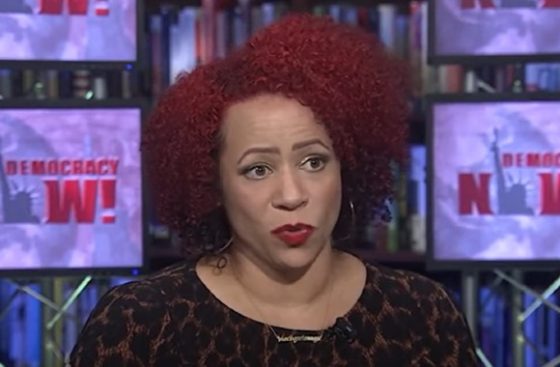
The late Assata Shakur was a convicted murderer and terrorist with the Black Liberation Army
Howard University professor and “1619 Project” creator Nikole Hannah-Jones is facing criticism for a tribute she wrote recently for the late Assata Shakur, a convicted murderer and terrorist.
In the piece published Dec. 16 in The New York Times, Hannah-Jones said Shakur compared herself to “Black freedom fighters” such as Nat Turner and Harriet Tubman.
“Shakur was lionized in rap songs and taught in college classes, and her likeness could be found in classrooms and community centers in Black neighborhoods across the nation,” she wrote, adding that the activist’s history was actually quite “complicated.”
Before fleeing the country, Shakur was a member of the Black Panther Party and Black Liberation Army, a domestic terrorist group that one scholar linked to “at least 20 fatalities.”
An “all-white” jury found Shakur to be responsible for one of those 20, a New Jersey police officer, in 1977, according to the piece. She later escaped prison and fled to Cuba, seeking political asylum.
In 2005, the FBI labeled Shakur a domestic terrorist, and, eight years later, added her to the “most wanted” list. As a result, she “was forced back into hiding,” and lost contact with her only child, according to the tribute.
“Liberation came with unbearable costs. But Shakur, who saw herself as an escaped slave, died free,” Hannah-Jones concluded.
However, Hannah-Jones’ portrayal of the activist, much like her claims about America’s supposedly racist founding in the “1619 Project,” were met with swift criticism.
Reason magazine writer Billy Binion questioned the New York Times’ decision to run her piece.
“The fact that some leftists still romanticize Assata Shakur as a ‘freedom fighter’ is just depressing. She escaped prison & stumped for the *Cuban government*—a regime that jailed dissenters & ran concentration camps. The ignorance is stunning,” Binion wrote on X.
He also recalled Hannah-Jones’ response to Charlie Kirk’s murder earlier this year: She claimed tributes to the Turning Point USA founder were “dangerous” because they would mainstream his “extremist views.”
Similarly, columnist Ira Stoll pointed out ways that Hannah-Jones emphasized or de-emphasized race to make Shakur’s legacy appear less terrible.
As Stoll wrote at the Washington Free Beacon:
Hannah-Jones doesn’t come straight out and assert that her subject was innocent, yet she certainly leaves readers with plenty of doubt. …
The Times tells you the name of the murderer (and, later, the name of her child) but doesn’t mention the name of the murdered state trooper. He was Werner Foerster, 34, a U.S. Army Vietnam veteran who had a wife, Rosa Charlotte Heider Foerster, and a son, Eric, and a vegetable garden.
The Times tells you that the jury was “all white” but it doesn’t tell you the race of the person who was president in 2013 when the U.S government added Joanne Chesimard to the list of most wanted terrorists. That was President Barack Obama. The Times doesn’t tell you the name of the FBI special agent in charge in Newark who put Chesimard on that list. He is Aaron Ford, who was quoted in a 2013 press release saying, “Joanne Chesimard is a domestic terrorist who murdered a law enforcement officer execution-style.” If the Times is going to say the race of the people in the law enforcement system or the government is relevant, it seems like a double standard to mention the jurors but not the president or the FBI official.
Hannah-Jones teaches journalism at Howard University. She repeatedly has faced scholarly criticism for making inaccurate claims about slavery and America’s founding, as well as for her “rejection of objectivity” in journalism.
MORE: Scholars slam New York Times’ 1619 Project: ‘So wrong in so many ways’