FEATURED
ANALYSIS
Campus leaders and student government officials at the private, preppy $90,000-a-year Amherst College in central Massachusetts are going into overtime working to respond to a lengthy article that detailed sexual students skits performed during freshman orientation and included pictures and short videos.
The expose was penned by Jeb Allen, a junior at Amherst College who’s contributed numerous opinion pieces to The Amherst Student.
One in particular earlier this year ruffled a lot of feathers — he dared to take on diversity, equity, and inclusion initiatives, and faced harassment and death threats over it, as The College Fix reported at the time. So upsetting was his op-ed that the school’s Title IX office hit him with a “No-Communications & Restricted Proximity Order” due to a complaint by a female student to whom Allen had never spoken.
Now Allen is back in the hot seat. Most recently, Allen — president of the Amherst College Conservatives — published a piece in The Washington Free Beacon about the school’s “Voices of the Class” program, part of its freshman orientation.
The program, which all freshmen are “urged” to attend by their orientation leaders, was held at the Johnson Chapel, and according to Allen featured “students perform[ing] mock sex acts including oral sex, masturbation, and group sex.”
“A young woman bent over while another student pretended to penetrate her from behind. Others pretended to do drugs and shared their ‘high thoughts,'” Allen wrote about the event.
The piece did not include any names, but did have a few photos and three short videos of the sex skits.
Allen’s piece went on to note other questionable programs at Amherst, such as “Beyond Monogamy” (students are “encouraged to speak with three licensed therapists who ‘specialize in polyamory and ethical non-monogamy'”), “Sex in the Dark” (students are “encouraged to speak” about “sexual orientation, habits, kinks, and fantasies”), and “Wellbeing Skits” (featuring students “roleplaying various casual and drunken sexual scenarios, including sex with strangers”).
The same morning Allen’s Free Beacon story hit on Dec. 12, Amherst President Michael Elliot and Vice President for Student Affairs Angie Tissi-Gassoway sent out a campus-wide email informing students the “safety and wellbeing of our students and staff is our immediate priority,” and that they were “exploring possible responses” to Allen’s piece.
The officials also provided numbers for the campus Center for Counseling and Mental Health and noted “Student Care and the Class Deans can assist students in accessing further resources.”

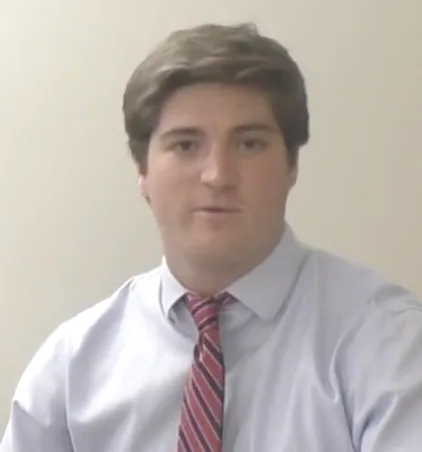
Tissi-Gassoway (pictured) and Amherst Chief of Police John Carter noted in an email the following day that they were “deeply disturbed” about reports of “harassment and doxing,” and that they were “seeking the removal of the photos, videos, and alarming posts where possible” and “requesting corrections from media outlets that misreported the events in question.”
In a subsequent email, Tissi-Gassoway, who uses she/they pronouns, “shared [the] sense of sorrow and outrage” many felt about media coverage of the “Voices of the Class,” adding “many” stories had “misleadingly conflated a comedy show with official sexual respect programming.”
In a Dec. 23 reply to a College Fix query to Elliot and Tissi-Gassoway, Amherst Director of Media Communications Caroline Hanna clarified that the school “did not and does not dispute” Allen’s reporting in The Free Beacon, but that of other, subsequent, reports. (The Amherst Student reports follow-up articles came from the New York Post, the International Business Times UK and The U.S. Sun.)
Meanwhile, the Association of Amherst Students expressed dismay over the media’s alleged “misinformation” along with the “national online pile-on” with which students were dealing in a letter to President Elliot and other officials, a copy of which was obtained by The Fix.
The letter alleges also Allen’s article had a “potentially malicious intent to cast [Amherst] traditions in a false light in order to instigate public vitriol” and noted “online coverage and viral clips are being used to shame Amherst students and invite harassment.” (One student worried the “negative attention” might lead to violence “in light of the recent shooting at Brown University.”)
Although the letter does not mention Allen by name, it effectively demands some sort of disciplinary action be taken against him. Forty percent of the Amherst student body, 768 students, have signed it.
It suggest the Washington Free Beacon article violates the college’s Code of Conduct under “Harm to Persons,” “retaliatory behavior,” and “respect for the ‘rights, dignity, and integrity of others.'”
It said it “supports free speech and good-faith critique” but claimed the recent media coverage “go[es] beyond criticism” — it is “a barrage of defamation and degradation” that is “dehumanizing, unsafe, and unacceptable.”
Tissi-Gassoway, in a memo to the campus community, acknowledged the student government’s letter, but said “there are legal and practical limitations to what action” Amherst can take.
In her reply to The Fix, Hanna, the campus spokesperson, noted Amherst’s offer of “immediate support to all students involved” in the matter included to Allen, the student reporter.
In response to a College Fix query, Allen said not only did he give Amherst administrators a “heads up” about the story the night before it was published, he gave them two months prior notice about it. He also said he “worked with them” during the story’s creation, and offered them an opportunity to respond to questions related to it, but most campus leaders declined.
Allen said his Free Beacon article does “not name a single student” (nor, to his knowledge, did any other article or social media account covering the story), and that — with the exception of one video he personally took — “every image” in it “came from the college’s own social media pages or from other students who attended the events.”
He added:
As for calls to remove the photos, I would ask a simple question: Why? If there is nothing objectionable about a public event attended by roughly a third of the student body, then why should prospective students, parents, donors, alumni, or the general public be shielded from seeing what the college chooses to put on for students during orientation? If transparency is deemed harmful, that raises serious questions about the defensibility of these events to outside observers.
Hanna did respond to a Fix follow-up inquiry regarding possible disciplinary action against Allen.
MORE: Amherst College faculty resolution shows why we don’t let academics run the country