FEATURED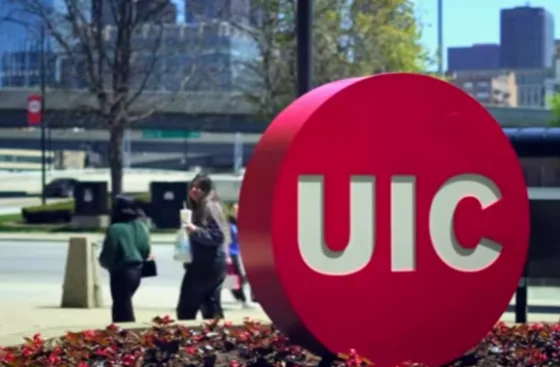
UPDATED
Professors cite anti-Israel messages in university Slack channels
Three Jewish faculty members are able to proceed with their harassment claims, according to the Equal Employment Opportunity Commission.
The University of Illinois-Chicago professors’ claim will now likely move to a conciliation process with the university to try to find a resolution, according to a news release from StandWithUs.
An attorney for the Dhillon Law Group, which represented one of the professors, provided further comments to The College Fix on a phone interview.
The law firm is representing Steven Roth, an anesthesiology professor.
Roth says he and the other Jewish faculty “felt demoralized and harassed by the activists’ hijacking of official communication channels to push pro-Hamas narratives,” according to a copy of the complaint provided to The Fix.
Roth stated that voicing “disagreement with the activists’ claims” or requesting “they not misuse the Slack for these outside political purposes” would risk being “marked out for retaliatory harassment, character assassination, and the loss of professional and academic opportunities.”
The charges include intensifying antisemitic discrimination following the Hamas attacks on Israel on October 7, 2023, students chanting “blood and martyrdom” at an on campus event, and the university’s alleged refusal to address the discrimination.
Roth’s complaint also cites statements by academic centers and departments at the university which criticized Israel.
Matt Sarelson, Roth’s attorney, said the comments cited do not amount to protected free speech.
He told The Fix in a phone interview that the incident he found “most egregious” involved students using the school’s open forum Slack channel and using what he described as antisemitic, anti-Zionist, pro-Palestine, pro-Hamas slurs and slogans, and “vile rhetoric.”
The Fix asked Sarelson where the law draws the line between incendiary rhetoric and antisemitic harassment. He rephrased the question as, “Where is the line between protecting free speech and speech that is not protected?”
Sarelson said that while in an “educational environment” you are allowed to have “heated discussions about topics of the day,” he argued it is different if “you are running a social or a school channel” and post something that has “absolutely no connection to the educational process.”
“It’s not remotely related to the curriculum. It loses some of its First Amendment protection and the school can take action against it,” Sarelson said.
The Fix also asked Sarelson if there are any concerns this case could be flipped against critiques of Palestine or Islam. He said that this case has “nothing to do with Palestine or Islam.”
Sarelson said that the next step will likely be conciliation and that the firm is waiting to hear back from the university to see if they are interested.
The attorney told The Fix that ultimately, students and professors have the right to attend their educational institution without fear of verbal assaults.
“The politics really shouldn’t come to play at all,” Sarelson said.
UIC said the school “condemns antisemitism, hate and discrimination in all its forms. We take seriously any allegations of harassment or bias within our campus community.”
Spokesman Brian Flood further told The Fix via email: “The university is committed to fostering an inclusive and respectful environment and will evaluate the EEOC findings and respond accordingly.”
National free speech group says criticizing Israel is protected
The Foundation for Individual Rights and Expression provided general information on the First Amendment and harassment, particularly in an educational setting.
“There is no free-floating ‘harassment exception’ to the First Amendment,” Government Affairs Counsel Michael Hurley said.
“Rather, when a persistent course of targeted behavior meets the legal standard for harassment, it’s construed as conduct, not speech. The Supreme Court has set robust standards for harassment ‘to ensure that Title VII does not become a general civility code,’” Hurley said.
He elaborated on what these standards include.
Title VII defines “hostile work environment,” according to Hurley, as when a “workplace is permeated with discriminatory intimidation, ridicule, and insult that is sufficiently severe or pervasive to alter the conditions of the victim’s employment and create an abusive working environment,” Hurley said.
“The work environment must be both objectively and subjectively hostile or abusive. In making this determination, courts look to ‘all the circumstances,’ including, importantly, the specific workplace context,” he told The Fix.
Hurley said that the higher education context matters “in Title VII analysis.” “Several courts have rejected Title VII hostile environment claims by emphasizing the need to allow robust debate in higher education and highlighting that such debate is expected.”
The Fix asked Hurley if FIRE considers calling for an end to Israel and saying it is committing genocide constitutes harassment.
“This is core political speech protected by the First Amendment,” he said. “Harassment requires a pattern of targeted behavior against a particular individual or group of individuals. It does not include mere speech on a contested political issue, no matter how offensive one might find that speech.”
Hurley said that examples of harassment on the basis of race or religion, while always context-dependent, include “denying someone access to parts of campus because of their race or religion, sustained and personally directed racial or religious abuse by a supervisor, and a pattern of stalking or physical intimidation against someone because of their race or religion.”
StandWithUs Saidoff Law, which is supporting the cause but not representing a specific professor, provided general comments on how universities should address harassment and antisemitism claims.
“Campus administrators should first ensure all staff are properly educated about Jewish identity and attacks against that identity,” Deedee Bitran told The Fix in a media statement. “Allegations of antisemitism should then be handled on equal terms with other forms of identity-based bias or bigotry, in accordance with applicable anti-discrimination and anti-harassment policies.”
Editor’s note: Details about the next step in the resolution process have been added.