
 FEATURED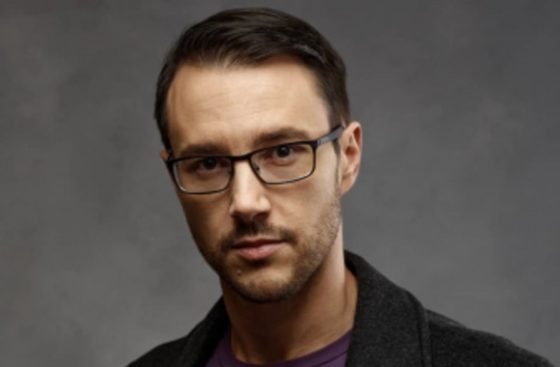
Attorney says university excluded ‘huge swaths of candidates based on race and ethnicity’
A lawsuit filed by evolutionary biologist Colin Wright includes “egregious” evidence of racially discriminatory hiring practices at Cornell University, according to his attorney.
“The facts could not be more egregious – here we have documented, intentional exclusion of huge swaths of candidates based on race and ethnicity,” Leigh Ann O’Neill, chief legal affairs officer at America First Policy Institute, told The College Fix in a recent email.
In the lawsuit filed in January, Wright alleges that multiple internal emails show the Ivy League institution intentionally excluded white candidates from the hiring process in violation of state and federal civil rights laws.
The lawsuit stems from a complaint that Wright filed against Cornell with the Equal Employment Opportunity Commission last year for alleged discriminatory hiring on the basis of race, The Fix reported at the time.
Wright filed his case after having received a Notice of Right to Sue from the EEOC on Jan. 23, according to the lawsuit.
As evidence of the discriminatory practices, the lawsuit cites an internal email in December of 2020 that stated, “it is evident that as a group we strongly wish to press for a diversity hire.” The email went on to state that Cornell “focused especially on identifying candidates from some of the most underrepresented racial/ethnic groups.”
The lawsuit also claims that an internal spreadsheet of potential candidates ranked them along a “diversity axis,” which listed the race of each candidate, as well as their disability status and sexual orientation.
All seven of the candidates flagged as “highest interest” by the spreadsheet were marked as either “black” or “latina.” Twenty-four out of 25 candidates on the list were marked as either “black” or “latina,” with one marked as “southeast asian,” according to the case.
Also in the lawsuit, another internal email from the chair of the ecology and evolutionary biology department mentioned a “hoped-for diversity hire,” and stated plans to “invite just one person … and not have that person in competition with others.”
Wright, who is white, was seeking employment in similar roles from 2018 to 2021, and says he would have applied for the position had it been publicly posted. His lawsuit alleges that the department restricted its hiring process to exclude white candidates and, therefore, he was denied the opportunity to compete for the position.
Wright is an evolutionary biologist who, at the time, had authored dozens of peer-reviewed scientific articles and served as a postdoctoral research fellow at Penn State University. According to his CV, he graduated from UC Santa Barbara in 2018 with a PhD in evolution, ecology and marine biology.
Additionally, he is the founding editor of Reality’s Last Stand, a substack focused on free speech and science, including research on sexual differences and the transgender issue. He also writes as a fellow for the Manhattan Institute.
A central argument to Wright’s lawsuit is the constitutionality of race-based admissions and hiring practices.
O’Neill told The Fix that AFPI plans to apply previous Supreme Court precedent regarding admissions decisions to employment.
“The significance of Students for Fair Admissions v. Harvard cannot be overstated—it makes clear that institutions cannot engage in race-based decision making in admissions, and Wright v. Cornell has the potential to establish the same principle with respect to employment,” she told The Fix.
The Fix reached out to Cornell’s media relations office via email, asking about the lawsuit’s allegations; however, it did not respond to two requests for comment in recent weeks.
However, the university denied the institute’s initial allegations about its hiring practices in a public statement last June.
“The university strongly disputes the allegations in the America First Policy Institute complaint that references a number of outdated websites or programs that have not been in use for many years,” it stated.
“Over the past year, the university has further enhanced its compliance with civil rights laws by engaging outside law firms to audit policy and practices to reflect changes in law or regulations, taking swift corrective action where necessary,” the Ivy League institution stated.
Additionally, it added that any “discrimination or bias” in “any stage in any hiring process … should be reported and will be corrected.”
Meanwhile, a medical watchdog organization told The Fix that racial discrimination is still a problem in higher education.
“At least when it comes to medical schools, we have observed that [the Students for Fair Admissions case] has not extinguished racial discrimination,” Ian Kingsbury, senior director of accountability in medicine at Do No Harm, said. “Our analysis indicates that some schools are particularly bad offenders.”
Do No Harm is a policy advocacy group founded to oppose identity politics in medical education, research and practice.
Kingsbury cited research on the admissions practices at the University of Wisconsin School of Medicine and Eastern Virginia Medical School: “At Wisconsin, Asian applicants had odds of acceptance that were only 8% as good as MCAT- and GPA-equivalent black applicants and 57% as good as MCAT- and GPA-equivalent white applicants.
“At Eastern Virginia, Asian applicants had odds of acceptance that were only 6% as good as MCAT- and GPA-equivalent black applicants and 54% as good as an MCAT- and GPA-equivalent white applicants,” according to the research.
Kingsbury proposed the idea of a test-based system to prevent future discrimination.
“For example, a university would automatically lose state or federal funding … if scores on entrance exams between racial groups diverge by more than one-half of a standard deviation, or if rejected students from one racial group have higher scores than accepted students from another,” he told The Fix.
MORE: Defense tech firm ends Cornell talk 8 minutes in after demands to cancel

