Universities are attempting to game the system by reclassifying programs as “professional” in order to circumvent new limits on student loans.
The “One Big Beautiful Bill” places limits on the aggregate amount a student can take out in federal student loans. For most graduate students, the limit is $100,000 total. However, there is an exception for “professional” programs, which typically refer to medical school and law school. For these programs, the cap is $200,000 because the return on investment is much better.
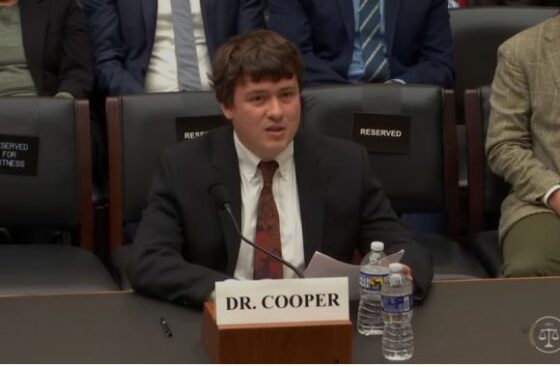
However, American Enterprise Institute economist Preston Cooper recently warned that lobbyists want to reclassify programs such as social work as “professional” degrees in order to get around the cap.
“A representative of the Council on Social Work Education argued that ‘a [Master of Social Work] provides full professional preparation, similar to a J.D. in law or an M.D. in medicine, and we think it should be categorized in the same respect,’” during a recent hearing on implementation of the regulations.
As Cooper explains in article for AEI:
Obviously, universities offering social work degrees will rake in more cash if their students can borrow up to $50,000 per year for tuition—but it may not be such a good idea for students to borrow so much for a lower-wage profession. If the Education Department is not careful about how it classifies programs claiming to be “professional,” hundreds of thousands of students could wind up with debt burdens they cannot afford.
The intent of the law is to make exceptions for “lucrative but expensive” degrees, such as medical school.
Social work degrees, however, do not pay off as well for the cost.
Efforts to “reclassify graduate degrees” should be treated with “great skepticism” by the Department of Education, Cooper wrote.
“Schools will undoubtedly seek to reclassify degrees as professional to allow students to take on more debt and charge higher tuition,” he wrote. “To defend Congressional intent and save students from crushing debt, the Department must stop them.”
MORE: Students increasingly outsource writing their personal memoirs to ChatGPT
IMAGE CAPTION AND CREDIT: AEI economist Preston Cooper testifies; House Judiciary Committee/YouTube