OPINION
Ian Oxnevad | Minding the Campus
Quaint Midwestern campuses are an unlikely setting for a spy drama—usually reserved for exotic locales and boardrooms. Yet this past month, two suspected Chinese spies were pulled from campuses in Indiana and Michigan.
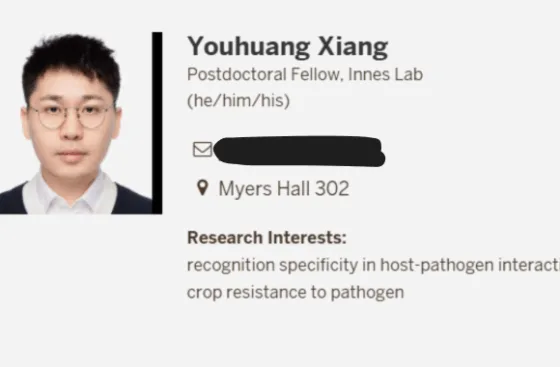
Youhuang Xiang, a member of the Chinese Communist Party (CCP) who worked as a postdoctoral student at Indiana University, was sentenced to four months in prison for smuggling E. coli into the U.S. and concealing it in a “shipment” of women’s underwear.
Last month, Danhao Wang, another Chinese researcher at the University of Michigan, died after falling from a building on campus and after being questioned by U.S. law enforcement. Wang’s death is being investigated as a potential suicide. Wang was well-published in fields of electrical engineering, materials science, chemistry, photonics, and semiconductors.
Beneath the intrigue, the work of Xiang and Wang reveals more about China’s interest in American higher education.
Before Xiang’s arrival in the U.S. and obtaining a “Non-Immigrant student (J-1) visa” to study biology in Indiana, he obtained a PhD from the Chinese Academy of Sciences (CAS). The CAS is led by CCP political appointees, and has been working with China’s People’s Liberation Army (PLA) since 2018.
CAS is known for its innovation in jet engine technology, underwater radar development, and interdomain warfare. CAS is also working on the China Brain Project, working at the “intersection” of brain science and artificial intelligence (AI).
Xiang’s shipments from Guangzhou Sci-Tech Innovation and Trading, a Chinese company, of undergarments was suspicious enough to capture the attention of U.S. Customs and Border Protection at Chicago’s O’Hare International Airport while returning to the U.S. from Europe. Xiang hid his CCP affiliation from immigration authorities by simply lying. The penalty for all of it amounted four months in prison, a $500 fine, and an order for removal along with the revocation of his student visa.
Before coming to the U.S., Wang studied at the University of Science and Technology of China (USTC), where he received a PhD in electrical engineering. The Australian Strategic Policy Institute notes that the USTC is overseen by the CAS. USTC is heavily involved in China’s “nuclear and space programs,” and is working heavily to advance Chinese interests in AI and quantum computing.
CCP propaganda is heavily integrated into USTC’s campus life and learning. The university’s anthem is titled “Greetings to the eternal east wind/Raise the red flag high!”, and is on sanctions lists from the U.S. Department of War, the Department of Commerce’s Bureau of Industry and Security (BIS). Why the University of Michigan felt at ease with keeping Wang’s affiliation is just as suspicious as his death.
One of China’s defenders in the U.S. is blaming the Federal government. In response to Wang’s death, Megan Russell, the “China campaign coordinator” for CODEPINK, “a feminist grassroots organization working to end U.S. warfare and imperialism,” said it is “not an isolated incident” but is “a series of repeated targeting of Chinese scholars.”
CODEPINK repeatedly deploys its activism in support of China, Cuba, and Iran. The co-founder of CODEPINK, Jodie Evans, is the wife of pro-CCP mogul Neville Roy Singham. In response to CODEPINK’s remarks: yes, Chinese scholars are under scrutiny, and for precisely the reasons listed here.
There are roughly 123,000 Chinese graduate students in U.S. colleges and universities. Statistically, there are plenty more security risks waiting to be discovered.
This column was originally published on April 22, 2026 at Minding the Campus and is reprinted with permission.