
University of Arkansas’ law school acted within its property authority when it rescinded a deanship offer to a professor who supported men competing in girls’ sports, two legal professors argued recently.
Professor Emily Suski lost her dean offer, but not her teaching job, after Republican state officials objected to her advocacy on behalf of gender-confused males who wanted to compete against girls. Suski submitted an amicus brief to the Supreme Court concerning a challenge to West Virginia’s law which prohibits men from competing in girls’ sports.
The provost’s office cited “feedback from key external stakeholders,” in announcing its decision, as The College Fix previously reported.
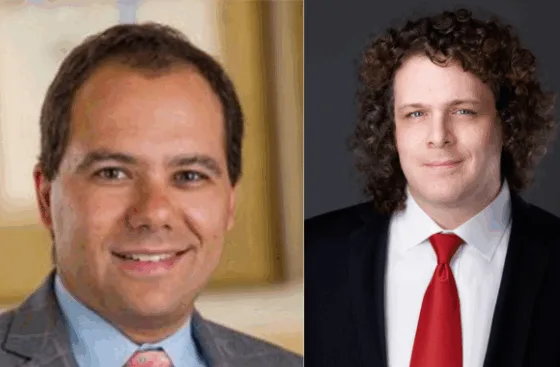
But public universities have the right, if not the duty, to ensure leaders are good fits with the political climate and can work well with state officials, according to Ilya Shapiro and Joshua Blackman. Shapiro (pictured, left) is a legal scholar at the Manhattan Institute while Blackman (pictured, right) is a law professor at the South Texas College of Law Houston.
Writing in the Washington Post, they argue:
While individual professors, including Suski in her scholarly capacity, enjoy academic freedom protections, there’s no First Amendment right to a deanship. The dean is appointed by the university’s governing body as an at-will employee to serve the university’s interests. A public university in particular could reasonably have concluded that Suski might have had a hard time interacting with the legislature, executive branch officials, alumni and donors. This red state was the first to ban medical treatment for minors with gender dysphoria.
The legal experts argue that the Supreme Court has established “government employees’ speech rights decrease as they go up the organizational chart.”
While left-leaning professors may argue that Republican policymakers are unduly interfering in university governance, Blackman and Shapiro say that is just how politics work. They point to Democratic Virginia Governor Abigail Spanberger’s actions to reshape public universities to fit her political agenda. “This process is always political,” the scholars write.
Blackman and Shapiro want to see other right-leaning lawmakers take similar initiative to reshape left-leaning law schools.
“After decades of neglect, decision-makers in other red states should take a closer look at who is leading their law schools,” they wrote. “If ever the ideological asymmetry in academia is to be corrected, change must start at the top.”

