
 BUZZ
BUZZ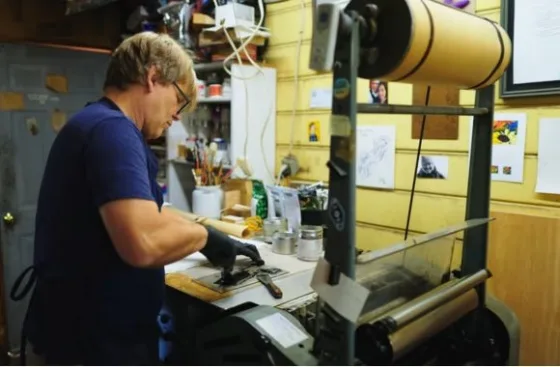
Leading up to America’s 250th birthday, Brigham Young University Professor Robert Buchert spent four months recreating the Declaration of Independence with historically-accurate tools.
The professor, who teaches an Intro to Letterpress class, received the request from fellow faculty member Gove Allen, who organizes Orem’s Colonial Festival, according to BYU News.
Allen told Buchert that he needed a more historically-accurate document for the festival’s George Washington impersonator.
“While studying colonial papermaking, Buchert discovered the Dunlap Broadside and realized the nation’s 250th anniversary was approaching. Seeing a perfect opportunity to apply his skills, he set out to replicate the Declaration of Independence,” BYU News reported.
Buchert told the outlet that he makes papermaking equipment, produces paper, and specializes in type design and letterpress printing.
“That’s sort of a strange skill set to have. It is very niche. But it was like, ‘Oh, but that’s the skill set you need to do this thing,'” he said.
BYU News also reported:
He engineered a specialized screen to match the original’s unusual 1.05-inch chain lines. He digitally uncovered the document’s watermark and hand-shaped the wire design, soldering it to the mold. He then produced sheets from flax, hemp, and cotton fibers.
Buchert rejected modern fonts as they didn’t offer the same authenticity that the declaration needed and rebuilt the typeface from historical specimens. He even used type believed to have come from the same foundry that supplied the original, according to evidence from a specimen book.
As he studied the document, he discovered that the Declaration’s physical appearance told a story.
Because the original printers worked under an overnight deadline, the text curves slightly across the page and contains irregular spacing throughout. To most readers, those details may seem like flaws. To Buchert, they reflect the urgency of that historic night, when the printers had little time to correct mistakes or begin again.
Buchert said he gained a greater appreciation for the language in the document by completing the project.
“The language chosen was really dignified for a complaint. The level of statesmanship that was put into this, and the bar it sets, was sort of the big revelation to me,” he said.
The professor also said he hopes students recognize the value of handcrafted work.
MORE: Princeton professor has ‘great trepidation’ about America’s 250th, blames Trump

