
 FIX EXCLUSIVES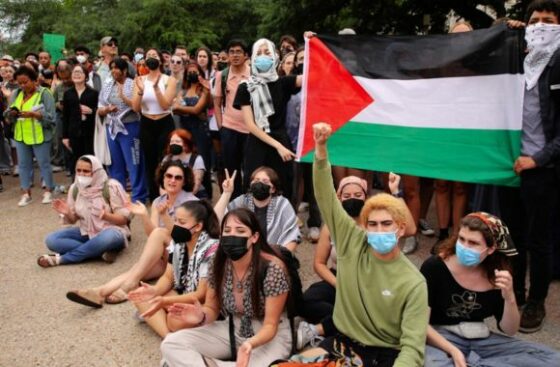
Lawsuit centers around U.S. government’s detainment and deportation of pro-Palestinian students, faculty
A lawsuit challenging the Trump administration’s crackdown on foreign students who participated in U.S. pro-Palestinian protests is drawing mixed opinions from legal scholars.
A trial on the case wrapped up on Monday, and it is unclear when U.S. District Judge William Young will issue a ruling, The Hill reports.
The American Association of University Professors and other university associations filed the lawsuit against the administration for detaining and deporting foreign students and faculty who engaged in these demonstrations.
Plaintiffs alleged that these actions violated their constitutional rights to assemble and exercise free speech, and create a chilling effect on speech regarding the Israel-Palestinian conflict, according to the Associated Press.
In response, the president’s attorneys argued that the government’s actions preserve national security and curb unlawful immigration.
One conservative legal expert asserted the constitutionality of the administration’s actions regarding noncitizens who participated in the protests.
“Foreign students studying in the U.S. have no ‘First Amendment’ right to engage in such behavior and the Trump administration is acting entirely within the scope of applicable law to remove aliens who present a clear and present danger to the safety of the public and our national security,” Hans von Spakovsky said in a statement provided to The College Fix.
A senior legal fellow of the Heritage Foundation, he reiterated the prevailing argument of the Trump administration against the plaintiffs, saying federal immigration law permits the government to remove noncitizens endorsing terrorist organizations, including Hamas.
“Aliens supporting Hamas are supporting a designated terrorist organization guilty of mass murder, mass rape, torture, and numerous other human rights abuses,” von Spakovsky said in the email. “No foreign student or teacher who supports such horrendous behavior should be in this country.”
Thomas Berry, director of the Cato Institute’s Robert A. Levy Center for Constitutional Studies, said the judge’s ruling could be important to modern interpretations of First Amendment rights.
“This case is at the intersection of First Amendment law and immigration law,” and “could bring clarity” to the rights noncitizens have in the United States, Berry told The Fix in a recent phone interview.
Differing from von Spakovsky’s interpretation, Berry questioned the constitutionality of the government’s actions toward the international student protestors.
“I don’t think the administration is handling [the protests] appropriately,” Berry said. “People are allowed to vehemently criticize the U.S. government, … the First Amendment applies to everyone on U.S. soil whether they’re citizens or not.”
He also emphasized that “the government cannot punish citizens in any way for their viewpoints expressed.”
MORE: Portland professor placed on leave after ‘I am Hamas’ comment
As tensions between free expression and national security flare, experts continue to interpret how, when, and where noncitizens are entitled to exercise free speech and assembly — core tenants of the First Amendment.
In the lawsuit, plaintiffs in the New England area allege that the Trump administration infringed upon their First Amendment rights and violated the Administrative Procedure Act.
The plaintiffs also expressed concerns that the administration used a digital monitoring program to record names of international students participating in these protests, the AP reports.
As part of their argument, the plaintiffs brought up former Columbia University student Mahmoud Khalil and Tufts University student Rumeysa Ozturk, both of whom were detained for leading anti-Israel protests on their campuses, according to the report. In a recent interview with CNN, Khalil refused to say if he condemns Hamas.
During the trial last week, Brown University Professor Nadje Al-Ali said their arrests prompted her to cancel her research trips to Lebanon and Iran, according to the report.
A German citizen who has green card status in America, Al-Ali told the court she feared having passport stamps from the Muslim countries “would raise red flags.”
Echoing Al-Ali’s concerns, Professor Megan Hyska also testified that the administration’s actions have negatively impacted her free speech, the AP reports.
A green card holder from Canada, and a professor at Northwestern University, Hyska said she used to participate in pro-Palestinian protests and support students’ encampment at the university.
“It became apparent to me, after I became aware of a couple of high profile detentions of political activists, that my engaging in public political dissent would potentially endanger my immigration status,” Hyska told the court.
MORE: Pro-Palestinian activist: ‘Absurd’ to ask if I condemn Hamas
IMAGE CAPTION AND CREDIT: Members of Students for Justice in Palestine hold a protest; VicHinterlang/Shutterstock

