
 FEATURED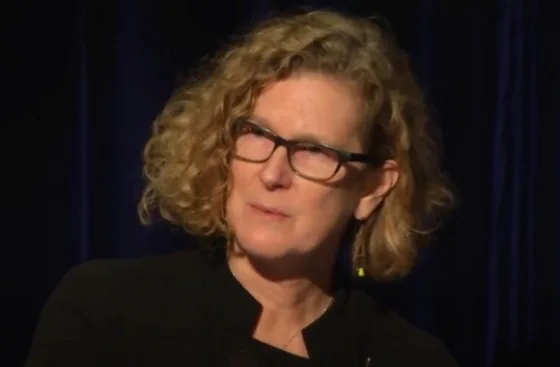
Key Takeaways
- Colby College received a $187,000 grant from the National Endowment for the Humanities to study 'carceral disruptions and community resistance,' focusing on the detrimental effects of mass incarceration.
- Critics, including former Detroit mayor Kwame Kilpatrick, argue the funding is excessive for its intended purpose and suggest resources would be better spent on practical societal reintegration and rehabilitation initiatives.
UPDATED
The National Endowment for the Humanities cut funding to a Colby College book project on “carceral disruptions and community resistance” to the tune of $187,000 by a prison “abolitionist educator.”
The taxpayer-funded NEH grant originally was set to run through September 2026. It aimed to help anthropology Professor Catherine Besteman study “mass incarceration” which she says is a “is a broken, harmful, and criminogenic system,” according to the project description.
However, following publication of this article, the National Endowment for the Humanities reached out and said the grant had been cut in April 2025. Previously, the NEH did not respond to College Fix requests for comment. “The NEH grant to Catherine Besteman at Colby College for ‘The Praxis of Care: Carceral Disruptions and Community Resistance’ was terminated by NEH in April 2025,” Acting Director of Communications Paula Wasley wrote on Sept. 2.
The research team will use “narrative analysis, oral histories, story-telling, feminist ethics, philosophical theories of the self, restorative practice, and deep personal experience,” according to the grant description.
Besteman’s research background includes “carcerality and abolition,” “security, insecurity, violence, militarism,” and “border crossing,” according to her faculty bio.
She (pictured) defines carcerality and abolition on her faculty website: “Mass incarceration, fueled by security rhetorics, white supremacy, fear, and profit-seeking corporations, is a scourge of our time. Carcerality prioritizes punishment and harm over repair and healing.”
The College Fix did not receive a response to emails and a voicemail left in the past several weeks that asked for further comment on the project, including how it benefits the American taxpayer.
The NEH previously did not respond to comment when asked by The College Fix over email and voicemail for the Trump administration’s view on funding prison abolition studies.
In April, the National Endowment for the Humanities announced future awards would “be merit-based, awarded to projects that do not promote extreme ideologies based upon race or gender, and that help to instill an understanding of the founding principles and ideals that make America an exceptional country.”
In an interview with The College Fix, a former federal prisoner and Democratic mayor of Detroit criticized using an overabundance of taxpayer dollars to study incarceration.
“[Studying incarceration is] not a bad thing. As a matter of fact, it could be a tremendously enriching thing,” Kwame Kilpatrick said in a phone interview. “But the type of money that we see going into this particular subject matter is beyond what we should be spending.”
He previously served time in a federal prison for bribery and racketeering, according to The Detroit News.
Kilpatrick, who had his sentence commuted by President Trump in 2021, now runs Movemental Ministries, a Christian nonprofit that includes a prison fellowship. He is a former state representative and now is an ordained minister. He also is an ambassador for Project 21, an initiative of the National Center for Public Policy Research.
Kilpatrick’s focus is on fostering young Americans into being better citizens from the outset and said that preparing them to compete in society should be the focus. The amount of money being used to create such little results that play out in society is unwise and could be used better elsewhere, according to Kilpatrick.
“I think that when you’re putting a great deal of money into things that are not producing that kind of focus, then you’re wasting money,” the former mayor of Detroit told The Fix.
Kilpatrick took issue with the larger societal pattern of losing focus on goals in science and life. The issue, he said, is bigger than just one party, but an overall problem America seems to continually have.
“It’s more of something that’s being driven from somewhere, and I don’t want to just say the Democratic Party, because I think it keeps it too small,” he said. “I think it’s something being driven from some parts of society that will not keep the main thing, the main thing that will not focus on on a level of, how do we just prepare people for engaging the world that’s that we’re in now and the world to come.”
In terms of rehabilitating prisoners, Kilpatrick said that the money is not being put toward the real issues.
Instead, money should be put toward getting “America back to work” and preparing “people who have been locked out” of society so they can be involved in the economy, Kilpatrick said.
This is a better use than spending “millions of dollars teaching us how to sing Kumbaya together if we’re in different ethnicities from different geographic locations.”
Editor’s note: This post has been amended to clarify a sentence. Also, following publication of the article, the NEH reached out to The Fix and said the grant had been cut in April.

