FEATURED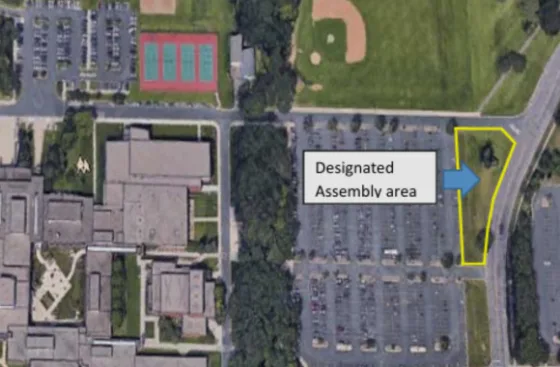
However, Minnesota college hasn’t responded to inquiries about formally rescinding policy
The Anoka-Ramsey Community College recently removed a ban on proselytism from its website after a free speech legal group accused the public institution of First Amendment violations.
The Foundation for Individual Rights and Expression noticed the policy had been changed online on or around June 10 after its lawyers wrote to the college raising concerns about free speech. Anoka-Ramsey is a public, taxpayer-funded institution in Coon Rapids, Minnesota.
As of Monday, however, FIRE attorney Brennen VanderVeen told The College Fix that Anoka-Ramsey has not confirmed whether it formally rescinded the policy.
In a recent email interview, VanderVeen said he believes the website language “may have been removed” well before June 10 as he received “a letter dated May 1 acknowledging the college’s receipt of FIRE’s April 29 letter and saying the college was reviewing” the materials.
However, he said he was unable to “independently confirm” if the ban had been “formally repealed” or if a new policy replaced it.
Anoka-Ramsey never told him “when or why the provision was removed” from the website either, he said.
VanderVeen described the ban as “a clear violation of the First Amendment,” adding that “government institutions should follow their obligations under the Constitution.”
He told The Fix that “restricting what kind of ideas are welcome is antithetical to a free society and is especially out of place on a college campus. The government should not limit messages students may find valuable.”
The Fix also contacted the college media relations office twice over the past two weeks via email, asking if the ban was lifted and if it had a response to FIRE’s letters. The college did not respond.
In an April letter to the college, FIRE called the ban on proselytizing “flatly unconstitutional,” The Fix previously reported.
Before being changed online, the policy stated that “[n]on-affiliated organizations may distribute materials but may not solicit or proselytize.”
As The Fix previously described it, the policy meant that “someone could tell people to abandon their Baptist or Catholic faith, for example, and they would not run afoul of the guidelines. But if a local minister or priest wanted to encourage students to join their nearby church for a Bible study or learn about getting baptized, this would violate the rules.”
Another problem was that the “policy did not define what it meant when it said such people may not ‘proselytize,'” VanderVeen said, “so under the ordinary meaning of that word, it burdened people wishing to advocate for an ideology or cause, especially a religious one, while allowing others to express any other view, including even harsh criticism.
“Placing particular topics off-limits, or even worse, only allowing one side of an issue to speak, directly contradicts freedom of thought,” he told The Fix.
The policy also required outside individuals to apply for permission to demonstrate on campus at least one week in advance. However, after FIRE called the requirement “unreasonable,” the college revised the policy on its website to state that the request must be made three days in advance.
Additionally, under the policy, anyone who is not affiliated with Anoka-Ramsey only is allowed to speak in two narrow, blocked-off areas 800 feet away from the main parts of campus.
As The Fix previously wrote:
One section is on the corner of two streets that lead into campus, but which is separated from the main complex of buildings by a parking lot. The distance between the “assembly area” and an actual building is approximately 800 feet, according to Google Maps.
Groups can also get a little closer by standing by a softball field on the other side of the parking lot, though they are not allowed to cross the street. The policy effectively means organizations can only engage with softball players or people coming to watch practice.
That part of the policy appears to be unchanged.
MORE: Minn. college: Speakers must stand 800 feet away from buildings, can’t ‘proselytize’