BUZZ
BUZZ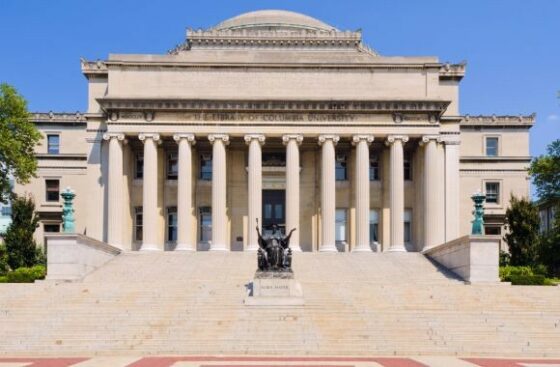
University will provide admissions data in exchange for frozen funds
Columbia University will pay $200 million to President Donald Trump’s administration in a settlement to resolve federal investigations into alleged breaches of anti-discrimination laws.
“Under [the] agreement, a vast majority of the federal grants which were terminated or paused in March 2025 will be reinstated, and Columbia’s access to billions of dollars in current and future grants will be restored,” President Claire Shipman wrote in a message to the campus community Wednesday.
Columbia will pay the settlement over a three-year period, along with $21 million to resolve inquiries led by the U.S. Equal Employment Opportunity Commission, Shipman stated.
The university also agreed to provide the government admissions data, including race, GPA, and test scores of accepted and rejected students, the Columbia Spectator reported.
Additionally, the school will give the Trump administration all records of “disciplinary actions” involving international students.
Justifying the decision, Shipman stated in her announcement that the university could not continue to “jeopardize [its] status as a world-leading research institution” while the Trump administration withheld $400 million in federal grants and $1.3 billion a year in federal funding.
Still, “the University has not admitted wrongdoing and does not agree with the government’s conclusion that it violated Title VI of the Civil Rights Act,” the president stated.
However, she acknowledged the “very serious and painful” issue of antisemitism on campus. The school implemented several critical corrective measures in March, many of which are part of the new agreement, such as establishing a new “liaison to the Jewish community, situated in University Life,” she stated.
Further, as part of the settlement, the school and federal government mutually agreed on a process to resolve disputes that includes an “independent monitor and arbitrator as neutral third parties,” Shipman stated.
If the government decides the school is not adhering to the terms of the agreement, it must follow a “very specific, prescribed set of steps.”
If the parties fail to reach a consensus, the issue will be referred to the arbitrator, and if necessary, to a court.
The president also wrote:
For months, Columbia’s discussions with the federal government have been set up as a test of principle—a binary fight between courage and capitulation. But like most things in life, the reality is far more complex. We established our non-negotiable academic and institutional boundaries clearly, and we chose to talk and to listen. We certainly did not always agree with the government’s proposals, nor they with ours. It is important for the community to know that a broad academic leadership team worked with me closely, as well as with our Board of Trustees, to achieve this resolution. I consulted widely outside of the institution as well. In the end, we have arrived at a carefully crafted agreement that protects our institution and our values, and that will allow us to move forward, with strength, resuming the vital work we do in service to the nation and to humanity.
She also recognized faculty members who have worked under immense pressure to protect the school’s future.
“They’ve confronted the real hardship caused by the loss of federal funding to our research enterprise, borne witness to the painful divides that have opened in our community, and labored to find constructive solutions to all of it,” Shipman wrote.
MORE: Columbia will suspend, expel dozens of pro-Palestinian protesters
IMAGE CREDIT AND CAPTION: Low Memorial Library at Columbia University; gregobagel/Canva Pro