
 EDITORS' CORNER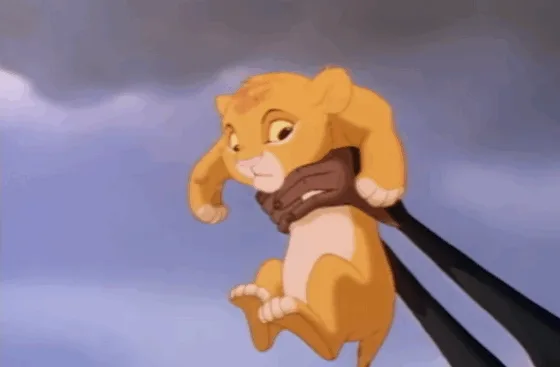
OPINION
Have you ever been watching an animated movie with your kids or grandkid and started asking yourself: “What do we make of the complex, ambiguous, and unexamined interdependence between racist and speciesist tropes embedded in the most prestigious global film awards?”
A few media professors have – and thanks to a payment from one university, they were able to publish their study in Frontiers, an open-access journal.
Professors Natalie Khazaal (Georgia Tech), Ellen Gorsevski (Bowling Green State University), and Tobias Linne (Lund University) recently published their study into racism and speciesism in Oscar-nominated films. Lund University, in Sweden, paid for the article to be published.
The researchers use something called the “Media Analysis of Racism and Speciesism” test, or MARS, to closely examine unseen hatred in films like “Spiderman: Into the Spiderverse.”
While this film won an Oscar award, the professors suggested racism was at play, arguing that the movie had a black character only to help the movie win.
“But why was the first Black Spider-Man (Miles Morales, voiced by Shameik Moore) introduced together with the character of Spider-Ham, who is ridiculed for being a pig,” they asked. “To what extent did having a Black main character nudge the movie over the edge to win the Oscar?”
Spider-Ham, who, remember, is just a cartoon character in a fictional movie, is also a victim here.
“Despite being accepted as one of the Spider superheroes, Spider-Ham’s character does not embody this kindness to animals,” the scholars write. “Quite the opposite, it resuscitates a 40-year-old speciesist caricature that itself hearkens back to the 1930’s wall painting of sausages labeled ‘Dad’ in Disney’s animated film, Three Little Pigs.”
The professors also identify other offensive ways animals are portrayed in movies – oftentimes promoting racism, even if the average person never noticed it.
“Hollywood’s cartoons and animated films have forged a checkered path in harnessing white privilege and recycling racist cultural narratives,” the professor declare.
“For example, while Lion King invites audiences to perceive Black people as inferior to whites, A Goofy Movie elevates Blackness to a cultural icon,” they argue. (In-text citations have been removed by The Fix).
The MARS test helps viewers determine how much racism and speciesism is in that movie their kids want to watch with them.
For example, before watching a movie with their kids, parents might ask some questions from the MARS test, like “Do the racialized characters fulfill harmful, simplistic, or racist stereotypes,” “Do the nonhuman characters fulfill speciesist stereotypes as pests, threats, game, or cute animals/charismatic megafauna,” and “Does the movie imply that the struggles against racial oppression and those against species-based oppression are incompatible or in competition with one another.”
I won’t be doing this, because this is a nonsense test created by professors in the silly field of “Critical Animal Studies,” to make it seem like their academic work is actually, well, academic.
But for a good laugh, definitely read through their paper – or just turn on “Spiderman: Into the Spiderverse.”

