EDITORS' CORNER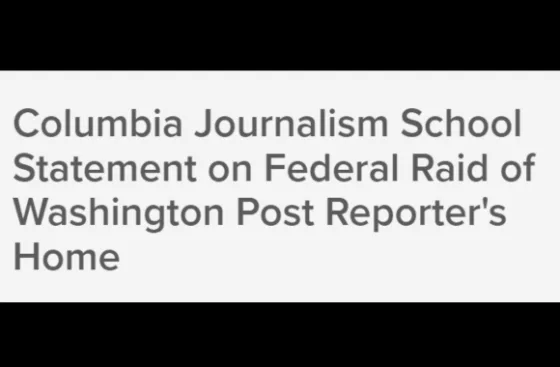
OPINION
Columbia University’s journalism school became the latest higher education institution to fail to live up to its promise of “institutional neutrality.”
Institutional neutrality is the idea that universities should not take official stances on political and social issues of the day unless they are explicitly related to the mission of the school.
It sounds great in theory but often fails in practice. For example, more than half of the universities who adopted an “institutional neutrality” pledge celebrated LGBT “pride” month, The College Fix previously found.
Columbia University adopted such a pledge in the fall 2025 semester.
A presidential advisory committee stated: “On matters that do not directly threaten Columbia’s paramount values and fundamental commitments, therefore, we recommend that the President, Provost, and Deans exercise restraint in issuing statements or speaking in their institutional capacity.”
“We recommend that academic departments and their Chairs continue to exercise restraint in issuing statements or speaking in an institutional capacity,” the Sept. 2025 report stated. It did say individual faculty members or “self-organizing” groups could issue statements.
That is not what the Columbia Journalism School did, however.
On January 19, it released a statement on the university website, on behalf of the entire “Columbia Journalism School,” condemning a controversial FBI raid on the home of a Washington Post reporter.
“In the raid on January 14 of reporter Hannah Natanson’s home, federal agents confiscated her phone, smartwatch, and personal and work laptops,” the faculty wrote. The professors called it a “flagrant violation of the Privacy Protection Act.”
The statement hints the raid occurred because Natanson has written critically of the Trump administration. However, the administration argues that Natanson is not under investigation herself, but the raid relates to a separate probe into the leaking of national security documents, according to the Associated Press.
The condemnation from journalism professors is certainly understandable. I do not want the FBI raiding my home because of information I obtained from sources. So on that point, it makes sense why journalism professors would speak out against what Trump did.
But the problem for institutional neutrality supporters is that this raid really has nothing to do with Columbia University itself. The professors could have written opinion pieces in any number of favorable outlets, been interviewed on news stations, or individually released statements through their Bluesky accounts. Instead, they chose to imply that all of the professors signed onto this statement.
This is not true though, as reported by the Washington Free Beacon. Two professors told Eliana Johnson that they had not signed onto the statement. The Free Beacon also cites the school’s institutional voice statement.
Furthermore, the statement goes beyond one high profile raid, which admittedly, is controversial and does not look good for the Trump administration. More facts could come out that justify the FBI actions, but based on what we know, it is reasonable for journalists to be concerned.
The statement also condemns the defunding of NPR and PBS, alleges favoritism of news outlets by the White House and Pentagon, and criticizes lawsuits the president filed against news outlets “for coverage he considered unfavorable.”
People can disagree about whether the public news outlets deserve to get taxpayer funding, particularly given their deep bias, and if presidential administrations should be able to favor certain news outlets. Professors are free to weigh in on any number of Trump’s questionable, if not frivolous, lawsuits against people and groups that raise his ire.
However, the idea of institutional neutrality holds that entire departments and schools should not be weighing in on every political issue. Whether taxpayers subsidize National Public Radio does not affect the operations of Columbia University at all, nor do individual lawsuits brought by the president against news outlets.
Columbia’s departments and schools can condemn Trump all day long if they want – but the university should then be honest that its commitment to institutional neutrality is paper thin.
MORE: Harvard health center to focus on pediatrics, not Israel