
 BUZZ
BUZZ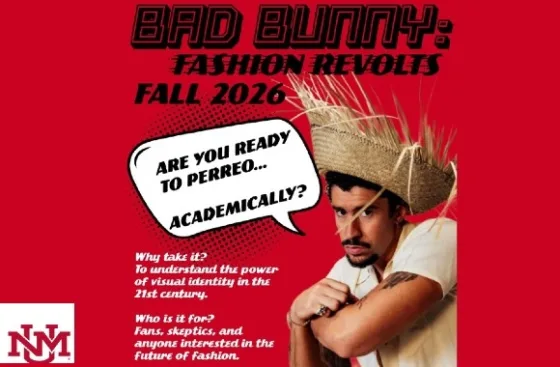
ANALYSIS/OPINION
Higher education is not what it used to be. Gone are the days when students were required to study the classics. Nowadays it seems like any gibberish can pass for scholarly study.
The examples are myriad, write Daniel Buck, a research fellow at the American Enterprise Institute, and Garion Frankel, incoming editor at the James G. Martin Center for Academic Renewal.
“Oregon State University offers ‘Disney: Gender, Race, and Empire.’ Students at Indiana University can attend the course, ‘Having it All: Postfeminist Media After Sex and the City,'” the two wrote in The Hill on June 2.
“How about ‘Bad Bunny: Musical Aesthetics and Politics’ at Yale University? The Bad Bunny Syllabus that inspires this course — which lists topics such as ‘LGBTQ Activism,’ ‘Gender and Sexuality in Reggaeton’ and ‘Political Protests of Summer 2019’ for study — is also in use at Wellesley College and Loyola Marymount University. Both Swarthmore College and the University of Chicago offer courses on ‘Queering God.'”
The scholars go on to note these classes are no outliers:
Harvard offers an English course, “Taylor Swift and Her World.” At UC Berkeley’s Haas School of Business, students can take “Artistry, Policy, and Entrepreneurship: Taylor’s Version” through the Department of Economics. Penn State Berks offers a course titled, “Taylor Swift, Gender, and Communication.”
Another unofficial sub-genre of courses focuses on Korean pop music — “Lights, Camera, Action: The Visual Culture of K-Pop” at Columbia University, “K-Pop and Human Rights” at Binghamton University, “Kangnam Style: K-Pop and the Globalization of Korean Soft Power” at Stanford University, or “K-Pop and J-Pop Culture” at Florida International University.
The scholars point out that at a time when the return on investment for a four-year degree is plummeting and trust in higher education is at an all-time low, colleges and universities should return to their true purpose.
“A student who can tell you all about Swift’s entrepreneurship but cannot write a five-paragraph essay is not educated, but entertained,” the duo wrote.
“Why attend college in the first place? Universities were once places where students and faculty alike pursued higher aims — truth, beauty, ethics and even the divine. What are they now? Too often, they resemble four-year summer camps, designed to make students comfortable with a participation diploma at the end.”
MORE: UMich students can take ‘queer social dances’

