
 FIX EXCLUSIVES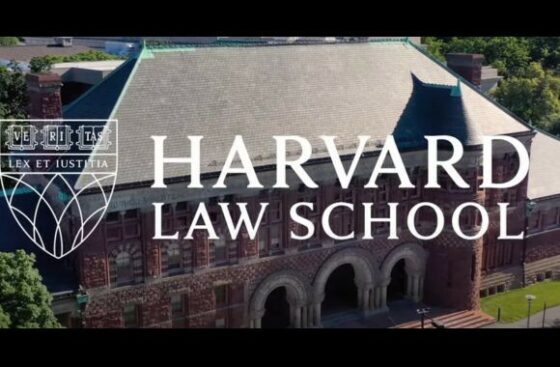
Report claims editors consider race, gender when choosing articles to publish
Harvard Law Review is pushing back against claims that it considers race or gender when selecting articles for publication, following a report alleging otherwise.
Internal documents recently obtained by the Washington Free Beacon suggest that some editors at HLR took authors’ race into account when making article selection and publication decisions.
According to the report, a scoring system known as the “Rotopool rubric” is used early in the article selection process and includes questions about the author’s race and other protected characteristics.
The Free Beacon states that this rubric is used to eliminate roughly 85 percent of submitted articles.
The outlet reviewed all 461 memos from 2024 and found 61 instances in which editors discussed the race or gender of the sources cited, and another six in which they discussed the race or gender of the authors themselves.
It further reports that 42 different editors considered race or gender when making publication recommendations. That number accounts for 40 percent of the 104 editors who serve on the journal at any given time, all of whom have a vote in publication decisions.
The law review nixed a piece by an Asian American scholar after an editor said, “we have too many Yale JDs and not enough Black and Latino/Latina authors,” according to the Free Beacon.
However, when reached for comment, the media team at Harvard University provided The College Fix with a three page fact sheet disputing the allegations.
The fact sheet states the law review does “not consider race, ethnicity, gender, or any other protected characteristic as a basis for recommending or selecting a piece for publication.”
The law review also argued that the documents being used as evidence have been selectively quoted from only five memos over more than three years.
HLR noted in its factsheet that, “the author’s identity and demographic information are not available to editors at that stage of article selection, and editors are instructed not to inquire into the author’s identity.”
“Recent news reports have mischaracterized the role that individual editor memos play in the article selection process, but the process involves all editors on the Review.”
MORE: Feds launch investigation into Harvard Law Review for alleged ‘race-based discrimination’
The law review also stated it is assessing internal guidance to editors to ensure that the review does not select pieces on the basis of any protected characteristic.
Shifting focus to the legal implications, American Civil Rights Project Executive Director Dan Morenoff told The Fix that this case hinges on the nature of the relationship between the law review and Harvard University.
Although formally independent, Morenoff said that “large amounts of money annually flow between it and Harvard,” citing ProPublica. He said this could indicate that the two are functionally integrated.
The HLR “operates in Harvard facilities, it benefits from Harvard services and security on Harvard’s campus, it performs functions otherwise performed elsewhere by an organ of most other universities, Morenoff said.
“It has substantial overlap with Harvard’s institutional bodies,” he said.
Morenoff told The Fix that a court might disregard the separate identities of the university and the law review, or “pierce the corporate veil.” If so, HLR would be “directly subject to federal-spending-clause legislation like Title VI and Title IX.”
However, he said that even without such a ruling, if Harvard funds the law review, “a court could find that HLR is subject to those statutes as a sub-recipient, the same way that subcontractors are.”
According to Morenoff, “if either set of arguments held, HLR’s programmatic discrimination (including in its selection of articles) could fall under federal nondiscrimination law.”
Whether discriminating on author selection based on race and sex violates Title VI and Title IX would “turn on the prohibitions in the two statutes,” Morenoff said.
These two statutes “each prohibit funding recipients from excluding people from ‘participation in’ federally funded programs or activities, from denying them ‘the benefits of’ those programs or activities, or otherwise subjecting them ‘to discrimination under’ any such program or activity,” he said.
“Should the statutes reach HLR, they probably are violating them,” Morenoff said.
To the extent the relationship between HLR and its authors is contractual, it could mean that they could fall under the ambit of Section 1981 and its state-law equivalent, he said.
According to Morenoff, “Both use language the courts have interpreted to forbid race-based decisions to contract or refuse to contract with counterparties.”
“To the extent that HLR enters contracts with authors: (i) who submit pieces for consideration; or (ii) whom it publishes, HLR’s race-informed decisions on these fronts would seemingly violate these laws,” he said.
If Harvard’s federal funding ties HLR to Title VI and Title IX, the law review would likely be held responsible under those laws. Even if those statutes don’t apply, HLR would probably still be liable under Section 1981 and its state-law counterpart, the expert told The Fix.
MORE: Despite DEI cuts, critics argue U. Wyoming still pushes politicized courses
IMAGE CAPTION AND CREDIT: Building on campus at HLS; Harvard Law School/Youtube

