
 FIX EXCLUSIVES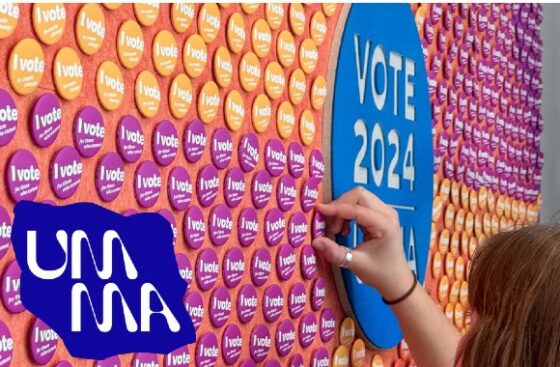
Illegal voting charges against student prompt wider concerns about campus election integrity, civics education
Concerns about election integrity have arisen after a University of Michigan international student’s illegal voting at a campus polling site highlighted risks of same-day registration fraud and inadequate voter verification processes.
The College Fix recently obtained court records in the case of Haoxiang “Neil” Gao that suggest the international student was not well-educated about voting rights and spent less than 15 minutes registering and casting his ballot at the on-campus polling site, which was co-organized by two Democrat donors.
Just hours later, Gao told an election official he was “freaking out” when he realized he had voted illegally. He immediately contacted them in an attempt to take back his ballot – which cannot be done.
“Whether he had malice or was simply trying to do his duty, whether it was intentional fraud or a huge mistake, this is one of my big concerns about same-day voter registration,” political science Professor Samuel Abrams told The College Fix when asked about the case.
“You can’t go retrieve that ballot after it’s been cast,” the Sarah Lawrence College professor said in a recent phone interview. “The macro-problem with same-day registration is it’s ripe for fraud and abuse.”
Two Michigan state lawmakers who spoke with The Fix voiced similar concerns in connection to Gao’s case.
“This wasn’t some one-off mistake,” said Republican state Sen. Jim Runestad, pointing to a Department of State report that found at least 15 people likely illegally voted in Michigan in 2024.
“Far-left special interests and out-of-state money have hijacked our elections by pushing ballot proposals that undermine our election integrity and allow people to register and vote without any verification of citizenship,” Runestad told The Fix in an emailed statement. He called for “a citizen-only voting amendment in order to secure our elections.”
State Sen. Ruth Johnson, a Republican, said voters want reform, but Democrat Gov. Gretchen Whitmer and Secretary of State Jocelyn Benson oppose election integrity efforts. Johnson told The Fix she would like to see the legislature pass House Joint Resolution B, which would require the secretary of state to verify the citizenship of people registering to vote, but Benson opposes it.
No answer from University of Michigan
Meanwhile, no one at the University of Michigan responded to repeated requests for comment about the case and student voter efforts.
The Fix asked if the university is reviewing its student voter registration efforts in light of what happened with Gao. Other questions included how it educates students about voting and civics and whether it believes it could be doing a better job with these topics.
Spokesperson Jeff Karoub did initially respond, directing The Fix to the public affairs team. But neither he nor anyone else on the team responded to follow-up emails over the past week.
The Fix also contacted UMich Votes faculty director Jenna Bednar, and Professors Hannah Smotrich and Stephanie Rowden, co-leads of the Creative Campus Voting Project, asking about Gao’s case, as well as student voter education efforts and the process for helping students register to vote on campus.
Smotrich and Rowden have donated to Democratic candidates, The Fix reported last year. They were involved in turning the university’s Museum of Art into “a satellite location” of the Ann Arbor City Clerk’s Office and a “one stop-shop” for students to register and cast their ballot.
This is where Gao registered and voted on Oct. 27, 2024, according to court records obtained by The Fix through an open records request.
The 19-year-old, a U.S. green card holder and Chinese citizen, lived in America for parts of his elementary and high school education.
In his statement to police and another to the university’s student legal services office, Gao said he honestly believed that, as a green card holder, he was a citizen.
He said he “registered and voted without any prompts or self-doubts. In my self-consciousness I have a vague concept of I can be called as a U.S. citizen as a green card holder and have the right to vote like everyone … just like every time I landed in the United States, I was in the same lane as citizens at customs,” according to the intake document from the campus legal services office.
MORE: Chinese UMich student who illegally voted has fled the country: feds
Gao described what happened on Oct. 27 when he walked past the university’s Museum of Art, where a voter registration and polling place was set up:
“A lady asked me if I am here to register or to vote, before I said anything and was still figuring out what is the relationship between registering and voting, she passed me a form and a pen. I took it naturally without asking myself what I am doing and started filling out the form.”
Gao said the form was “easy,” he didn’t look at the small print, and he signed it. He used his “M-Card Wolverine Access” student ID when he registered, according to the police report.
“It all happened and ended within 15 minutes,” Gao said.
Gao either did not indicate how he voted or what he said was redacted from public records. Historically, college students lean heavily Democrat, and campuses tend to be a target of leftist advocacy groups and campaigns.
‘I’m freaking out because I wasn’t supposed to vote’
Soon afterward, Gao said he had a sinking feeling that he may, in fact, have done something wrong.
After searching online and realizing he’d committed a felony with the possibility of jail time and deportation, he said he had “a total mental breakdown.” He said he called the city election office right away, “hoping to fix it,” later adding, “I know being honest is the right thing to do.”
“I’m freaking out because I wasn’t supposed to vote,” an Ann Arbor city employee said Gao told her over the phone a few hours after casting his ballot, according to the police report.
According to a university CareNetwork report, Gao’s actions weighed heavily on him in the days after he voted, and he spoke of having a “mental breakdown” and made an attempt at self harm that resulted in police being called.
Gao fled the country earlier this year after being charged.
As a result, CBS News Detroit reports he also was “federally charged with flight to avoid prosecution, though the U.S. does not have an extradition treaty with China.” Other charges include false swearing to register to vote and an unqualified elector attempting to vote.
“Though Mr. Gao is also facing federal charges, his state charges are still active and we intend to continue prosecuting the state-level offenses once he is brought back into American custody,” Washtenaw County Prosecuting Attorney Eli Savit told The Fix in an email last week.
Student’s case sign of larger problem
In Michigan, Sen. Johnson believes there are other stories similar to Gao’s that have not come to light.
“We heard many stories about activists being very aggressive trying to get people to vote, who may not have even been eligible to vote. Ultimately, the system needs to have some checks and balances,” she told The Fix.
Affirming this, the Public Interest Legal Foundation, which focuses on election integrity, pointed The Fix to a similar case in Pennsylvania in 2004 when a non-citizen student registered to vote after being prompted “by a third-party drive” on his campus.
“It doesn’t matter that Michigan offers same-day or conventional registration and voting options,” Logan Churchwell, research director at the foundation, told The Fix.
“When an international student engages with Michigan’s election system and checks the application box to say they are a U.S. citizen, they will be able to vote. Michigan is not invested in checking the accuracy of claims of citizenship in voter registration applications,” he said.
Gao’s case also raises questions about how well education institutions are teaching students about basic civics.
“Our civic education is terrible,” Professor Abrams told The Fix.
What’s more, he said proposals that would allow non-citizens to vote have raised confusion in people’s minds. Sometimes, his students are surprised to learn that some criminals forfeit their right to vote, too, Abrams said.
“It’s an important lesson that we should be teaching, who can vote, and we should be teaching in k-12 and higher education as well,” he said.
MORE: UMich art museum hosts ‘fun’ election office led by Democratic donors
IMAGE CAPTION AND CREDIT: A colorful display advertises a voter registration and polling place on the University of Michigan campus; University of Michigan Museum of Art

