
 FEATURED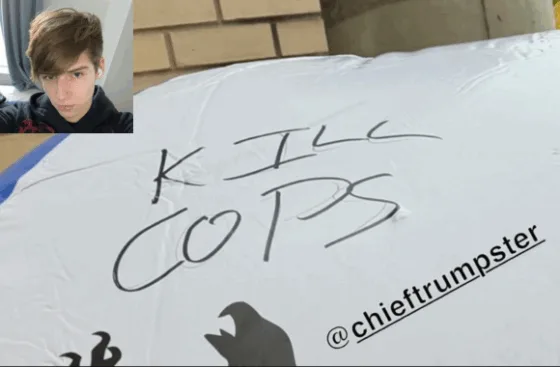
Key Takeaways
- Carnegie Mellon University is investigating a student for allegedly writing violent messages including 'kill cops' and 'kill transphobes' during a free speech event, prompting a response from law enforcement and university officials.
- The messages were allegedly written by a communications director for the campus Democrats during an event hosted by Young Americans for Liberty, which allowed students to express their thoughts on a beach ball.
- The College Republicans expressed concerns about the statements being damaging to the university's community and are awaiting a university response before taking further action.
- A free speech attorney noted that while private universities aren't subject to the First Amendment, they often commit to protecting free speech, and investigations should cease if it's determined that speech is protected.<br>
UPDATED
Carnegie Mellon University is investigating a student who allegedly wrote “kill cops,” “kill transphobes,” and “kill police” during a campus free speech event on Wednesday, Oct. 22.
“CMU is investigating reports of disturbing statements allegedly written by a student during a campus event this week,” the university wrote on X. “CMU Police, Student Affairs and local public safety officials were immediately notified and are taking appropriate action.”
The Pittsburgh university made the comment in response to an X post by an account called “Chief Trumpster,” which included a photo of the ball. Young Americans for Liberty on campus hosted the event, where typically students are invited to write anything they want on a giant beach ball.
The account alleged a student named Ryan Tosh wrote the messages. He is the communications director for the campus Democrats, according to a statement from the College Republicans.
In an email with The Fix, CMU College Republicans President Anthony Cacciato said that the event was held at the Cohen University Center Merson Courtyard and that the messages were written at approximately 2 p.m. and witnessed by two students, including himself.
Cacciato said his club is giving the school an opportunity to respond before it takes any further action, and that the statements are “unbecoming of a student leader and member of the CMU community.”
The Fix reached out to the campus College Democrats for comment on Oct. 24 and Tosh on Oct. 27. Neither has responded.
The regional director for Young Americans for Liberty told The Fix: “In the marketplace of ideas, what you say is exposed to public scrutiny – oftentimes for good reason.”
Nicholas Ellerton said YAL “will continue to advocate for peaceful free expression and the free exchange of ideas between people” and “will always reject any incitement of violence against others.”
A free speech attorney provided the general guidelines schools should follow when investigating speech, though she said she could not comment on this specific case.
“Private institutions are not bound by the First Amendment,” Haley Gluhanich, senior program counsel for the Foundation for Individual Rights and Expression, told The Fix. “However, many private institutions commit themselves to protecting free speech, and [FIRE] would argue that those institutions need to stand by its commitments.”
The Supreme Court has ruled the “First Amendment protects offensive and hateful speech. This includes rhetorical hyperbole and the endorsement of violence.”
However, there are exceptions, such as “true threat.”
This occurs, according to Gluhanich, “when a speaker means to communicate a serious expression of an intent to commit an act of violence against a particular individual or group.”
“Another category of unprotected speech is incitement, which is when a speaker intends to incite or produce imminent lawless action and the speech is likely to incite or produce such action,” she said.
The free speech expert provided further information on how school’s can handle such comments.
“If a university receives a complaint implicating student speech, it should undertake a cursory review of the complaint and determine whether the alleged conduct constitutes protected expression,” she said.
“If so, the university should end the investigation without notifying the accused student,” she said. “If more information is truly needed to establish, for example, what was done or said, thus necessitating an investigation, that may be okay. But the moment the university can determine that the conduct is protected, it must end the investigation.”
Tosh, the College Democrat, is no stranger to conservative events on campus.
Tosh (pictured) previously “staged a solo protest” at a CMU College Republicans table in the wake of the Charlie Kirk assassination. He held a sign that said “Every Republican Has Blood On Their Hands.”
“I wanted to convey that if Republicans really cared about reducing political violence, they wouldn’t be doing what they’ve been doing for decades,” Tosh told The Tartan. “They consistently support easier access to firearms and shrug off assassinations of left-wing figures, only speaking out when one of their own is attacked.”
“I looped through a list I’d written on the back of my sign,” he said of his chanting, “naming things like school shootings, deaths of women denied healthcare, and U.S. arms sales that fuel genocides as examples of political violence.”
Editor’s note: The article has been updated with comment from Young Americans for Liberty.
MORE: DeSantis tells Florida universities to hire Americans first

