FEATURED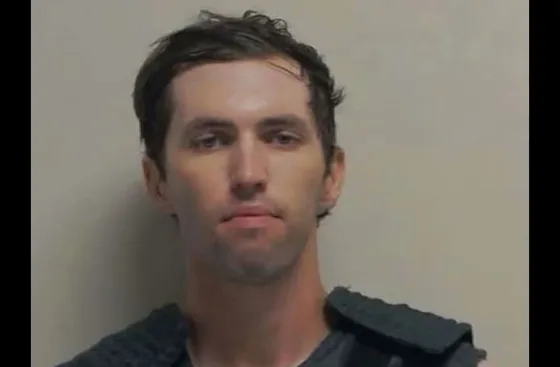
ANALYSIS: University of Utah law professor says Tyler Robinson’s defense will focus on keeping evidence out, avoiding death penalty
Charlie Kirk’s accused killer will focus on avoiding the death penalty and keeping evidence out of admission during a potential trial, a University of Utah legal expert told The College Fix.
Tomorrow is the last day of a preliminary hearing for Tyler Robinson (pictured), who stands accused of murdering Kirk, the founder of Turning Point USA, nearly a year ago at Utah Valley University. A preliminary hearing allows both sides to see the evidence that could be introduced at trial. Judge Tony Graf is expected to rule on whether there is enough evidence to move to trial.
Ahead of the ruling, University of Utah law Professor Paul Cassell spoke to The Fix about potential strategies Robinson’s legal team could take if the case proceeds.
Cassell, a former federal judge in Utah, said the defense is going to focus on questioning the admissibility of evidence, working to get the least amount of evidence admitted to the court as possible.
He also highlighted that the main goal of the defense will come during the penalty phase, which would follow a guilty verdict from the jury. During this phase, Cassell said that the defense will work to get at least one juror to oppose a death penalty verdict, as a unanimous decision is required for the death penalty in Utah.
Cassell told The Fix the defense would attempt a variety of “mitigation strategies” during the penalty phase in order to “prove that the death penalty is not appropriate.” These strategies could include methods such as a psychological evaluation.
The high-profile nature of this capital punishment case could lead to further delay tactics by the defense, Cassell said.
Cassell questioned if Judge Graf was going to be able to move the case along despite almost certain objections from the defense.
The preliminary hearing began on July 6, and oral arguments went until July 10, at which point the judge allowed each side to submit written briefs, as the defense said that “there are some legal issues which the defense would like to brief for the court.”
The last of the briefs was due August 18, and tomorrow marks the last day of oral arguments for the prosecution and defense.
As of Friday, Judge Graf had yet to rule on a motion to bar cameras from the court room, as requested by Robinson’s attorney.
Robinson’s attorneys regularly tried to limit media access during the week-long proceedings in July. During the last hearing in July, Graf ultimately ruled to allow livestreaming but barred the camera operator from capturing the actual evidence.
At every turn the defense requested that evidence be not admitted to the court, not shown to the courtroom, and especially not shown on the livestream. The defense argued that publication could sway a “potential jury pool.” The prosecution pushed for all evidence to be admitted to the courtroom, published, and shown on cameras.
An attorney representing Erika Kirk, the widow of the slain TPUSA founder, argued at one point that she was being denied the right to see evidence during the trial. This occurred after Graf barred the public from seeing evidence on screens.
Judge Graf allowed the majority of the evidence to be admitted during the preliminary hearing and published in all capacities.
However, he blocked some key evidence from being published to the public, including the “enhanced” campus surveillance footage. Authorities had enhanced the video to make it easier to see.
The next step, if Graf rules to move forward, would be jury selection.
MORE: At least 14 TPUSA clubs were blocked this year after Kirk assassination