EDITORS' CORNER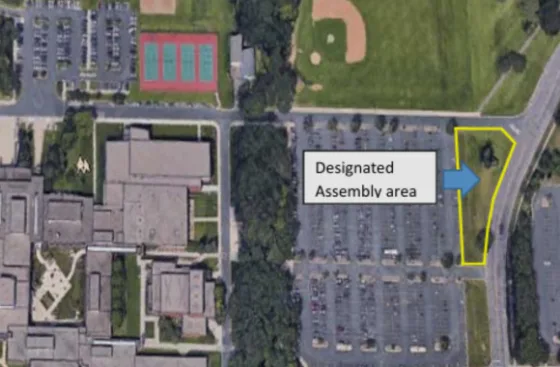
You can tell people not to be Catholic, but cannot try to convert them
Christians hoping to engage with Anoka-Ramsey Community College students must do so on two roads that are 800 feet from campus buildings.
Furthermore, speakers can hand out materials, but are not allowed to debate Christian doctrine or ask students to attend a local Mass.
The taxpayer-funded community college in Coon Rapids, Minn. designates just two areas for “non-affiliated organizations” to engage with students.
One section is on the corner of two streets that lead into campus, but which is separated from the main complex of buildings by a parking lot. The distance between the “assembly area” and an actual building is approximately 800 feet, according to Google Maps.
Groups can also get a little closer by standing by a softball field on the other side of the parking lot, though they are not allowed to cross the street. The policy effectively means organizations can only engage with softball players or people coming to watch practice.
As expected, the burdensome rules drew criticism from the Foundation for Individual Rights and Expression, which urged the school to fix its policies at this campus and another location.
The “ban on proselytizing is flatly unconstitutional,” FIRE explained in an April 3 letter. Likewise, the “one-week notice requirement and restrictive designated expression and assembly areas both raise serious First Amendment concerns.”
Anoka-Ramsey officials do not define what constitutes “proselytizing,” but FIRE takes its ordinary meaning, which is recruiting someone to join a church or cause.
“The rule therefore prohibits non-affiliated individuals from advocating in favor of an ideology or cause—especially religious ones—while allowing them to express any other view, including harshly arguing against an ideology or cause,” Program Counsel Brennen VanderVeen wrote.
The ban only applies to certain views, so this amounts to “viewpoint discrimination.”
Under the prohibition, someone could tell people to abandon their Baptist or Catholic faith, for example, and they would not run afoul of the guidelines. But if a local minister or priest wanted to encourage students to join their nearby church for a Bible study or learn about getting baptized, this would violate the rules.
Court precedent that applies to Minnesota has affirmed that viewpoint discrimination is unconstitutional, the free speech group wrote.
“The Establishment Clause does not require—and does not justify—public entities restricting religious speech, and it is well-established that religious speech—including proselytizing—does not receive lesser protection,” VanderVeen, the free speech attorney, told the school.
FIRE asked for a response by April 17 and offered to help the school revise its policies pro bono.