BUZZ
BUZZ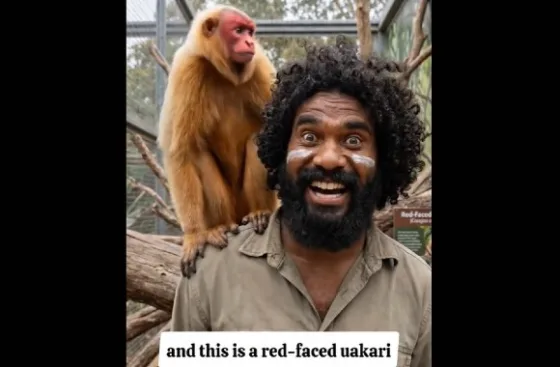
AI-generated characters form ‘a new type of cultural appropriation,’ Australian scholar says
New problems with racism and “cultural appropriation” are arising online due to AI, a Macquarie University scholar wrote recently, pointing to a popular AI-generated TikTok channel about Australian animals.
The “Bush Legend” channel has an AI “Aboriginal man” as its host – “sometimes painted up in ochre, other times in an all khaki outfit – as he introduces different native animals and facts about them,” Tamika Worrell wrote at The Conversation.
However, it’s not known if the human beings behind the channel are Aboriginal, the senior lecturer wrote. Worrell works in the Department of Critical Indigenous Studies at the university in New South Wales.
“It forms a new type of cultural appropriation, one that Indigenous peoples are increasingly concerned about,” she wrote, continuing:
“Indigenous peoples have long fought to tell our own stories. AI poses another way in which our self determination is diminished or removed completely. It also serves as a way for non-Indigenous people to distance themselves from actual Indigenous peoples by allowing them to engage with content which is fabricated and, often, more palatable.”
Worrell likened these AI generated characters to blackface, although she spelled it “blakface.” Basically, the alternate spelling represents racism against Indigenous people instead of African Americans.
“Non-Indigenous people and entities are able to create Indigenous personas through AI, often grounded in stereotypical representations that both amalgamate and appropriate cultures,” she wrote.
With the “Bush Legend” channel, examples include “wearing cultural jewellery” and having “ochre painted on his skin,” the scholar continued.
“This forms a new type of appropriation, that extends on the violence that Indigenous peoples already experience in the digital realm, particularly on social media. The theft of Indigenous knowledge for generative AI forms a new type of algorithmic settler colonialism, impacting Indigenous self-determination,” she wrote.
Worrell said such content also can prompt racist remarks online that, although directed at AI-generated characters, can hurt real human beings.
“While the Bush Legend is not real nor culturally grounded, it too is not immune to online racism,” she wrote, later adding, “While this does not impact the creator, it does impact Indigenous peoples who are reading the comments.”
She concluded by recommending people “take a moment to consider the source” and ask themselves if TikTok videos are AI generated.
“Is this where my support should be?” Worrell wrote, urging people instead to “support actual Indigenous people sharing knowledge online.”