FEATURED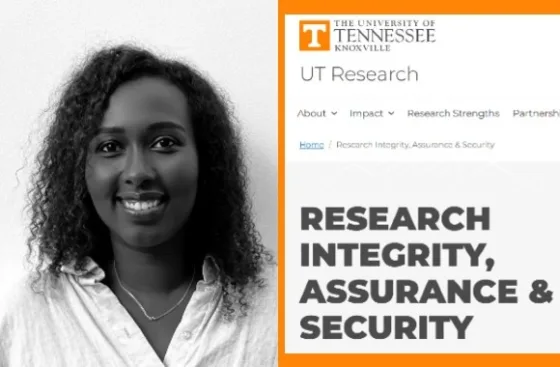
Lawsuit alleges the public university’s Institutional Review Board violates students’ free speech
Lawyers for a University of Tennessee PhD student hope their client’s case, scheduled for trial next year, will reshape how public universities regulate social science research through academic oversight and the authority of Institutional Review Boards.
The case, Issak v. University of Tennessee, centers on Idil Issak, a PhD student whose anthropology research involved interviewing Ethiopian domestic workers in the United Arab Emirates. After the university’s Institutional Review Board repeatedly delayed and restricted her project, Issak filed her lawsuit, arguing that the mandatory research review violated her First Amendment rights.
At the center of the case is a constitutional question: Is interview-based academic research protected speech?
“Ms. Issak’s research consists solely of speech: Ms. Issak’s speech with domesticated workers who opt to speak with her; the women’s speech to Ms. Issak about their experiences as domesticated workers; and Ms. Issak’s speech in her dissertation,” attorney Margot Cleveland told The College Fix in a recent interview.
Issak is represented by the New Civil Liberties Alliance with Cleveland as the lead attorney.
According to the lawsuit, UT Knoxville’s Institutional Review Board raised concerns about risk, cultural sensitivity, and the framing of Issak’s research on Ethiopian domestic workers in the United Arab Emirates.
The complaint alleges the board repeatedly required revisions to her dissertation project, including narrowing its scope and obtaining letters addressing the study’s “cultural appropriateness” before Issak could conduct interviews.
The trial is scheduled for May 2027, and it’s been over three years since Issak first submitted her research proposal, according to her lawsuit.
The university media relations office declined The Fix’s request for comment on the lawsuit this week, stating that it “does not comment on matters of pending or active litigation.”
According to the lawsuit, filed in June of last year, labeling interviews and conversations as “research” does not eliminate constitutional protections for speech. If courts ultimately agree, the decision could dramatically narrow the authority of these review boards over many forms of social science research conducted at public universities.
Issak’s attorneys argue that a recent U.S. Supreme Court decision strengthens their case significantly.
In Chiles v. Salazar, an 8–1 decision issued earlier this year, the court ruled that Colorado’s ban on conversion therapy regulated speech rather than conduct and therefore triggered heightened constitutional scrutiny.
Issak’s legal team believes the ruling also should apply to university oversight of communicative research. Quoting the opinion, Cleveland noted that “the spoken word is perhaps the quintessential form of protected speech.”
Using another line from the ruling, Cleveland emphasizes how the “First Amendment is no word game.”
University research review boards were originally established to protect human research participants and make sure research is conducted ethically. Today, most universities require IRB approval for a wide range of studies involving human subjects, including interviews, surveys, and observational research.
“Nearly every professor has a story of the IRB delaying their project, acting as the ‘methods police’ and forcing them to make unnecessary changes,” former psychology professor and education researcher Russell Warne told The College Fix.
Warne recently wrote an article published by the James G. Martin Center, “A Little-Known Lawsuit May Weaken University Ethics Boards,” which examines the lawsuit and the common frustrations with ethics review systems among researchers.
According to Warne, delays caused by the review boards can alter methodologies, increase costs, and discourage valuable scholarship without meaningfully improving participant safety.
“Communicating to people is inherently different from doing something to their bodies,” he told The Fix in a recent email.
Warne argues that the origins of Institutional Review Boards explain much of the current tension. The oversight system was designed largely in response to dangerous medical experimentation, where researchers could physically harm participants. Applying those same standards to interviews and surveys, he argues, imposes unnecessary governance on research that often carries minimal risk.
Still, defenders of the oversight boards argue that even non-medical research can expose participants to emotional distress, reputational harm, or privacy violations, particularly when studies involve vulnerable populations or politically sensitive topics.
Warne acknowledged those concerns but said existing legal systems already provide accountability for researchers who behave unethically.
“A devil’s advocate could argue that the harm from social science research might not be physical, but it exists nonetheless,” he said. “That is true, but American society already has ways to handle this type of harm: civil lawsuits and criminal charges.”
Even if Issak’s case prevails, experts note that the case would not eliminate IRBs. Medical studies, federally funded research, animal research, and projects involving physical interventions would remain subject to ethics review requirements. Instead, the dispute centers on a narrower category of speech activities in research, such as interviews, surveys, and oral histories.
For critics of current research review practices, the potential constitutional implications of Issak’s case are significant.
“Once the issue of IRB supervision is seen as a free speech issue, then any argument for government monitoring of research immediately becomes an argument for government-mandated censorship,” Warne told The Fix.
Editor’s note: College Fix contributor Drew DiMeglio contributed to this report.
MORE: Indiana U. professor says he was denied emeritus status after posting about male IQ