
 FEATURED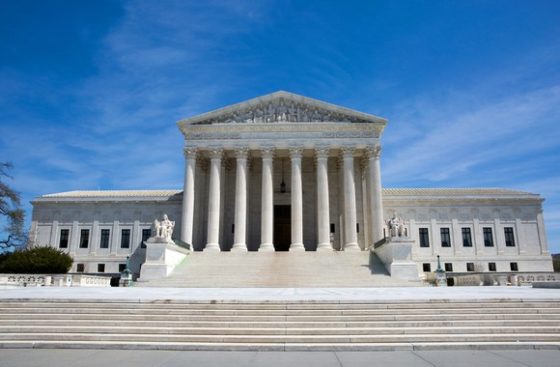
A conservative UT Austin finance professor has petitioned the Supreme Court to review his lawsuit, arguing that administrative threats that suppressed his free speech activity constitute unconstitutional retaliation — even though he has not been demoted or officially censured.
The petition for review describes Professor Richard Lowery as “an outspoken professor” who “has a history of speaking, posting, and publishing on controversial topics such as DEI (diversity, equity, and inclusion), affirmative action, academic freedom, viewpoint diversity, and capitalism.”
The request to the high court comes after the U.S. Court of Appeals for the Fifth Circuit in October upheld the dismissal of the case, affirming a lower court’s decision that Lowery did not suffer from any real administrative retaliation for his outspokenness aside from “grumblings” and “informal pressure.”
“University of Texas officials threatened Professor Richard Lowery with reduced pay, loss of a research post, and other consequences, if he did not stop publicly criticizing the UT administration. Wishing to avoid those outcomes, Lowery self-censored,” Lowery’s Supreme Court petition states.
The petition claims court precedent has established that employer threats suffice to establish a First Amendment retaliation claim “if they would dissuade a reasonable employee from speaking,” calling the Fifth Circuit “one of two outlier courts that require a completed adverse action, such as a discharge, demotion, or reprimand.”
“The question presented is whether a public employer’s threats against an employee can suffice to establish a First Amendment retaliation claim, if those threats would dissuade a reasonable employee from speaking on a matter of public importance,” the petition states.
Del Kolde, senior attorney at the Institute for Free Speech and the attorney representing Lowery, told The College Fix in an interview that this case is about what kind of punishments can be imposed “by a public employer on a public employee.”
He added “the Supreme Court must intervene and make the standard uniform throughout the country.”
“It shouldn’t be the case that university professors or other public employees [cannot] criticize public officials,” Kolde said.
Representatives from UT Austin’s media relations department did not respond to requests for comment.
The lawsuit arises from a dispute over the creation of a think tank called the Liberty Institute.
“The idea was to create an independent institute at UT to promote viewpoint diversity,” Kolde told The Fix. “It would take a market-based approach to policy issues and get away from DEI and critical theory about privilege at UT.”
Along with a few colleagues, Lowery was able to secure $6 million in funding from the Texas legislature and approval from Jay Hartzell, UT’s president. Once the funding was secured, Lowery alleges in the petition, Hartzell “took over the project, and in [Lowery’s] view, watered down and undermined the independence of the Liberty Institute,” Kolde told The Fix.
The Liberty Institute has since become the Civitas Institute at UT.
One particularly upsetting remark of Lowery’s to the university came during a podcast in July 2022, during which Lowery said “the sole qualification for being a president of a university in a red state is that you’re good at lying to Republicans.”
Following the podcast remarks, a UT department head said the university “need[ed] to do something” about Lowery. Soon after, the administration met with Lowery with the goal of silencing him. In the words of the petition, UT officials “threatened Lowery’s pay, a valuable institute affiliation, and his access to research opportunities, if he did not tone down or stop his critical speech.” At one point, the administration “placed him under police surveillance.”
“The problem is that threats are very effective,” Kolde said. “Most normal employees have a mortgage to pay and a family to support, so when you’re threatened by your employer, you’re going to shut up, and that’s what happened here.”
Lowery stopped posting to social media in August 2022, and has not made a podcast appearance since July 2022.
However, the university has “denied wrongdoing and maintained that Lowery had not experienced any adverse employment action,” according to Duke University’s free speech database.
“Officials noted that he had remained in his position, continued to receive salary increases, and had not faced formal discipline. They argued that disagreements or criticism from administrators did not amount to a constitutional violation, and that the statements Lowery described did not rise to the level of coercion or retaliation prohibited by the First Amendment,” it states.
Zachary Greenberg, faculty legal defense fund counsel at the Foundation for Individual Rights and Expression, agreed with Kolde that Lowery’s actions were reasonable.
“It’s reasonable for any employee to stop speaking when their employer threatens them with punishment for speaking out,” Greenberg told The Fix. “Such threats deter expressive activity and should be enough to constitute retaliation under the First Amendment.”
As a critic of both his employers in particular and higher education’s left-leaning bent in general, Lowery was active on Twitter and often quoted in news articles up until August 2022, when he chose to self-censor out of fear, the lawsuit contends, The College Fix previously reported.
Lowery’s comments can be found in The Hill, The College Fix, Houston Chronicle, Ft. Worth Star-Telegram, Washington Times and other outlets.
Lowery had sued the university in February 2023, arguing the university unconstitutionally retaliated against him and that their threats chilled his speech.
“It’s a question of what kind of adverse action is enough to make a retaliation claim,” Kolde told The Fix. “Every other circuit except the Fifth and Eleventh has said the test is basically the same: something that would keep a reasonable employee from speaking is enough to go to court.”
“The Fifth Circuit said [threats to employment] are just ‘hot air,’” Kolde said. “They’re not going to fix it themselves – only the Supreme Court can fix this.”
The stakes represent a growing trend among public universities, Greenberg said.
“We’re seeing more cases involving faculty punished for criticizing their universities, which the institutions see as disruptive or harmful to their reputations,” he said.
Even if there is reputational harm to the university, undermining the First Amendment is not an option, Greenberg added.
“Faculty criticism of their universities is protected by academic freedom and free speech principles,” he said. “Universities shouldn’t retaliate against professors for such criticism.”
The case now comes before the court, which will decide whether to hear Lowery’s case before its term ends in June.
In a separate case, Lowery previously lost an appeal to the Fifth Circuit against Texas A&M University over alleged discrimination in its hiring practices after it did not hire him for a position. He has not appealed that ruling to the Supreme Court.
MORE: Kent State U. professor caught on camera: ‘They want to keep the white men in power’

