FEATURED
‘Title IX’s creation and history have always included employees,’ expert says
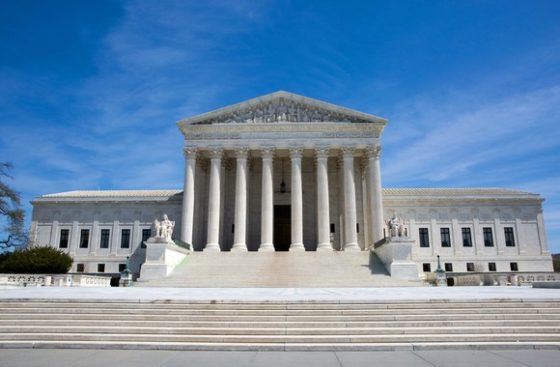
The U.S. Supreme Court will soon decide the future of sex-based discrimination in higher education.
Later this month, the Court will hear arguments in Crowther v. Board of Regents of the University System of Georgia, which deals with “whether Title IX provides employees of federally funded educational institutions a private right of action to sue for sex discrimination in employment,” according to SCOTUS.
The case involves the Board of Regents of the University System of Georgia and two former employees who allege workplace retaliation.
The employees include former Augusta University professor Thomas Crowther, who was reassigned and later dismissed in 2020, and former Georgia Tech women’s basketball coach MaChelle Joseph. Joseph was fired in 2019 after filing an internal complaint alleging the university discriminated against her and her program.
This case was submitted to SCOTUS following a ruling against Crowther and Joseph in the Eleventh Circuit Court of Appeals in November 2024.
The SCOTUS grant states that this case will revolve around Title IX, which “prohibits federally funded educational institutions from discriminating on the basis of sex.”
Shiwali Patel, spokesperson for the National Women’s Law Center, told The College Fix that not ruling in favor of Crowther could upend the purpose of Title IX.
“Congress wrote Title IX to reach a wide range of discrimination against a broad class of people, including women working in education,” Patel said.
Patel, the Senior Director of Education Justice, is concerned with how SCOTUS could potentially overlook the history of Title IX when deciding this case.
Patel told The Fix that “When Congress created Title IX decades ago, it began by holding hearings cataloging the experiences of employment discrimination that women faced in academia.”
“Title IX’s creation and history have always included employees,” Patel said.
Patel said that not allowing employees to pursue private action under Title IX “would break from the statute’s text, its history, and precedent.”
“If the Supreme Court decides employees of educational institutions cannot sue for sex-based discrimination, that would be a significant departure of the longstanding understanding and application of Title IX,” Patel added.
Patel distinguished between the purposes of Title VII and Title IX, as both deal with sex discrimination, but only Title IX currently affords a streamlined process for private action.
Patel noted that “Title VII protects workers from sex discrimination, but it also requires that they first go through the EEOC to file a complaint, in addition to other procedural hurdles.”
“Restricting Title IX’s protections only creates more barriers for school employees who experience sex discrimination to pursue justice,” Patel said.
For guiding its future decision in Crowther, SCOTUS will reference two previous cases: Cannon v. University of Chicago and Jackson v. Birmingham Board of Education.
Cannon was concerned with whether Title IX allows a right of private action for lawsuits, despite no explicit authorization in the text of the Code itself.
“This Court held that Title IX is privately enforceable by victims of discrimination through an implied right of action,” the SCOTUS website says.
Jackson, on the other hand, involved one of the most influential lawsuits under the Cannon ruling.
In that case, Roderick Jackson alleged that he was being discriminated against because of his sex, and when the school retaliated, he filed a lawsuit.
The Court decided in favor of Jackson, holding “that employees of federally funded educational institutions may invoke Title IX’s implied private right of action to bring claims for retaliation.”
In using these two cases to help guide its decision, SCOTUS is drawing from its own precedent that already twice confirms a right of private action for sex discrimination lawsuits contained in Title IX.
SCOTUS will hear arguments for Crowther on Nov. 30.
The College Fix reached out to the Constitutional Accountability Center, the Equal Protection Project, the Georgia Institute of Technology, and the University System of Georgia for insight. None responded.
The Fix additionally reached out to the Board of Regents of the University System of Georgia and the Lead Attorneys of the Board of Regents of the University System of Georgia. None responded.
The Fix was unable to locate contact information for Professors Thomas Crowther and MaChelle Joseph.