BUZZ
BUZZ
Key Takeaways
- Six Democratic lawmakers released a video reminding military personnel they can refuse illegal orders, though specific illegal orders from Trump were not identified; one representative said she wasn't aware of any illegal orders.
- UMass Amherst scholars Charli Carpenter and Geraldine Santoso discuss ethical dilemmas faced by military members regarding illegal orders, noting many service members believe they have the duty to disobey orders perceived as unlawful.
- A UMass poll reveals that only 9% of active-duty troops would obey any order, with many expressing a duty to disobey orders they consider 'obviously wrong' or 'unconstitutional,' particularly regarding harming civilians.
This past week, six Democratic members of Congress put out a video (below) in which they allegedly remind members of the U.S. military that they can — and must — refuse to follow illegal orders.
So far, none of the six have indicated which orders from President Trump have been illegal, opting to fall back on a it’s just a reminder narrative.
One of the six, Rep. Elissa Slotkin, admitted “To my knowledge I am not aware of things that are illegal.” She instead used “A Few Good Men” and the Nuremberg trials as examples of what U.S. military personnel may face.
But Charli Carpenter and Geraldine Santoso, “scholars of international relations” at the University of Massachusetts Amherst, use in The Conversation dodgy phrases such as “what many observers say,” “legality has been questioned,” and “alarmed international human rights observers” to, like the congresspeople, cast doubt upon the president’s duties as commander-in-chief.
We want to speak directly to members of the Military and the Intelligence Community.
— Sen. Elissa Slotkin (@SenatorSlotkin) November 18, 2025
The American people need you to stand up for our laws and our Constitution.
Don’t give up the ship. pic.twitter.com/N8lW0EpQ7r
The pair ask “When a sitting commander in chief authorizes acts like these, which many assert are clear violations of the law, men and women in uniform face an ethical dilemma: How should they respond to an order they believe is illegal?”
In a poll they conducted at the UMass Amherst Human Security Lab, Carpenter and Santoso found the vast majority of U.S. service members know they’re not supposed to just blindly follow any order.
Of the 818 active-duty troops we surveyed, just 9% stated that they would “obey any order.” Only 9% “didn’t know,” and only 2% had “no comment.”
When asked to describe unlawful orders in their own words, about 25% of respondents wrote about their duty to disobey orders that were “obviously wrong,” “obviously criminal” or “obviously unconstitutional.”
Just over 40% of respondents listed specific examples of orders they would feel compelled to disobey.
The most common unprompted response, cited by 26% of those surveyed, was “harming civilians,” while another 15% of respondents gave a variety of other examples of violations of duty and law, such as “torturing prisoners” and “harming U.S. troops.”
(Oddly enough regarding torture, several very outspoken critics of George W. Bush’s/Dick Cheney’s invasion of Iraq were in attendance at the latter’s funeral last week, including Al Gore, Nancy Pelosi, and Joe Biden.)
What’s worrisome in the scholars’ poll is that some military members — who take an oath to the U.S. Constitution — “no longer trust U.S. law as useful guidance” and even “emphasized international law as a standard of illegality” than U.S. law.
Selected Trump-critical poll responses claim “Trump will issue illegal orders,” that “new laws will allow” such, and that they’re “not required to obey such laws.”
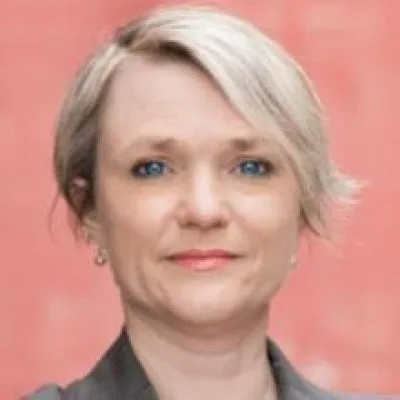
In a study from 2020 in which Carpenter (pictured) asked troops about the “war crime” of dropping a nuclear bomb on a civilian city, 69 percent said they would follow the order.
But when “asked to think about and comment on the duty to disobey unlawful orders” before dropping the bomb, that percentage fell to 56 percent. (Is there a purely military city? What is the overall wartime situation upon which this question is based?)
According to her faculty page, Carpenter researches “the politics of war law, transnational advocacy networks, protection of civilians, humanitarian disarmament, and the role of popular culture in global human security policy.” She has “a particular interest in the gap between intentions and outcomes among advocates of human security.”
Santoso is a PhD student who researches “climate security, migration, and climate coloniality.”
MORE: Professor says she spends ‘a third’ of ‘working hours’ fighting Trump ‘terrorism’