FEATURED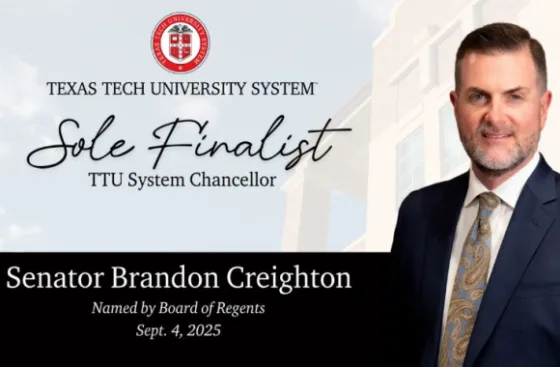
Key Takeaways
- Texas state Sen. Brandon Creighton has been selected as the sole finalist for chancellor of the Texas Tech University System.
- Creighton, known for dismantling DEI programs, represents a broader trend of merit-based values in public universities.
- Critics express concern over the impact of Creighton's legislative actions on academic freedom and shared governance, particularly his role in making it easier to revoke tenure for professors.
In a move reflecting the shifting landscape in higher education, Texas state Sen. Brandon Creighton has been selected as the sole finalist for chancellor of the Texas Tech University System.
Creighton, a Republican lawmaker known for authoring legislation that dismantled diversity, equity, and inclusion programs in the Lone Star state, is set to take the leadership later this month after the Board of Regents officially confirms its decision.
Lieutenant Gov. Dan Patrick said the pick represents a new approach to higher education in Texas.
”There’s a whole new look at least in Texas of who [university leaders] think should lead universities, people with legislative experience, people who have been accountable to the people, people who have a record,” Patrick told the Texas Tribune. “You don’t just have to have nine letters behind your name and some education degree to run a university when it really takes more than just that.”
Texas Tech and Sen. Creighton did not respond to multiple requests for comment.
Creighton’s selection signals a broader trend of public university systems aligning themselves with leadership that supports merit-based values, some observers say.
In 2023, Creighton led the charge on a ban of DEI initiatives in Texas public colleges and universities, arguing that such programs prioritize identity politics over academic excellence.
Following raucous pro-palestinian protests at the University of Texas at Austin in 2024, Creighton authored a law, which went into effect this month, restricting expressive activities on public campuses from 10 p.m. to 8 a.m., a measure aimed at maintaining order amid rising tensions.
However, critics had argued the law is overly broad and potentially unconstitutional, as it could limit non-disruptive speech.
This year, Creighton championed Senate Bill 37, which empowers university presidents to oversee faculty senates, limits consecutive terms for faculty leaders, and establishes an ombudsman to enforce compliance with anti-DEI policies and other reforms.
The Texas Tech University system includes Texas Tech University, Texas Tech University Health Sciences Center, Angelo State University, Texas Tech University Health Sciences Center El Paso and Midwestern State University.
Creighton’s pending appointment is not without criticism.
The Texas chapter of the American Association of University Professors stated: “We have concerns about the future of academic freedom and shared governance in the Texas Tech University System given the positions Sen. Creighton has taken in the legislature.”
As the Texas Tribune reported, Creighton also co-authored Senate Bill 18, a law that “made it easier for universities to revoke tenure, which provides job protections to professors so they can teach and research without fear of reprisal.”
Supporters had argued the change was necessary to hold professors accountable for efforts to indoctrinate students with progressive ideology, the Tribune reported.
Andrew Martin, an art professor and leader of Texas Tech’s AAUP chapter, also shared his concerns. Speaking personally, he told Inside Higher Ed the chapter opposed some of Creighton’s legislation.
“Our hope now is that Sen. Creighton… will spend time learning more about the campuses in the TTU System,” Martin said.
The Texas Tech Board of Regents, appointed by Gov. Greg Abbott and confirmed by the Senate, applauded Creighton’s alignment with the system’s conservative ethos.
But they also stated he is the right man for the job for other reasons, too.
“He has partnered with West Texas leaders on higher education, energy, agriculture and economic development priorities throughout his nearly 20 years in the Texas Legislature. His record reflects a strong understanding of the culture, history and challenges of rural Texas, and he has consistently advanced policies that support access to higher education, rural health care and workforce development in the region,” a board news release states.
MORE: Texas A&M president quits after backlash over DEI, gender-identity lessons