FEATURED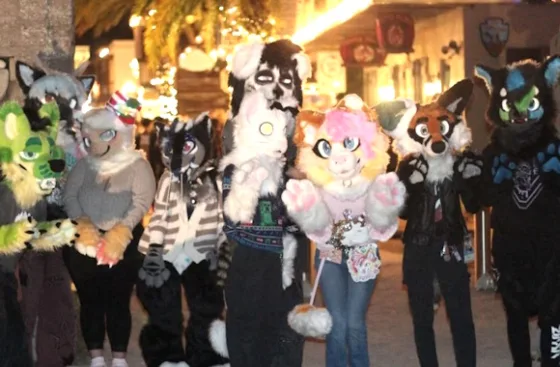
Not ‘all about sex’: Some experts, students defend college furry clubs’ creative core
A student group at the State University of New York at Plattsburgh dedicated to furry fandom was recently approved by its student government, joining several dozen such campus clubs that have popped up at colleges and universities across the country in recent years.
A college campus furry club is a student organization in which students who enjoy dressing up as life-sized animals, or wear accessories like ears or tails, and converge to socialize, share artwork, and host events or workshops to enjoy camaraderie.
A small subset, less than 10 percent, also reportedly either feel some sort of spiritual connection to animals or believe they are an animal trapped in a human body.
At SUNY Plattsburgh, the student government voted 11-1 on Nov. 16 to recognize Plattsfur, a club with 17 members, as a safe space for students to socialize and explore interests around human-shaped animals, the student newspaper reported.
The club’s formation started when some students discovered they shared an interest in the fandom and, after outreach, found more furries scattered across campus, it reported.
“We aim to not only have social dialogs, but also incorporate certain elements of crafts as well as arts, and not only teach methods, but also invite people to explore stuff that they may not have before,” one student told the Cardinal Points newspaper.
Plattsfur is no outlier. There’s been a growing number of furry clubs at U.S. colleges and universities — several dozen at least — reflecting the fandom’s growing popularity among college students.
Research from the International Anthropomorphic Research Project, also known as Furscience, found that 60 percent of furries are enrolled in higher education, and more than 75 percent of furries are under the age of 25.
A 2015 USA Today report noted the community’s expansion on campuses, driven by social media. The fandom boasts an estimated 100,000 to 1 million members worldwide, many reportedly drawn to its emphasis on creativity and belonging.
WikiFur’s list of educational furry groups documents dozens of official chapters, from the University of California, Berkeley’s longstanding club to newer ones at the University of Tennessee, Knoxville and California Polytechnic State University (Cal Poly), approved in March.
Experts attribute the rise to destigmatization efforts.
Psychologist Kathy Gerbasi, professor emerita at SUNY Niagara and a research partner with Furscience, told The College Fix recent studies have “somewhat destigmatized” the fandom, making it “less stigmatizing [and] risky to come out as a furry.”
As a social psychologist, Gerbasi said that humans naturally seek groups with shared interests, much like anime or e-sports clubs.
“People tend to want to associate with similar others,” she said via email. “So it would be expected that students join groups… that represent others with common interests.”
Gerbasi said the fandom’s most persistent myth is that it’s “all about sex” — but that is not true.
“That is not supported by our data,” she said. “Membership in the furry fandom is based on a common interest in anthropomorphic characters and related art.”
At the University of Central Florida, the Knights of the Paw club was the only one that agreed to an interview out of 12 furry clubs that The College Fix contacted.
With 50 to 110 attendees at weekly meetings, the group centers on three pillars: community, creativity, and philanthropy, its president told The Fix via email.
The weekly gatherings alternate between on-campus workshops, lectures, and socials, and off-campus park or restaurant meetups. They recently engaged in a Halloween parade, hosted a Friendsgiving, and took part in a Christmas field trip.
“We have meetings at our campus’ nature trails and enjoy each other’s company, chatting while we explore the nature around us,” said club member Ciara, who asked that her last name not be used.
The Knights also host annual charity drives, like raising $600 for the Children’s Miracle Network in 2023 and crafting dog toys for the Pet Alliance of Greater Orlando. Partial proceeds from socials also support animal welfare.
One of its members said he thinks furry clubs get a bad rap.
“I think a lot of people hear someone’s a furry, and then assume that’s all there is to them and put them in a box. That couldn’t be further from the truth,” said Jack, a UCF student who also asked that his last name not be used.
“People are best when they’re complicated, and for me, being a furry is just another part of a whole. I just as equally enjoy paddleboarding, volunteering at a pet rescue, and belting country music,” he told The Fix.
Another told The Fix she feels being a part of the club has helped her overcome her shyness.
“There have been a few times where we’ve gotten negative reactions on campus. … People would bark at us or make mocking animal noises. … Our usual response is to continue doing our own things, showing that our club is just here to have fun,” said the student, who also requested anonymity.
“When there’s a personal encounter, I like to generally educate people on what our club is actually about, the social space that it provides and the realm of creativity it opens for others.”
Furry clubs at Southern Illinois University, UCLA, University of Maryland, Cal Poly, Kent State, Iowa State, SUNY Plattsburgh, Louisiana State University, and University of Tennessee did not answer multiple requests for comment. Kent State agreed to an interview and later declined to comment.