FEATURED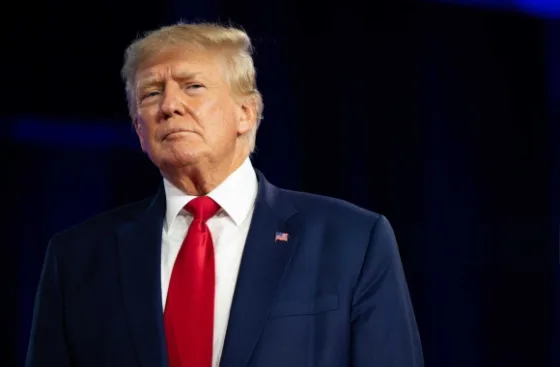
ANALYSIS: Civic engagement or data laundering? Here’s why Trump’s Education Department has cracked down on a nationwide student voting study.
The Department of Education has launched an investigation into whether universities that share students’ personal data with a third-party voting firm, ostensibly for the purpose of studying voting habits and educational opportunities, not only violate federal privacy laws but also contribute to election interference.
In announcing the probe earlier this month, the department cited “multiple reports alleging that the process of compiling [the] data involves illegally sharing college students’ data with third parties to influence elections.”
The review comes on the heels of a major series of election integrity investigative reports by The College Fix leading up to the 2024 election that flagged several issues, including widespread concern about the voting-data study, launched during the Obama administration as part of a “call to action.”
The study encompassed student data from over 1,000 U.S. colleges and universities.
One big contention is how the third-party vendor that distills the information may retain the valuable data of college-aged students, who mostly vote Democrat — and there is no mechanism for ensuring the data is deleted or not used in some way for get-out-the-vote efforts.
“American colleges and universities should be focused on teaching, learning, and research – not influencing elections,” stated Education Secretary Linda McMahon in announcing the probe.
The Student Privacy Policy Office will investigate the issue to protect students’ private data and ensure campuses comply with federal privacy laws, she said.
Ill-gotten gains
The controversy centers on the National Study of Learning, Voting, and Engagement, or NSLVE, housed at Tufts University’s Institute for Democracy in Higher Education.
Under the Biden administration, the Education Department encouraged universities to take part in the study to “use their own campus reports to see where there are gaps among their students in registering, and all schools can use the national dataset to determine target populations.”
But Trump’s Education Department this month rescinded those Biden policies, agreeing with watchdogs who voiced concern that Tufts’ study used wrongfully obtained student information.
FERPA, which gives students the right to protect their information, contains a “study exception” that allows the release of their personally identifiable information if it is used to “improve instruction.”
Tufts previously defended the NSLVE data and reports as a way of measuring educating for democracy, that the study serves as a proxy measure for student political learning.
Watchdogs have repeatedly argued the voting study does not support educational instruction, and Trump’s Education Department agreed, telling universities this month that if they utilize NSLVE data they may be found in violation of the Family Educational Rights and Privacy Act.
Previous red flags
The controversy was first flagged in July 2023 by Verity Vote in its nine-page report describing how the national voting study, which got university administrators from across the country to agree to release students’ enrollment data from the National Student Clearinghouse, where it’s kept, to a voter-data company.
“College and university administrators have, for more than a decade, authorized the disclosure of this sensitive and highly valuable private data of students to a Democrat-exclusive voter data company,” the report stated.
“The third party vendor of choice from inception until recently has been Catalist, the Democrat’s exclusive voter data provider. Tufts maintains a relationship with Catalist but also has an agreement with L2 Political for analysis of the NSC data.”
A Tufts University spokesman previously told The College Fix the institute switched to L2 in 2018.
A College Fix report from July 2024 noted L2 ignored requests to discuss what it does with the student information.
Tufts has said the data collected is “de-identified” by L2 by removing names, identification numbers and month and day of birth, but keeps information such as school attended, major, race, ethnicity, sex, and year of birth. But Verity Vote argued the de-identification is “superficial.”
Cleta Mitchell, a senior legal fellow at the Conservative Partnership Institute, previously told The College Fix that the Democrats had created a clever scheme to access valuable voter data.
“The left has created a very sophisticated system for obtaining valuable, non-public data about each student … without the knowledge or consent of the student,” Mitchell said.
Student engagement versus political agenda
A National Student Clearinghouse spokesperson told The College Fix this month the group “will cooperate fully with the investigation. We continue to uphold our commitment to compliance with the Family Educational Rights and Privacy Act.”
“As a politically neutral 501(c)(3) nonprofit, our mission is to provide trusted data and services to the education and workforce communities, supporting educational success nationwide.”
When asked about how the voting study uses and retains student data, the clearinghouse replied: “NSLVE is designed to encourage student civic engagement rather than advance any political agenda.”
“We are presently reviewing our involvement to ensure the continued integrity and impartiality of our services to institutions,” the clearinghouse spokesperson stated.
The Education Department told universities this month that if it finds any illegal actions have been taken by universities, they will suffer financial consequences.
Efforts applauded, but skepticism remains
Logan Churchwell, a spokesperson for the Public Interest Legal Foundation, told The College Fix the Education Department probe is important for maintaining integrity.
He noted that since the Obama Administration in 2008, “if you exist in a government database, that information would be automatically passed over to voter registration officials – no choice.”
“Programs like NSLVE are patchwork efforts to keep the universal registration goal alive,” Churchwell said, adding a concern regarding individual privacy rights.
Churchwell referenced an older program titled the Electronic Registration Information Center, or ERIC. Research by the Public Interest Legal Foundation revealed that ERIC would send voter registration instructions to ineligible people, such as felons, foreign nationals, and even the deceased.
Churchwell said ERIC “had a side deal… to harvest voter roll, mail performance, and other metrics for its own programming,” which he said was a “serious breach of trust” for many states.
“Transparency is a natural hedge against ‘chill.’ We look forward to seeing the results of this latest investigation,” Churchwell said.