
 FEATURED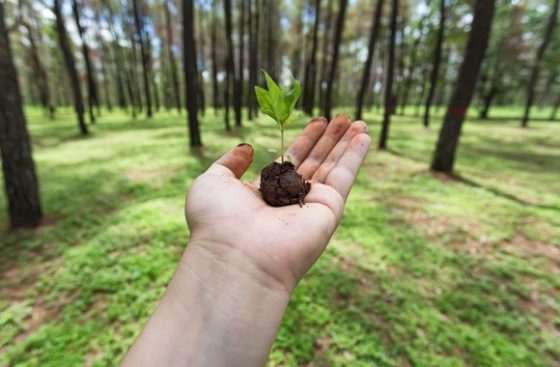
Key Takeaways
- UC Santa Barbara is offering courses that incorporate Native American 'Traditional Ecological Knowledge' into environmental science.
- One class has students create a 'land acknowledgement' and develop a 'plant relative'
- Opinions on the integration of Indigenous knowledge with science are mixed; some scholars see potential benefits, while others argue that cultural beliefs should not replace scientific methodology and are more suited to social sciences.
Two courses that explore environmental science from a Native American, or “Traditional Ecological Knowledge,” perspective at University of California Santa Barbara this fall are adding to an on-going debate about the role of cultural and religious beliefs in science education.
One scholar told The College Fix that scientific education can be enriched by Indigenous knowledge. But others expressed concerns, saying it aligns better with anthropology and sociology than science.
At the public university, the class “Traditional Ecological Knowledge: Honoring All Our Relations” launched in the summer of 2020 under the teaching of doctoral student and Choctaw Nation of Oklahoma member Margaret McMurtrey, according to the Daily Nexus, the university’s student newspaper.
The course description defines Traditional Ecological Knowledge as “Indigenous Peoples’ ways of knowing their relationship to land, air, water, flora, fauna, to each other, and to all beings.”
“Knowledge of these relationships are passed down from generation to generation through stories, life ways, culture, and ceremony,” the description states.
The goal of the class is this: “Through selected readings, guest speakers, and individual research projects students will honor the wisdom and teachings offered by traditional ecological knowledges from many ancestors and relations.”
A similar class, “Traditional Ecological Knowledge Studies,” also is being offered this fall after first launching in 2022, according to the student newspaper.
“Through projects and fieldwork students will become knowledgeable about sustainable Indigenous gardening practices, Indigenous food sovereignty, ethnobotany, Indigenous allyship in outdoor spaces, Chumash culture and history, and forming meaningful connections with land via Indigenous lifeways,” the course description states.
According to the Daily Nexus, students participate in a “plant relative” project in which they “choose a plant in one of the Indigenous garden spaces on campus and build a relationship with it throughout the quarter,” according to the report.
Another project in the class has students create a “land acknowledgement” with their “places of origin,” their current location, and “a pledge for how they will occupy different lands moving forward,” the report states.
The College Fix contacted the university media relations office and McMurtrey twice via email within the past two weeks, asking for more details about the classes and for a copy of the syllabus, but neither responded.
Outside scholars had mixed opinions about the classes and, more widely, efforts in academia to meld together Native American cultural beliefs with science.
Amanda Black, a professor of agriculture and life sciences at Lincoln University in New Zealand who has written about the topic, believes teaching Traditional Ecological Knowledge adds to students’ scientific education.
She told The Fix in a recent email that classes like the one at UCSB remind her that “students can come to science from all walks of life and while it is critical that we teach them fundamental principles of science, adding TEK enriches their learnings.”
While her thoughts on such courses are dependent “on the content of what is being taught and who is teaching,” Black expressed concern that these teaching efforts will face “racism primarily through other people trying to discredit this as a knowledge system that is worthy of teaching.”
Additionally, she said the “Traditional Ecological Knowledge” classes “would be disingenuous if … taught by people not Indigenous to where the knowledge is sourced from.”
Black told The Fix her research has brought her to the belief “that as humans [we] are not separate from the environment, but very much part of it. We need to consider the environment, not just a series of discrete separate processes and mechanisms.”
Another scholar, University of Chicago Professor Emeritus Jerry Coyne has been voicing concerns with academia’s movement regarding Indigenous knowledge and science for years.
When asked about the classes, the evolutionary biologist directed The Fix to a recent article he wrote in response to a group of Indigenous scholars who are advocating for “decoloniz[ing] science.”
“Yes, indigenous people can contribute empirical truths to science, but indigenous ‘science’ almost invariably consists of local knowledge helping people to live in their specific environment … and isn’t generalizable to other places,” Coyne wrote on his blog Why Evolution Is True.
“It does not use the tools of modern science and … is often imbued with nonscientific aspects like ethics, morality, unsubstantiated lore, and supernatural trappings like teleology and myth,” he wrote.
“Yes, some aspects of indigenous ‘science’ can and should be worked into science classes, but most of it should be taught in sociology or anthropology class,” Coyne wrote, adding, “Attempts to create a parity between indigenous knowledge and modern science … have largely failed.”
Michael Matthews, a professor at the University of New South Wales, expressed a similar opinion when contacted by The Fix. He wrote in an email last week, “Incorporating the two fields is a bad idea” because “TEK courses are a legitimate part of anthropology, not of Science.”
Regarding UCSB, he said the course is “perfectly acceptable in a anthropology/social studies programme” but “out of place in a science programme unless it is simply a credit option that can be done along with, for instance, Medieval History, Spanish, Art.”
The Fix also asked Fair For All about the course. The nonprofit organization focuses on “overcoming identity politics” and “promoting a common culture of fairness, understanding, and humanity.”
Monica Harris, its executive director, told The Fix that “the approach matters more than the topic itself.”
She said that “faculty need clear frameworks for guiding these discussions constructively” and raised concern about the “risk of polarization.”
“The goal should be developing students’ analytical capabilities and cultural literacy simultaneously,” Harris said in her email to The Fix.
The Fix also reached out to Jill Sherman-Warne, a councilmember of the Hoopa Valley Tribe and a member of the California EPA Tribal Advisory Committee, for comment, but did not receive an answer.

