
 FEATURED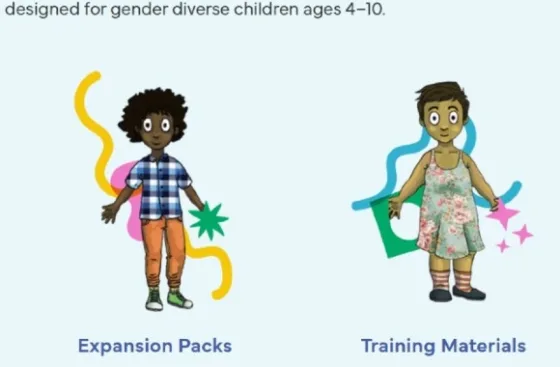
These dolls are ‘a grooming tool’ and ‘have no place in an ethical medical care world,’ American College of Pediatricians leader says
A University of Minnesota project to create “therapeutic” transgender dolls for children as young as 4 is officially launching this year.
However, the project continues to face criticism from medical leaders, as well as questions about whether public funding is involved.
“Join the waitlist” and “Launching in 2026,” the MyGender Dolls website tells visitors.
“Grounded in gender-affirming clinical practices,” the dolls will be a “therapeutic” resource for clinicians and educators who work with children ages 4-10, it states.
The new website only includes a few details about the dolls, a years-long project by faculty at the university’s Eli Coleman Institute for Sexual and Gender Health. Some of the links on the site are not working yet, but there is a “waitlist” form that people can fill out “to be kept up to date about the MyGender Dolls.”
The College Fix contacted the email address listed on the website and the project organizers via email on July 2 and 5, asking for information about the product and launch date. No one responded.
Previously, the university had a webpage dedicated to the project, but it was removed at some point after The College Fix first reported on it in December 2024.
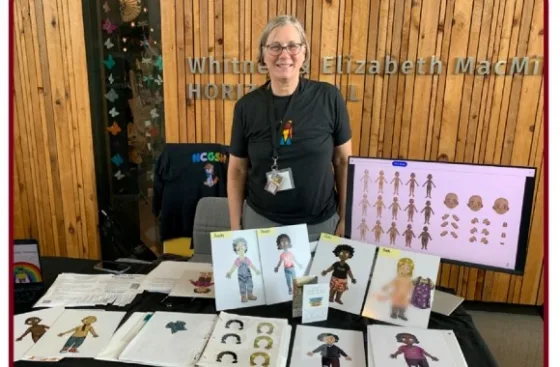
According to the page, MyGender Dolls mimic classic paper dolls, featuring drawings of children of different ages, shapes, and skin colors to represent “all” kids. Children will be able to choose different internal and external genitals, clothes, and other accessories to help them “visualize their anatomy and genders,” the page stated.
The new website has several images of the dolls, including one that appears to be a boy wearing a dress. It states that the dolls will include a base, expansion pack, and training materials.
The project is facing criticism from the American College of Pediatricians, a medical organization focused on “protecting the biological integrity of children against transgender ideology.”
Dr. Quentin Van Meter, immediate past president, told The Fix via email last week that the dolls are “just a grooming tool” and “have no place in an ethical medical care world.”
Van Meter said that the science for the past 75 years has been clear: “A child will recognize their biological sex by age three. They are able, by age five, to understand that boys grow up to be men, and girls grow up to be women, but until age 7 years, kids don’t really understand the immutability of the sexes: they can wrap their heads around the fact that a girl can be a tomboy but is still a girl and a boy can play female dress-up, but he remains a boy.”
Van Meter said children ages of 3 to 7 who are persuaded into believing that sex can be changed will become “confused” and “vulnerable to anxiety.”
He said the clear basis for gender dysphoria is “emotional trauma caused by ideologues as parents or teachers or counselors.”
Questions also have been raised about whether the public university’s project is funded by tax dollars.
In 2024, the project won a cash prize from the university’s MINCORPS program, which provides funding of up to $3,000. The program is a part of the Great Lakes I-Corps Hub, which has received support from a grant from the federally-funded National Science Foundation.
According to the NSF’s website, the I-Corps program has received a total of $16 million to date. The grant was established to accelerate “federally-funded research into products/services that benefit society and create economic growth.”
However, UMinn’s program director for I-Corps Ashley Mahoney told The Fix in a recent email that the MyGender Dolls team prize was “solely funded through private donations for that program.”
The transgender doll project also received funding from the university’s Early Innovation Fund, which offers awards of up to $10,000.
According to its website, the prize is awarded through the university’s Research and Innovation Office. The Fix contacted the office on June 25 and 29 via email asking how the prize is funded, but did not receive a response.
Meanwhile, the Upper Midwest Law Center also has been investigating how the university funds the program. The organization, a center-right public interest law firm, told The Fix in a recent email that it is still investigating the funding sources and does not have any updates.
“It’s important to know exactly how the University of Minnesota is able to fund this program, especially while coming so short of their funding goal,” senior counsel James Dickey said in a statement when it first launched the investigation.
“University of Minnesota students, families and taxpayers have the right to know if their money is funding controversial programming aimed at children as young as five years old,” he said.
The project is through the university medical school’s Eli Coleman Institute for Sexual and Gender Health. Its 2024 annual report shows that the institute received $1.35 million in research grant funding, a 35 percent increase from the previous year. However, the report does not specify the sources of the funding.
That same report highlighted the MyGender Dolls project, describing it as “a set of therapeutic tools intended for licensed therapists to use with patients and their parents or caregivers, to help children who find it difficult to express themselves.
“Research and development is ongoing, and has been made possible by generous grant and donation support,” the report continued. “We used community engaged approaches to revise both the dolls and the therapeutic tools that are used in conjunction with them. We are working with offices at the University in order to bring this innovation to clinical spaces!”
In a 2024 post on Instagram, the university National Center for Gender Health also offered to pay “transgender and gender diverse children between the ages of 5 and 10 years old” to play with the dolls.
As The Fix reported that year, the university removed details about the project from its website after it began to attract criticism from conservatives online.
MORE: UMinn removes parts of transgender paper doll project from website

