FEATURED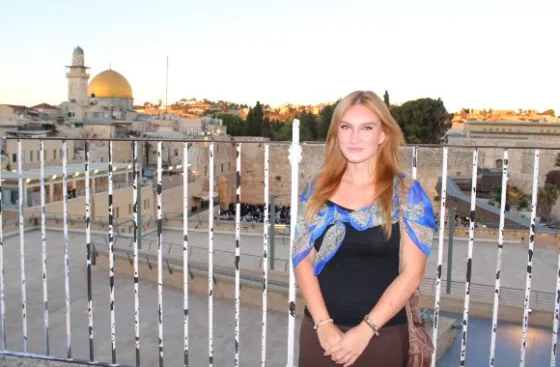
OPINION: People’s stories made it impossible to dismiss the Iranian conflict as just another overseas war measured by its effect on gas prices
When I traveled to Israel earlier this month as part of a student journalism trip, I went expecting to learn about the Oct. 7, 2023 terrorist attack, the war with Iran, and the broader conflicts involving Gaza, Lebanon, Hamas, and Hezbollah.
I had followed the headlines from the United States. I had seen the social media clips, campus slogans, and commentary from both sides.
Being there with The College Fix and Passages made the limits of that coverage obvious.
In the West, Israel is often treated less like a country and more like a symbol. For many on the left, it is the permanent villain, blamed for nearly every crisis in the region. To parts of the right, the conflict is reduced to an unwanted foreign entanglement, as if Iran, Hamas, and Hezbollah are not part of a larger ideological and strategic threat.
Both views egregiously misrepresent the people who live with the consequences.
I stood at holy sites where Jesus performed miracles and gave his life. I also stood in villages and saw the devastation wreaked by Hamas terrorists three years ago on Oct. 7: bullet holes, blackened walls, posters with the faces of people who were murdered.
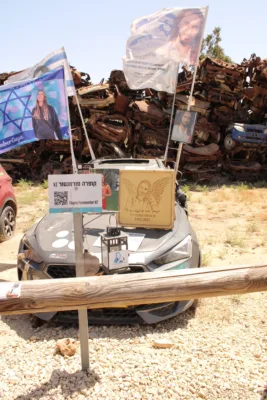
But the trip’s most important lessons came from the people I met directly: Israelis still grieving their dead, Palestinians explaining the complexity of life in the region, former IDF members describing the realities of war, and survivors whose stories made it impossible to dismiss the conflict as just another overseas war measured by its effect on gas prices.
The conflict is not a clean morality play. It is a long and painful history shaped by religion, conquest, exile, terrorism, failed leadership, regional power struggles, and the basic desire of ordinary people to live day-to-day without rockets overhead.
One of the most important conversations I had was with Shadi Khalloul Risho, an Aramean Maronite Christian and former IDF officer. His argument is not that Israel is above criticism. It’s that much of the criticism begins from a false history.
“The Jewish people didn’t come here on behalf of a mother country like Britain or France to exploit resources,” he told me. “One cannot colonize a land where his ancestors’ language is written on the ancient stones, where your kings ruled, and where your prophets walked.”
Israel is treated as if it appeared out of nowhere in 1948, with centuries of conquest and displacement ignored. Khalloul said Arab and Islamic powers “occupied the Middle East, arabized its tongues and islamized its people,” turning many native communities, including Christians, Arameans, Copts, and Jews into diminished minorities.
He was just as direct about the current war. “Iran uses Hamas and Hezbollah as human meat-shields to project power and they in their turn use their own people as human-shields to justify their existence.”
By “keeping the conflict bloody,” these groups “extract billions in Western aid and maintain their grip on power,” he said. They prolong the war because “peace or normalization with Israel would render their radical existence obsolete.”
Khalloul also drew a distinction that rarely appears in Western media coverage: “Every society has its fanatics, and Israel is no exception, we have a fringe of Jewish extremists. But here is the critical distinction: In Israel, the law fights the extremists, in our neighboring countries, the extremists are the law.”
He continued: “When a church is defaced in Israel, President Isaac Herzog and the Prime Minister immediately condemn it, the police make arrests, and the courts punish them. In Egypt, Syria, Lebanon, or the PA, when a Christian home/Church is burned or a girl is kidnapped, the authorities turn a blind eye, or worse, collaborate with the attackers. Israel’s democratic institutions prove that extremism is a disease we actively fight, not a state-sponsored policy.”
Something that I noticed when we visited the border of Israel and Gaza was how Hamas and Hezbollah deliberately fight from within civilian life. They place weapons, tunnels, command centers and fighters in or near neighborhoods, schools, hospitals and places of worship. They know Israel will be blamed when civilians die. They rely on that blame.
In a recent IDF report, their military said Hezbollah had embedded weapons and infrastructure inside a clothing store, inside a school, near a church, in an ambulance and inside a child’s bedroom. That is not incidental. It is the strategy.
It also clarified something important: Supporting Israel does not require ignoring Palestinian suffering. Taking Palestinian suffering seriously requires being honest about who exploits it. Hamas has brought devastation on Gaza while hiding behind the people it claims to represent. Iran uses Hamas and Hezbollah as proxies while ordinary Israelis, Palestinians, Lebanese, and others pay the price.
Blaming Israel for everything may be the current bandwagon, but it ignores terrorist leadership, jihadist ideology, regional history, and the repeated refusal of peace by actors who benefit from endless war.
Some things have to be seen directly. You have to stand where the rockets fell. You have to listen to survivors. You have to speak with soldiers, minorities, and families who live with the consequences of decisions that Americans debate from a safe distance.
I left Israel with a stronger Christian faith and a much lower tolerance for easy answers. A viral video is not history, and a headline is not truth.
Editor’s note: Leona Salias is a College Fix contributor and summer fellow at The Daily Wire.