EDITORS' CORNER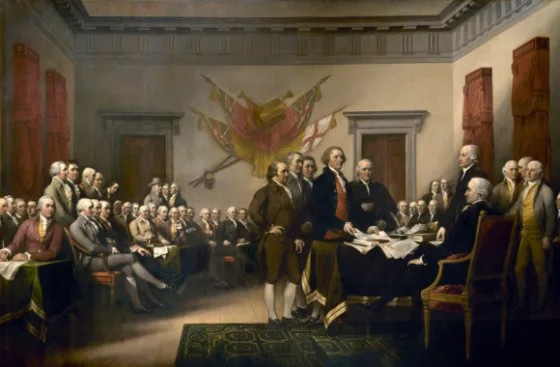
OPINION: Republican legislators and governors are criticized for exercising proper authority
Here we go again.
Inside Higher Ed has yet another story criticizing Republican officials for exercising their proper authority over publicly funded universities.
“Thousands of college students in some states now have to read the Constitution and Declaration of Independence as well as pass American history and government courses to graduate,” the publication reported on June 16.
“Legislators are increasingly determining colleges’ core classes, underscoring how higher ed has become a political lightning rod,” the publication warned in its subheading.
Republicans, the outlet warns, are “assert[ing] their power and increas[ing]state-level governing boards’ authority over curricula—an area previously mostly under faculty purview.”
That complaint forms the crux of many an Inside Higher Ed article – just a few days prior, it reported on how “Republican lawmakers have put faculty governing bodies under university presidents’ control.”
The concern stems from the position of the American Association of University Professors and other groups that currently control higher ed: taxpayers in red states should shovel billions of dollars of subsidies into higher education but elected officials should keep their hands off policy.
Joe the Plumber needs to subsidize the gender studies department, but his elected officials should not require universities to teach things like, I don’t know, American history and the Declaration of Independence.
It’s the same approach as that of the entitled teenager who wants mommy and daddy to buy her a car but not establish a curfew or any rules about where she is allowed to go. Or the graduate schools that have gotten rich off of generous taxpayer subsidies and now cry foul because President Trump has placed reasonable limits on how much the public will be on the hook for pricey degrees.
Such is how publicly funded entities normally work. My town gets to decide if the garbage hauling contract should also include recycling and how many large items a resident can get picked up for free per week. The waste removal company can have an input, but ultimately they serve the city.
Likewise, the city council can tell the parks and recreation employees if it wants more trees planted or fewer dog parks built; it’s not really up to the individual landscaper or laborer.
What it ultimately comes down to is that both sides understand that curriculum sets the tone for the university. When DEI is eliminated and the Great Books are promoted, then the university moves closer to one of truth-seeking and merit. When students learn about the Declaration of Independence and not “queer theory,” then the message goes out that this is a place of learning, not left-wing activism.
That does not mean elected officials need to micromanage every aspect of a university. Good leaders know when to delegate responsibilities and the principle of subsidiarity supports professors and department chairs making most of the day to day decisions on specific books or class schedules.
Still, it is proper and just for the elected officials who vote for higher education funding, as well as trustees and governors to have a say in what is taught at the state’s universities.
And yes, that includes teaching the Declaration of Independence.
MORE: Just 10 percent of professors want to leave red states