
 EDITORS' CORNER
OPINION: ‘It is written in a way that feels inaccessible to the very people it aims to reach’
All is not hopeless among contemporary college students. This past week I happened upon an op-ed by Drexel University’s Bobby Saunders titled “Feminism’s language problem.”
Saunders says he recently was asked if he is a feminist, to which he replied “yes — I love all the women in my life and want them to have equal opportunities and respect as men.”
But he wonders: “What does it actually mean to be a feminist today?”
“There is no shortage of writing on feminism and gender, and the question has likely been answered many times over,” Saunders writes. “But much of it is written in a way that feels inaccessible to the very people it aims to reach.”
In an honors(!) course he took titled “Gender & Sexuality in Hip-Hop and R&B,” Saunders was assigned the reading “The Ghosts Got You: Exploring the Queer (After) Lives of Sample-Based Hip Hop” by the University of Minnesota’s Elliot Powell (pictured).
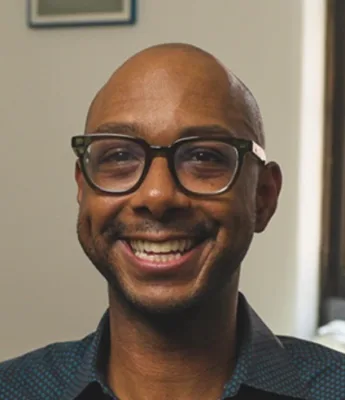
After noting how certain hip-hop artists “sample” others’ work “without concern of violating copyright infringement,” the reading states “[they] also illustrate how sampling establishes queer spatiotemporal interfaces between bodies, technology, and the social formations of race, gender, and sexuality.”
Saunders also notes “what most people would call friendship” is referred to by Powell as a “male homosocial relationship.”
Unsurprisingly, Powell’s faculty page notes his first book
… investigates these cross-cultural exchanges in relation to larger global and domestic sociohistorical junctures that linked African American and South Asian diasporic communities, and argues that these Afro-South Asian cultural productions constitute dynamic, complex, and at times contradictory sites of comparative racialization, transformative gender and queer politics, and anti-imperial political alliances.
Saunders, an engineering major, says he “dreaded the weekly readings” because he “found the wording to be too verbose” and “assumed a level of familiarity with the subject matter that most readers simply do not have.”
Where I differ with Saunders is his contention that the “inaccessible” language used in gender/feminist studies doesn’t mean such courses lack “value.”
I say the ridiculous lingo in those courses is precisely because of the subject matter’s vacuity.
A further example was highlighted recently on social media, a paper titled “Dying while fat: Post-mortem inequality.” In the abstract, the University of South Carolina’s Flora Blanchette (Dept. of Women’s and Gender Studies, pictured) argues

… fat people are subject to postmortem inequality and discrimination via exclusionary death and dying technologies […] that fat people’s dignity and right to choice in death are constrained [and] how technologies relating to both cremation and burial – the two most common options for postmortem disposition – both convey additional burdens for fat people and their loved ones, and highlight how contemporary mediation of death via technology can perpetuate anti-fat discrimination.
What does this mean? That fat people, unlike skinny and/or fit individuals, get hassled for wanting to be buried or cremated upon death?
And what the hell is “contemporary mediation of death via technology” … and how does it further bias against fat people?
It likely won’t shock you that Blanchette’s research “focuses broadly on liberation through a feminist lens” including “fat liberation and upward resistance among fat people,” “abolitionist politics and liberation from carceral systems,” and “sexual liberation, particularly liberating marginalized group members from systems of sexualized violence.”
Kudos to Mr. Saunders for having the cojones to raise this issue in the student newspaper.
MORE: Another self-absorbed rant by a ‘studies’ professor makes critics’ points (and bores ’em)

