
DEI aims to end the ‘reign of the white, Anglo-Saxon Protestant,’ panelist says
Efforts to combat diversity, equity, and inclusion practices are rooted in “white male Christian supremacy,” a University of California Berkeley professor said during a social sciences panel this week.
The “Building a Post-DEI Future” panel explored how anti-DEI efforts and political backlash against “wokeness” are transforming higher education, according to a news release published on the UC Berkeley Letters & Science webpage.
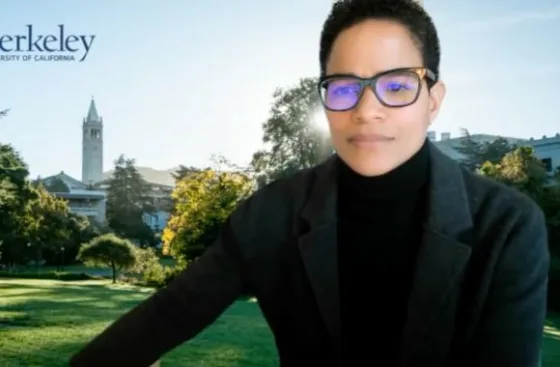
“The war against ‘woke’ is an ideological battle centered on the principle of white male Christian supremacy, with very significant policy implications,” African American Studies Professor Nikki Jones said.
She said that when students read about systematic oppression for the first time, “it blows their mind.” She hopes her students keep it in mind when they enter the workforce and make decisions that prevent it from continuing.
Andrew Barkett, a political economy alumnus who formerly served as chief technology officer of the Republican National Committee, agreed that the issue comes down to white nationalism.
“DEI became the mascot for a team — the team that said the reign of the white, Anglo-Saxon Protestant needs to end. What’s lost in that disagreement is the middle side,” Barkett said.
He said the side that is “losing its power” is having a “terrible overreaction” and is “lashing out in totally the wrong way.”
However, he said the real debate isn’t between white nationalists and the “woke” left. Rather, the real question is whether the U.S. can still live up to the ideals set forth in the Constitution, “and if there’s a post-DEI concept that helps us perfect our imperfect union.”
Sociology professor Cristina Mora said that turning to DEI sparked important conversations, “but we never did enough for these students in terms of resources and programs.”
She said that DEI officers never had enough resources to do their job, and administrators need to find ways to “increase access.”
The panel also posed the question of whether artificial intelligence created “more inequity.”
“Is AI an equalizer, or does it actually create more inequity? When people come into the workforce, have they leaned too heavily on it? Or have they not been exposed to it?” Mora said.
“I want to see a diverse world, an equitable world and an inclusive world. I want my leader to help build that world. And that’s the work that’s ahead of us,” she said.
Berkeley Social Sciences Dean Raka Ray began the conversation saying the social sciences must “analyze and critique the elements that make our social world.”
“In an atmosphere where it’s getting increasingly hard to talk, debate, reason, disagree, dialogue and learn about tough social issues, we step into it. We see this as our mandate,” she said.
She added that “It’s valuable to still work towards a good life for all, in a world where institutional approval for certain policies no longer exists.”
MORE: Columbia professor says A.I. ‘fails black teens navigating racial stress’

