
 FEATURED
‘The First Amendment does not rise and fall with the sun,’ campus free speech attorney says
The Fifth Circuit Court of Appeals is considering a First Amendment case against the University of Texas System after a hearing this month over restrictions that limit free speech after 10 p.m. on campuses.
The federal court has not yet issued a ruling after hearing oral arguments from the Foundation for Individual Rights and Expression and the university system’s lawyer on Oct. 5.
“The First Amendment does not rise and fall with the sun, and a federal court rightly stepped in and said that Texas’ law was unconstitutional,” FIRE senior attorney Adam Steinbaugh stated in a news release sent to The College Fix. “That ruling should be upheld. Policymakers can set responsible rules to address disruptions without banning all protected speech for hours at a time.”
The case centers on Texas Senate Bill 2972, which requires public universities to create policies restricting “expressive activities on campus” from 10 p.m. to 8 a.m. and during the last two weeks of each semester, The Fix reported previously. The state legislature passed the legislation, which amends to an older campus free speech law, in response to concerns about pro-Palestinian protests that, at times, turned hostile.
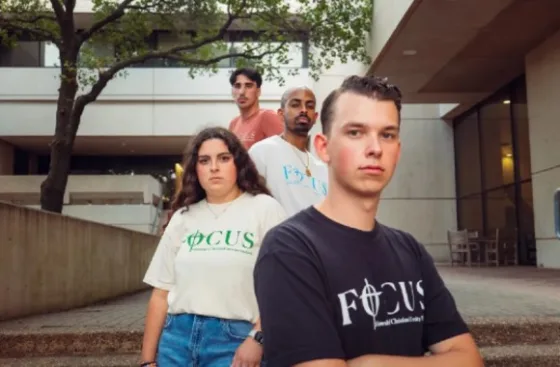
FIRE’s lawsuit on behalf of a diverse set of student organizations, including the Fellowship of Christian Students at UT Dallas, alleges the law restricts students’ free speech.
The recent hearing dealt with the university’s appeal of a lower court ruling that halted enforcement of the restrictions. The Fix watched the hearing online.
Daniel Ortner, the lawyer for the university system, argued that the appeals court should reject the lower court’s ruling because the injunction was “against the wrong law and from the wrong defendants.”
Ortner said the law directs the university to enact a student speech policy, but the law is not a student speech policy itself.
“Really, our argument is simply that they needed to challenge the specific campus policies, not the state law that does not regulate their conduct and merely directs universities to enact policies,” Ortner told the court.
However, Steinbaugh with FIRE argued that the law would “chill speech” on University of Texas campuses, if enforced.
He said even though the students are not directly regulated by the state law, there are prohibitions against violating state law that they are subject to.
“I think the board [University of Texas Board of Regents] has greater authority to regulate, and a greater obligation to regulate, than the defendants are giving them credit for,” Steinbaugh said.
He told the court that viewpoint discrimination is another problem with the law. He used the example of a student bringing someone in to sell Tupperware in their dorm, noting that the law does not restrict commercial interactions. The law, however, does restrict other free speech and that amounts to content discrimination, he alleged.
For example, he said the Fellowship of Christian University Students at UT Dallas cannot invite “off-campus ministers to their weekly meetings to discuss faith or hold prayer sessions” in the last two weeks of semester under the law’s restrictions.
“If it’s commercial, then you go to the university’s other regulations, which, to be sure, do burden commercial speech, but they don’t extinguish it the way the statute does to non-commercial speech. It still authorizes people to bring in someone to sell Tupperware in the halls,” Steinbaugh said.
However, Ortner offered a rebuttal when the court asked about viewpoint discrimination.
“UT’s policies clearly state that all time, place, and manner restrictions that apply to non-commercial speech also apply to commercial speech. There is no discrimination in favor of commercial speech,” he said.
At another point in the hearing, Steinbaugh pushed back against the university’s argument that the deans should be the proper defendants of the case, calling the argument “passing the buck.”
He said just because a specific person has the primary responsibility to enforce student disciplinary policies doesn’t mean others are not also responsible or do not have any connection with this issue.
However, Ortner said the dean of students is the proper defendant of the case because they are the one who enforces campus policy.
Ortner asked that the appeals court overturn the injunction on grounds that the plaintiffs sought wrong relief.
“The law itself that they’re challenging only says institutions must adopt policies … and that doesn’t create the kind of objective chill that the court has said is required,” he told the court.
The University of Texas media relations office did not respond to The College Fix’s requests for comment after the hearing. FIRE declined to comment.
MORE: Judge blocks Texas ban on campus free speech after 10 p.m.

