FEATURED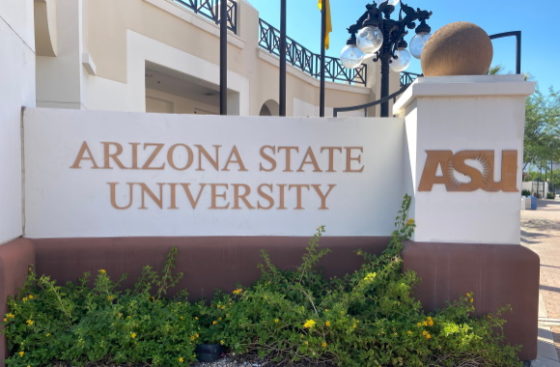
Key Takeaways
- Courses at institutions like Arizona State University incorporate controversial content, including LGBTQ discussions and one-sided views on the Israeli-Palestinian conflict, according to a Goldwater Institute report.
- Critics argue that such ideological content limits students' exposure to diverse viewpoints and may stifle free speech on campus, with calls for administrative and legislative intervention to ensure a balance in curriculum.
Over 70 percent of sections for required honors course push ideological content
Arizona’s public universities require their honors students to complete coursework promoting a “diversity, equity, and inclusion” agenda, alongside anti-capitalist and anti-Israel themes, a recent report from a conservative think tank revealed.
Arizona State University’s Barrett, The Honors College, requires honors students to engage with mandatory readings that include discussions of sexually explicit LGBTQ content and explore racially and sexually charged questions, according to the Goldwater Institute’s report called “Desert Brain Drain.”
For example, one instructor requires students to discuss the “relationship between the white female gaze and the eroticized black male body.”
Another professor provides students with “a one-sided view of the Israeli-Palestinian conflict, assigning readings that are exclusively critical of Israel and Zionism,” the report states.
“Over 70% of all Barrett course sections for the mandatory ‘The Human Event’ (HON 272) reviewed by Goldwater” push this ideological content, it states.
Similarly, at the University of Arizona’s Franke Honors College, students must choose an “Honors Seminar” from a limited list that includes “ideologically extreme” courses, such as one exploring whether food can be decolonized.
The Fix reached out to the University of Arizona, Arizona State University, and their honors colleges for comment, but did not receive a reply.
Timothy Minella, Goldwater’s director of higher education, told The College Fix the findings are “concerning” because honors colleges are meant to educate the most talented students.
Instead of academically challenging students “with significant texts from world history,” professors are “pushing a political and ideological agenda,” he said.
“Students are not learning about the basics like the Constitution and the freedoms in the Bill of Rights and significant Supreme Court cases,” he said.
Asked about Barrett’s bias against Zionism, Minella said, “what’s concerning is the instructor assigns 2 texts and both of them are very clearly critical towards Israel.”
“One is by Edward Said, a Palestinian-American academic, called Zionism from the perspective of its victims, which very clearly is an anti-Israel, anti-Zionist essay. And then another, the other article that’s paired with that is by an Israeli journalist,” he said.
“And although it would seem like this is an attempted balancing that you’ve got a Palestinian reading and an Israeli reading, we find that the Israeli journalist article is about the ‘dark side of Zionism,’” he said.
Minella added that the required reading does not include pro-Israel or pro-Zionism perspectives, raising concerns that professors are not offering students multiple perspectives on controversial issues.
To mitigate this issue, Goldwater believes the state legislature needs to step in and “consider withholding appropriations.”
Offering additional insight, Steve McGuire, the American Council of Trustees and Alumni’s Fellow for Campus Freedom, told The Fix universities are narrowing the diversity of perspectives students are exposed to.
“There has been widespread pressure across the academy for years to offer DEI-related courses and to add such content to existing courses for ideological reasons,” he said.
While many faculty happily go along with it, even those who disagree are pressured to modify their classes, he said.
“Students encounter a narrower range of topics, questions, texts, and authors because DEI-related themes and concerns dominate so many of the courses available to them,” McGuire told The Fix.
Asked what should be done to remove the bias, he said faculty should ideally fix curriculum issues. However, administrative leaders and governing boards should step in if they are unwilling to do so.
“While those who are further away from the classroom should be careful to leave details to the faculty, they can perform audits of course and program offerings and offer general direction in terms of priorities and requirements,” he said.
“There can also be some room for state legislators to act when it comes to public institutions, as they can insist, for example, that all students take a course in American government or history that covers certain texts or topics,” McGuire said.
What’s more, this ideological bias may be stifling speech, Claire Winn-Fogle, an honors student and Young Women for America’s chapter president at Grand Canyon University, told The Fix.
Ideologically-driven course content creates “an environment that makes students scared to speak up,” she said.
“It almost makes us fearful to speak our opinion at a public state university, like University of Arizona, and Arizona State– you should be able to voice your opinions in those federally funded schools,” she said.
She added that required honors courses often “don’t even touch on leadership skills.”
“They touch on integrating and brainwashing students, making them think they are less than others,” she said.