
 FEATURED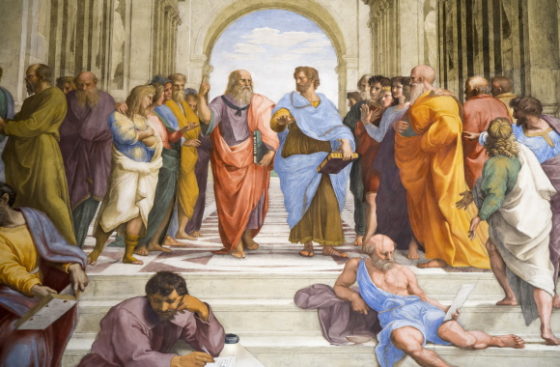
University flagged ‘material advocating race,’ ‘gender ideology’ that included Plato readings
A philosophy professor says Texas A&M University recently demanded that he remove sections about “race” and “gender ideology” – including readings by Plato – from his spring “Contemporary Moral Issues” class to comply with a new course review directive.
“Your decision to bar a philosophy professor from teaching Plato is unprecedented,” Professor Martin Peterson wrote in a letter to his department chair, which he shared with The College Fix Wednesday.
Peterson did agree to revise his syllabus “and replace the censored material with lectures on free speech and academic freedom” after consulting a lawyer. However, he wrote that the whole situation reflects poorly on the university.
He also emphasized to his department chair that his class “does not ‘advocate’ any ideology,” but it does discuss the “contemporary moral issues” of gender and race.
At the center of the matter is a new syllabi and course review directive that the university’s Board of Regents adopted in December. It requires deans and department leaders to flag “material advocating race or gender ideology or sexual orientation” for “adjustments,” starting with classes in the spring semester.
The move followed the regents’ November approval of a civil rights policy that states, “No system academic course will advocate race or gender ideology, or topics related to sexual orientation or gender identity, unless the course and the relevant course materials are approved in advance by the member CEO.”

The actions relate to larger efforts by Texas conservatives to crack down on diversity, equity, and inclusion and other political and ideological advocacy in the classroom.
Peterson, who emphasized that his comments are personal and do not reflect the views of the university, told The Fix that “the ban on Plato” in his spring semester class came from an email from his department chair, Kristi Sweet.
“The Board of Regents revised/tightened the new policy on December 18. She sent the first email about the revised policy on the 19th,” he told The Fix.
On Tuesday, the blog Leiter Reports, run by University of Chicago Law Professor Brian Leiter, published two emails between Sweet and Peterson about his course materials, as well as Peterson’s original syllabus.
In his initial email to Sweet, which included his class syllabus for review, Peterson described the directive as “mandatory censorship.”
He wrote:
The syllabus has not changed much since I last taught the course. I have made some minor adjustments to the module on Race and Gender Ideology and to the lecture on Sexual Morality. These topics are commonly covered in this type of course nationwide, and the material is discussed in depth in the assigned textbook (Fiala and MacKinnon, 10th edition). I also ask my students to read a few passages from Plato (Aristophanes’ myth of the split humans and Diotima’s Ladder of Love).
Please note that my course does not “advocate” any ideology; I teach students how to structure and evaluate arguments commonly raised in discussions of contemporary moral issues.
Sweet responded by giving Peterson two options: change his syllabus or drop the class, according to the email published on Leiter’s blog:
1. You may mitigate your course content to remove the modules on race ideology and gender ideology, and the Plato readings that may include these.
2. You may be reassigned to teach PHIL 482 501-514. Lecture times for this course are T/Th 8:00 – 9:15.
3. Please let us know by end of business tomorrow how you would like to proceed.
Neither Sweet nor a representative for the board of regents immediately responded to emails Wednesday, asking for their perspectives on the situation. The Fix also asked if they planned to meet with Peterson to discuss his concerns and if the new course review directive includes an appeal process if a professor disagrees.
The university media relations office also did not respond to The Fix’s email or a phone message left Wednesday.
Meanwhile, Peterson told The Fix that university leaders have given him “no indication of any willingness to compromise.”
He said he did agree to Sweet’s option 1, and he believes he is still slated to teach the class – he hasn’t heard otherwise. But he is not happy about the course review.
Neither is the Foundation for Individual Rights and Expression.
In a statement emailed to The Fix on Wednesday, the campus free speech group blasted the regents’ directive for stripping “faculty of the ability to determine curriculum around issues of ‘race or gender ideology’ and ‘sexual orientation,’ placing that power entirely into the hands of the institution’s leadership.”
“Texas A&M now believes Plato doesn’t belong in an introductory philosophy course,” FIRE Director of Campus Rights Advocacy Lindsie Rank said in the statement.
“This is what happens when the board of regents gives university bureaucrats veto power over academic content. The board didn’t just invite censorship, they unleashed it with immediate and predictable consequences. You don’t protect students by banning 2,400-year-old philosophy,” Rank said.
The matter also drew wide-spread consternation among academics on X, including prominent conservative Princeton University Professor Robert George.
Banning something–anything–by Plato in a philosophy course is idiotic. In fact, any college or university that's serious about liberal arts education would not let students graduate without having read a significant chunk of Plato.https://t.co/5sb3cGgr8x
— Robert P. George (@McCormickProf) January 8, 2026
The university faculty union also commented on X, writing, “Not even Plato can escape censorship at Texas A&M!”
MORE: Education watchdog urges Ohio AG to probe OSU over mandatory DEI coursework

