
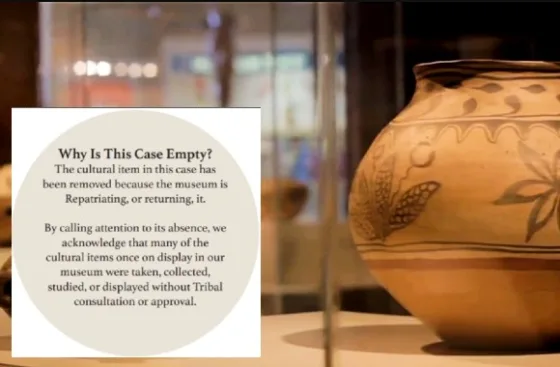
Identity politics focused around Native American tribes are causing problems in the field of anthropology.
In a column Thursday at the Daily Wire, a professor emeritus of anthropology at San José State University warned that the “aggressive use and misuse” of the federal Native American Graves Protection and Repatriation Act is ruining anthropological research, and something needs to be done.
Museum and research collections are being removed and destroyed. In some cases, female scholars are being barred “from handling specimens, since that’s sometimes prohibited by Native religious taboos,” according to the article.
“Science is too precious to be sacrificed to the political demands of DEI and the wishful thinking of angry activists who prioritize race over research, discovery, and progress,” Professor Elizabeth Weiss wrote with Goldwater Institute’s Timothy Sandefur.
They continued:
It was 30 years ago this month that a couple of college students in Kennewick, Wash., stumbled upon a rare archaeological discovery — one that would help trigger a war between science and racial identity politics, or what we now call “DEI.” Three decades later, it’s clear that if we don’t act quickly, it’s a fight science will probably lose.
What the students found was a 9,000-year-old skeleton that was soon nicknamed Kennewick Man. It was certainly one of the most precious anthropological finds ever. At the time, it was the oldest human skeleton ever found in North America, and it had signs of an injury from an arrow or a spear. More intriguingly, it seemed to have less in common with the skeletons of Native Americans than with those of ancient Japanese peoples, thus potentially changing our understanding of how humans first arrived in the New World.
But that’s when the federal government stepped in. Under a law called the Native American Graves Protection and Repatriation Act, or NAGPRA, skeletons found on federally owned land (as Kennewick Man was) must be turned over, or “repatriated,” to the Native American tribes they’re related to. NAGPRA was written in response to the actions of 19th- and early 20th-century archaeologists who sometimes engaged in practices that would be unacceptable today to acquire specimens, and it requires not only the “repatriation” of human remains, but also of “funerary objects” — that is, things buried alongside bodies.
Kennewick Man was far older than any existing tribe and not related to any of them. …
Scientists sued, arguing that NAGPRA simply doesn’t apply to objects that old. After years of litigation, federal courts ruled in their favor. Indeed, the courts found that government officials had acted in bad faith and awarded the scientists $2 million in attorney fees. A year later, even though DNA research revealed that Kennewick Man was closest to South American indigenous peoples, an executive order by then-President Barack Obama forced the scientists to turn Kennewick Man over to a group of Northwest Coast Native American tribes who destroyed the bones forever.
Read their full column at the Daily Wire.

