
 FEATURED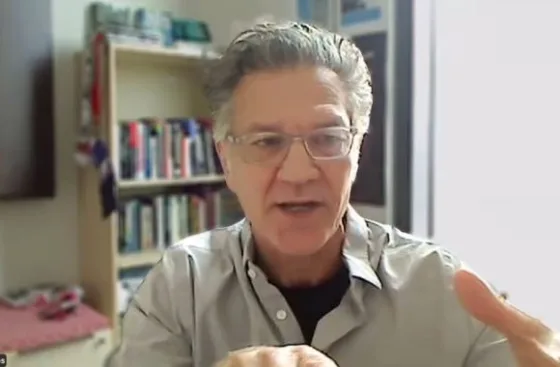
Professor pushes for three replacements for capitalism
During an Arizona State University event this week, a professional futurist argued that capitalism, while once effective, no longer fits society’s emerging values and needs to be replaced by new economic systems.
Capitalism “did its job … but as you look at the emerging future, it doesn’t fit anymore,” University of Houston professor Andy Hines said during the event titled “Imagining After Capitalism.”
While capitalism has led to “good things,” it also produces “inequality” and “environmental overshoot,” he said.
“[W]hen you look at the literature, you see a lot of capitalism is the root of all evil, and maybe it is, but I take the position that … it was a fit for purpose,” the professor said.
However, it is now misaligned with changing global values that emphasize community and sustainability over competition and endless growth, he said.
“We live in an economy rather than a society … our lives are serving the economy,” Hines said.
As a result, society must begin preparing for a post-capitalist future within the next 20 to 30 years.
“There are a hundred times more books about the end of capitalism, how to fix capitalism than there are about alternatives. There’s not much written about, hey, what should we do instead?” he said.
Hines then outlined three possibilities for what could replace it, including “circular commons, non-worker paradise, and tech-led abundance.”
“Circular commons” focuses on sustainability, shared resources, and reduced growth.
He described a “non-worker paradise” as a future in which people no longer need traditional jobs to survive or access society’s resources. Advances in automation and artificial intelligence would perform most necessary labor.
“Now there’ll be some people that will abuse it … but most people, I think we’ll be just fine without having a job,” Hines said.
He also said this possibility will still require “work-like things,” but no one will have to have a job “in order to have access to society’s resources.”
Lastly, Hines said “tech-led abundance” involves rapid advances in technology to make goods and services cheaply so that scarcity largely disappears.
He said this future “image” would require redistribution.
“And that’s a horrible word for many people, right? Redistribution. Oh my goodness. But if we could do it, oh my, this could really be an amazing enabler,” he said.
He ended by saying that Americans need to implement all three of these things in order to “actually move the system.”
During the Q&A portion of the event, Hines said there are many dystopian visions, but very few positive ones. His goal is to contrast darker images with positive ones.
He also said that most of the current literature surrounding capitalism is about how to fix it rather than replace it.
“I don’t think the mainstream has yet gone over and said, well, what if we can’t?” he said.
He argued that futurists need to “start getting this beyond just the … fringe and into the organizations and institutions.”
Hines authored a book titled “Imagining After Capitalism,” in which he similarly argues that the U.S. needs to begin implementing alternative economic systems as capitalism is “dying.”
The event was hosted by ASU Futurists Community of Practice, which plans monthly meetings for students and staff interested in “futures thinking,” according to its flyer.
MORE: U. California academic program ‘designed for one ethnic group’: complaint

