
 FEATURED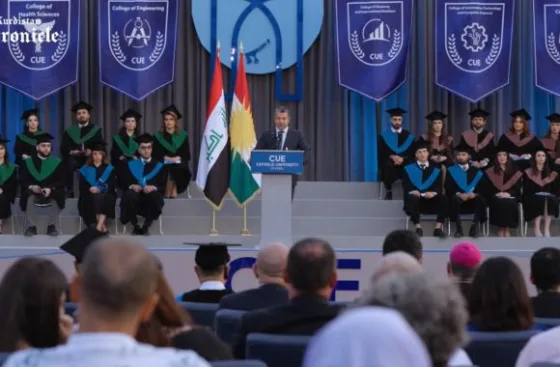
Key Takeaways
- Catholic University in Erbil, Iraq, was established in 2015 to support displaced Christian and minority families after ISIS's destruction, focusing on fostering coexistence and dialogue among diverse ethnic and religious groups.
- The university's curriculum integrates 'ethical principles' and a 'strong moral compass.'
- Challenges include securing funding, language proficiency among students, political influences on educational policies, and restrictions on offering advanced degrees, which limit the university's program expansion.
- Future goals include achieving international accreditation, enhancing academic quality, and reducing migration by providing accessible education and job opportunities for Iraqi youth.
A Catholic university in Iraq, founded to help rebuild society in the wake of ISIS-led destruction, is celebrating its first decade of serving “students who have lost everything.”
The school’s president, Father Karam Shamasha, told The College Fix via email that the Catholic University in Erbil “was born directly from one of the darkest moments in Iraq’s recent history and was founded as a direct response to the ISIS crisis.”
He said the school was founded in 2015 as an “urgent pastoral duty” to support the many Christian and other minority families uprooted by ISIS.
It was envisioned as a “project of life,” providing young displaced people with a safe place to pursue higher education and preserve their dignity and future in their homeland.
“CUE is one of the leading universities in promoting brotherhood and coexistence in Iraq and the Kurdistan Region,” Shamasha told The Fix.
“In a society still affected by sectarian conflict, CUE offers a unique environment for fostering mutual understanding, dialogue, and forgiveness, actively contributing to the rebuilding of Iraq’s fragmented social fabric,” he said.
Asked about the school’s mission, Shamasha said CUE aims “to be a good example of peaceful coexistence and dialogue.”
“A key goal is to continue fostering an environment where students from all ethnic and religious backgrounds—especially Christians, Muslims, and Yazidis—can learn together in an atmosphere of mutual respect and co-learning,” he said.
Further, the school “is defined as a Catholic academic institution inspired by the rich spiritual and intellectual teachings of the Catholic Church, as well as the heritage of Mesopotamian civilizations.”
The president said the university focuses on both faith and reason in the classroom.
Additionally, its “curriculum integrates ethical principles, a strong moral compass, and a commitment to social justice, truth, and human dignity into all academic programs,” he said.
The university’s Board of Trustees is required to preserve this identity in accordance with the teachings of the Catholic Church.
When asked about the school’s challenges, the president said securing consistent funding remains one of the biggest hurdles.
He said the school relies heavily on donors as it seeks to serve “students who have lost everything.”
Another challenge is admitting students who possess the necessary academic and language skills to be successful in CUE’s programs.
To address this issue, the school provides additional support to students who are not yet proficient in English, he said.
“Additionally, like many universities in the region, we are grappling with the “daunting turmoil” caused by the COVID-19 pandemic and the ‘serious lack of job opportunities,’ which can dissuade young people from pursuing higher education,” Shamasha told The Fix.
He added that the university also encounters challenges from education authorities both in the region and throughout Iraq.
“Political disagreements can affect the educational process and sometimes influence the Ministry of Higher Education’s decisions on the recognition of private university degrees by the central government,” he said.
CUE lacks the special designation granted to certain Iraqi institutions that permits them to offer master’s and doctoral degrees, as well as evening courses, the president said.
This restricts the university’s ability to expand its programs and assist students pursuing advanced studies.
Looking forward, the school aims to solidify its “role as a premier institution of academic excellence and a pillar of peace in the region,” Shamasha told The Fix.
He said the school’s main goal is to attain “international recognition for academic quality and scientific research.”
Administrators are working to gain accreditation with the Middle States Commission on Higher Education, which requires aligning its programs with leading international standards.
“By providing high-quality education and job opportunities, we aim to reduce migration and give Iraq’s next generation a ‘structure of hope,’” he said.
The school ultimately aims to reduce migration by encouraging Iraqis to stay in the country and rebuild it. Part of this mission involves making enrollment accessible to all.
“Since our university is a nonprofit institution, no student pays the full tuition amount; all are provided with either full or partial scholarships,” Shamasha said.

