BUZZ
BUZZ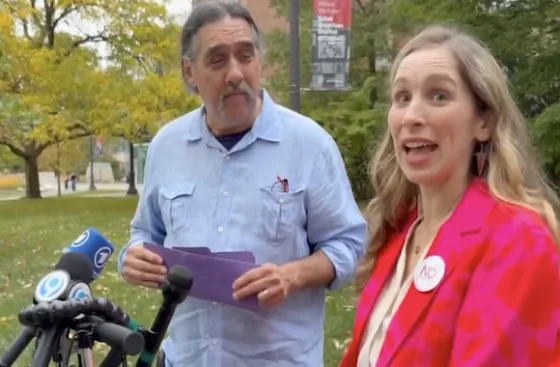
‘I don’t know how any of that is relevant, but I believe Jane Doe. I believe survivors, I believe my students.’
On October 7, the Cornell Faculty Senate put forth a resolution expressing “no confidence in the ability of the central administration to effectively address the ongoing crisis of sexual assault” on campus.
The resolution comes as the “Cornell 7” fraternity (alleged) rape case from 2024 continues to make headlines.
Faculty debated the resolution on Wednesday, with additional debate and a final vote scheduled for October 28.
Part of the resolution’s “rationale” states many faculty “were approached by students at Cornell who are upset, fearful for their personal safety, and wanting our university to address the perennial problem of sexual assault on the campus.”
As previously noted by The College Fix, alleged victim “Jane Doe’s” 2024 sworn statement to the district attorney does not match the claims in her new civil lawsuit.
One of the co-sponsors of the Cornell Faculty Senate resolution, Iris Packman, also is a signatory to an October 8 letter from the School of Industrial and Labor Relations faculty which states “how Cornell responded to the allegations of sexual assault in 2024 are in direct conflict with the practices and values we teach.”
When asked at a recent press conference by journalist Michael Tracey about the conflicting narratives in Jane Doe’s original statements and recent civil suit, Packman said faculty present at the Oct. 14 meeting “did not talk about details of the case and I don’t think it’s material to the [faculty] resolution” (emphasis added).
Packman added the resolution “is about the fact that overall the [Cornell] administration is not handling this crisis.”
When pressed by Tracey about how the Cornell 7 matter was the impetus behind the faculty resolution, Packman said they did talk about the conclusion of the Title IX “process”:
Two of the men had sexually assaulted [Jane Doe] and were expelled, and two more were found to have committed sexual misconduct which I believe was characterized as having sex with her without her consent. The last I checked, that’s the definition of ‘rape.’
Iris Packman, Cornell faculty member, says it’s not “material” that exculpatory evidence has emerged indicating the alleged Jane Doe Gang Rape was in fact consensual — nor does it dissuade her from declaring that “rapists” are walking around campus making everyone “feel unsafe” https://t.co/jaBn8Ch5LG
— Michael Tracey (@mtracey) October 15, 2026
Packman then bemoaned that these two “rapists” were allowed back on campus making others “feel unsafe,” and contrasted the treatment of these “rapists” to that of student protesters being “suspended or expelled for their speech.”
When asked why she was using the term “rapist” based solely on the school’s Title IX process, Packman essentially repeated what she said previously.
When queried about Jane Doe’s text messages which contradict the Title IX process’ conclusions, Packman replied “I’m not going to debate the nuances of that. There is so much more context to that, and again that is not the purpose of this.”
A bit later while standing alongside ponytailed Professor of Labor History Paul Ortiz, Packman claimed female student protesters also had been sexually assaulted, and said “they don’t feel comfortable coming forward because they’re worried their assaulters, the predators, will actually use their participation in speech activity to punish them.”
When asked by Tracey if he believed Jane Doe’s story from the recent civil complaint, Ortiz, who teaches “upper-division electives in comparative race and ethnicity” and served previously as the president of United Faculty of Florida, replied “Yeah, it’s my understanding that that’s exactly what occurred.”
MORE: Columbia group cancels ‘press freedom’ event over students’ op-ed on Cornell rape case
He admitted, however, he “didn’t know” about the “backstory behind that,” and said “I just know what [students and alumni] have reported to me about being sexually assaulted.”
When Ortiz is asked if he’s looked at any “exculpatory” evidence regarding the Cornell 7, Packman intervened saying “We’re not here to talk about the details of the criminal case” … and then moved on to another questioner.
According to her faculty page, Packman is a senior research and policy development associate at the School of Industrial and Labor Relations’ School Climate Jobs Institute. Her research “centers on the legal mechanisms for creating high quality, union jobs in the clean energy economy, as well as policy recommendations to ensure an equitable transition that centers frontline communities.”
Victoria Xaka, a Cornell music department “black feminist sound theorist and abolitionist educator,” expressed similar concerns as Packman, saying “the way [the university] prosecutes students who are exercising their free speech, students who are speaking out against genocide, and students who have really legitimate complaints about the systematic violence of this institution.”
Cornell Professor of music, Victoria Xaka, vacates the premises after I point out her incorrect statements about the chronology of the Jane Doe lawsuit. On her university webpage, she is described as a “black feminist sound theorist and abolitionist educator” https://t.co/uMpo0QU4JN
— Michael Tracey (@mtracey) October 15, 2026
When asked by Tracey about her concerns regarding what she deemed “extreme violence” on campus and whether they are tied to the Cornell 7 case, Xaka said the case is “just the tip of the iceberg … it’s a culture of white supremacy, it’s a culture of patriarchy, it’s a culture where a certain, small demographic of men retain a lot of power to do what they will with relatively little consequence.”
Xaka then blew off Tracey’s questions about evidence contradicting Jane Doe’s civil case complaints, saying “I don’t know how any of that is relevant, but I believe Jane Doe. I believe survivors, I believe my students.”
She then left the microphone after Tracey confronted her with her misstatements regarding basic facts behind the civil suit.
According to her faculty page, Xaka is “deeply invested in the study and practice of fugitive creativity, and her work is devoted to revealing how and where black sociality uses the material affordances of sound to create experiences that evade capture and exploitation by capital accumulation.”
There are several other recent videos and tweets related to the Cornell 7 case at Tracey’s X feed.
MORE: WATCH: Do students believe in due process for the Cornell 7?