
 FEATURED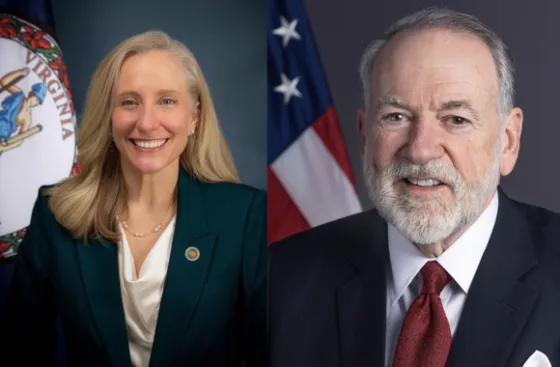
ANALYSIS: Democrats account for 86 percent of partisan keynote speakers
Democrats outnumber Republican commencement speakers for at least the fourth year in a row, according to a College Fix analysis.
The Fix looked at the keynote commencement speakers at undergraduate ceremonies at U.S. News & World Report‘s Top 100 schools.
The analysis found only six Republican or Republican-leaning speakers compared to 38 Democrat or Democrat-leaning speakers. Put another way, Democrats account for 86 percent of partisan keynote speakers.
The Fix reviewed public statements and donation records to determine the political leanings of speakers. The numbers only include the speakers at either the main commencement ceremony, or if there are multiple events, the undergraduate ceremonies.
Other speakers did not publicly indicate a political leaning and were counted as not applicable in the analysis. Some universities have not announced their keynote speakers as of mid-May.
This year’s results are more skewed than the 5-to-1 Democrat-to-Republican ratio that The Fix found in 2025. The 2023 and 2024 analyses by The College Fix found similar results.
Center-right speakers who made the podium this year
Arthur Brooks, former president of the conservative think tank American Enterprise Institute, gave the commencement address at Vanderbilt University on May 7, and is one of six Republican or right-leaning speakers at top schools this year.
Mike Huckabee, the current U.S. Ambassador to Israel under President Donald Trump, will speak at Yeshiva University.
Dario Gil, undersecretary for science at the U.S. Department of Energy under President Donald Trump, will share the podium at Rensselaer Polytechnic Institute’s commencement ceremony.
Former University of Texas quarterback and NFL player Colt McCoy will give the commencement address for University of Texas undergraduates. Republican Texas Gov. Greg Abbott appointed McCoy to the Texas Higher Education Coordinating Board in January 2026.
The fifth right-leaning speaker is Eric Dickerson, who will give the commencement address at Southern Methodist University. Dickerson has actively criticized diversity, equity, and inclusion in the NFL.
Finally, conservative political theorist Francis Fukuyama is the graduation speaker at William & Mary University.
Democrats dominate commencement stage
Notable Democrat speakers this year include elected officials such as Democrat New Jersey Gov. Mikie Sherrill, who will give the commencement address at the New Jersey Institute of Technology, Democrat Michigan Gov. Gretchen Whitmer, who will give the address at Michigan State University, and Democrat Virginia Gov. Abigail Spanberger, who will give the address at Virginia Tech.
Democrat Georgia Sen. Raphael Warnock will speak at Georgia Tech.
Other political appointees speaking at top commencement ceremonies this year include Bill Clinton’s White House Press Secretary Dee Dee Myers, who will give the address at Santa Clara University. Alison LaCrois, who President Joe Biden appointed to the Presidential Commission on the Supreme Court, will speak at the University of Illinois-Chicago. Alison Nathan, U.S. Circuit Judge for the Second Circuit Court of Appeals, was nominated by Joe Biden in 2021 and was the second openly LGBTQ+ woman to serve on a federal circuit court. Nathan will speak at the University of California Irvine.
Democrat authors include James Patterson, who will speak at the University of Wisconsin, Madison; John Green at Rice University; Xochitl Gonzalez at Brown University; and Min Jin Lee at Yale University.
Patterson wrote a book with Bill Clinton and has openly criticized Trump. Green’s post-election thoughts in 2016 reveal support for Hillary Clinton. Gonzalez writes on feminism and Puerto Rican diaspora, and has referenced support for Hillary Clinton’s campaign in 2016. Lee, a popular Korean American author, contributed to an anthology titled Why I’m a Democrat.
Democrat-associated media members at commencements this spring include Craig Melvin at Villanova University, Rebecca Kutler at George Washington University, and Jonathan Capehart at Rutgers University, Newark. Melvin is a co-anchor on NBC’s TODAY show and has displayed some liberal leanings.
Kutler is the president of MS NOW (formerly MSNBC), who previously worked for CNN. Axios released an article soon after Kutler became president in 2025, describing her plans to elevate progressive voices during the Trump administration. Capehart, an openly gay media personality, wrote for The Washington Post and has appeared on MS NOW’s “The Weekend” and PBS NewsHour.
Democrat speakers from the entertainment industry include actresses Kristen Davis, Sarah Jessica Parker, and Jane Lynch, as well as William Adams, a singer, rapper, and record producer better known as will.i.am. Davis will speak at the University of Colorado Boulder, Parker at Northwestern University, and Lynch at Cornell University.
Adams will speak at Worcester Polytechnic Institute. Davis led a Democrat voter registration campaign in 2016. Parker endorsed Kamala Harris in 2024 and helped launch the ‘Moms for Biden’ initiative in 2020. Lynch voiced public support for former U.S. Secretary of Transportation Pete Buttigieg’s run for U.S. President in 2019, and even co-hosted one of his events. Adams created campaign anthems in support of both Kamala Harris and Barack Obama, titled “Yes She Can” and “Yes We Can,” respectively.
In another example, researcher Kip Thorne, who will speak at the California Institute of Technology, once called conservatives “anti-intellectuals who don’t accept the fundamental tenets of science.”
Several colleges will have nonpartisan or Republican speakers at different ceremonies
Some colleges will have Republicans at specific school events, but these are not included in the total count because they are only at individual ceremonies for specific schools within a university.
Other speakers, such as country singer Eric Church, who will be featured at the University of North Carolina at Chapel Hill, don’t appear to have a strong political leaning. A Rolling Stones article from 2018 revealed that Church voted for President George Bush in 2004 and for President Barack Obama in 2008, though not in 2012.
Other top schools, such as Florida State University and the University of California, Davis, have no main commencement address for the conferral of bachelor’s degrees, as different departments split up for smaller commencements.
Georgetown University, which similarly doesn’t have a combined commencement ceremony, is hosting at least two Republican speakers among 13 commencement speakers for the undergraduate, graduate, and professional schools.
These speakers are Tom Brady, a seven-time Super Bowl champion, and Cindy McCain, wife of the late Republican Arizona Senator John McCain. The school will also feature former Democratic Massachusetts Senator John Kerry. Kerry served as Secretary of State for President Barack Obama and Special Presidential Envoy for Climate under President Joe Biden.
Georgetown faced controversy this year for replacing a Jewish undergraduate commencement speaker with a critic of the Republican-led investigation into the rise of antisemitism on campuses. After Morton Shapiro bowed out due to protests, the university switched out the former president of Northwestern University for Georgetown Law Professor David Cole.
South Carolina State University, which is not one of the U.S. News and World Report‘s Top 100, similarly canceled a conservative speaker this semester. South Carolina Lieutenant Gov. Pamela Evette responded to the 9,000-signature petition to have her removed as speaker for the Historically Black University on social media, saying that “President Trump and conservatives have done more for HBCUs than any administration in history.”
University leaders pick speakers that likely reflect their values
Zach Greenberg, director of faculty legal defense at the Foundation for Individual Rights and Expression, said that liberal-leaning speakers at campuswide commencements “reflect the values of the institution.”
“The disproportionate number of Democratic to Republican speakers could indicate that these institutions are predominantly liberal, or that they seek to cater to a liberal audience,” he said.
Greenberg said that when it comes to a college-hosted event like commencement, “it’s completely up to the institutions to decide which speakers to invite and how to structure these events.”
Princeton University Professor Robert George argued in a Washington Post opinion piece that the solution to fix “broken” university commencements is to “choose honored guests impartially.” George said that universities should take notes from Vanderbilt University’s May 7 commencement featuring Arthur Brooks and from Dartmouth’s conferral of an honorary doctorate on FIRE’s president and CEO, Greg Lukianoff.
“A lack of viewpoint diversity is just as scandalous in commencement speakers and honorary degree recipients as it is in faculty hiring and student admissions,” George wrote, adding a course reversal would signal that “institutions honor achievement no matter the political leanings of the achievers.”
MORE: Rutgers cancels grad speaker who claims Israel trains dogs to rape prisoners

