FEATURED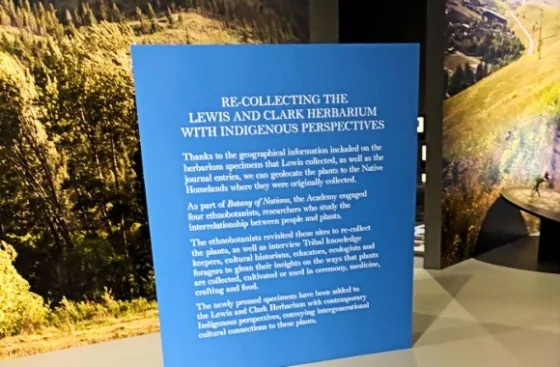
America’s 250th anniversary ‘provides a rare opportunity to “re-story” the seminal history of encounter with Native perspectives,’ according to the exhibit
PHILADELPHIA – Drexel University recently opened an exhibit in connection with the 250th anniversary of the United States that showcases plants from Lewis and Clark’s collection from the perspective of Native American “Tribal Knowledge.”
The “Botany of Nations” exhibit at the Academy of Natural Sciences of Drexel University opened March 28. It displays artifacts and plant specimens from Meriwether Lewis and William Clark’s early 19th century Corps of Discovery expedition.
According to the academy website, the exhibit “presents plants as portals to Indigenous storytelling and knowledge,” and “Center[s] the voices of Native Nations who have protected and cared for the lands for thousands of years.”
“Learn how the Native Nations Meriwether Lewis met on the trail shaped America’s plant knowledge long before Western scientists claimed these ‘discoveries,’” the website says.
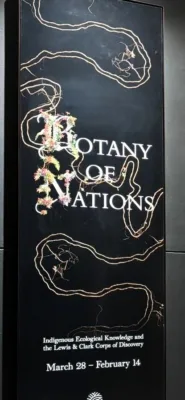
When The College Fix visited, a land acknowledgement sign just outside the exhibit discussed the Native Americans who lived in Pennsylvania before settlers arrived.
“The land upon which the Academy of Natural Sciences of Drexel University stands today is part of Lenapehoking, the ancestral homeland of the Lenape … whose enduring relationship to the places that we know today as Pennsylvania, Delaware, New Jersey, and southern New York spans thousands of years,” the sign states.
It continues, “The Academy of Natural Sciences honors the Lenape people and all affiliated tribes as the Indigenous stewards of their homelands, as well as the spiritual keepers of the Lenape Sipu, or Delaware River.”
The sign concludes with, “It is vitally important that we not only understand and honor the history of this land many of us today call home, but also commit to amplifying and strengthening Indigenous knowledge, voices, stories, perspectives and narratives.”
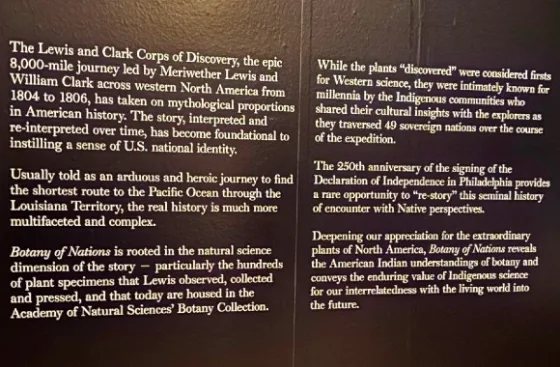
One wall of the exhibit de-emphasizes Lewis and Clark’s natural science discoveries by placing the word in quotation marks.
“While the plants ‘discovered’ were considered firsts for Western science, they were intimately known for millennia by the Indigenous communities who shared their cultural insights with the explorers as they traversed 49 sovereign nations over the course of their expedition,” it states.
“The 250th anniversary of the signing of the Declaration of Independence in Philadelphia provides a rare opportunity to ‘re-story’ the seminal history of encounter with Native perspectives,” it states.
Another plaque titled “Open to Collaborate” says the university partnered on the exhibit with Local Contexts, a “global initiative that supports Indigenous communities with tools that can reassert cultural authority in heritage collections and data.”
Anyone who visits Local Contexts’ website is asked to agree to a “Land Acknowledgement” pop-up that states that everyone has “obligations to support Indigenous peoples” and emphasizes “efforts to overcome the legacies of settler-colonialism.”
For the exhibit at Drexel, organizers invited “Tribal cultural historians … to apply Traditional Knowledge and/or Biocultural Labels to the new herbarium specimens collected as part of the Botany of Nations project,” according to one plaque.
As the labels are submitted, they “will be posted on the Academy of Natural Sciences’ digital collections records to assist future researchers in interpreting the specimens with Traditional Knowledge befitting Indigenous cultural values, practices and protocols.”
Next to the plaque was a “Traditional Knowledge Notice,” which describes itself as “a visible notification that there are accompanying cultural rights and responsibilities that need further attention for any future sharing and use of this material.”
It also mentioned that the labels’ “implementation is being negotiated.”
The Fix emailed Drexel’s media relations team asking about the purpose of the TK Notices and if they had been used for any other exhibits, but did not receive a response.
Artifacts on display in the exhibit include “18th and early 19th century scientific instruments, original journals, maps and herbarium sheets” used by Lewis and Clark, “Native American peace pipes,” and “Corps of Discovery peace medals.”
The exhibit also has interactive displays and a new film “about how Indigenous traditional land practices and cultural systems surrounding food provide contemporary solutions to today’s biodiversity and climate challenges.”
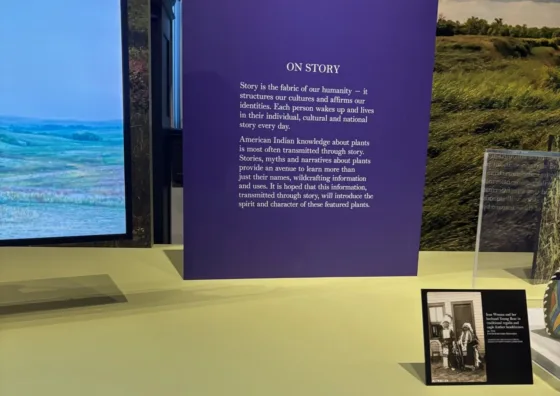
Another part of the exhibit explains why “living knowledges” should not be disregarded.
“Indigenous peoples are managers of repositories of complex knowledge on how humans maintain responsible and sustainable relationships with local habitats,” the sign reads.
It continues, “Unfortunately, more often than not historians, conservationists, environmentalists, ethnoecologists, and even Native people relegate this knowledge to categories such as ‘traditional knowledge,’ ‘the sacred,’ and ‘the old ways.’”
“When Indigenous ancestral ecological knowledge is categorized in this way, it becomes stagnant, metaphorically pickled and sucked of its life.” The sign concludes with, “This knowledge is kept alive through oral traditions and through its use.”
The exhibit is scheduled to remain open through February 2027.
Enrique Salmón, professor of ethnic studies at California State University, East Bay, co-curated the exhibit. The College Fix emailed Salmón multiple times asking for a comment about the exhibit’s importance, but he did not respond.
MORE: ‘We owe it to science’ is ‘unacceptable’: Indiana U. training prioritizes ‘tribal knowledge’