FEATURED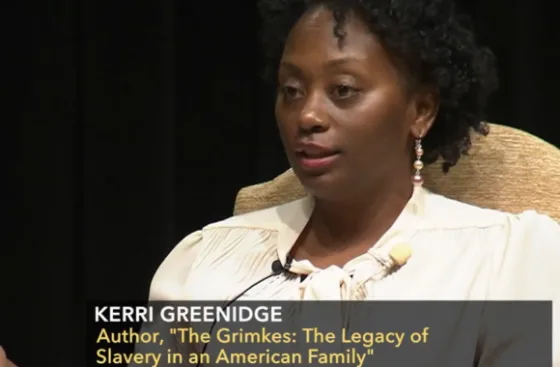
Were concerns about a black historian’s research based in fact — or just an example of racial bias?
Kerri Greenidge’s celebrated 2022 book, “The Grimkes,” which explores three generations of the history of the prominent slaveholding family, is now under heavy scrutiny, with scholars arguing it contains factual inaccuracies, nonexistent citations, and misattributed source materials.
Greenidge is an American historian who was a tenured associate professor at Tufts University in the Department of Studies in race, colonialism, and diaspora.
As a result of the controversy, she may have lost a book deal last month, according to the New York Times. Greenidge’s university email is now defunct and she does not have publicly listed contact information. She did not respond to The College Fix’s request for comment on LinkedIn.
She told the New York Times that she might have misattributed some citations, but that “I am heartbroken that a field I have given my life to can treat me this way,” adding: “The attack on Black women academics is real.”
Greenidge declined to discuss with the Times the details about her departure from Tufts or status of her books.
A July 16 article in the Boston Globe states Tufts first began a review of Greenidge’s work in 2022. In 2024, the city of Boston selected Greenidge to help write a report on reparations, but that report has been delayed as a result of the controversy, bypassing a June 2026 deadline, the newspaper reported.
Tufts University and Boston Reparations Committee representatives did not respond to requests for comment from The College Fix.
In 2024, retired historian Myra Glenn detailed her concerns for John Hopkins University Press detailing discrepancies in Greenidge’s book.
“Although well-written, ‘The Grimkes’ is also a deeply flawed book. All too often Greenidge lacks the evidence to substantiate many of her major claims. Her work is also riddled with factual errors and repeatedly omits needed endnotes,” Glenn wrote.
Some of Glenn’s criticism centered on Greenidge’s claim that sisters Sarah and Angelina Grimkes were not true abolitionists and only called themselves that to not feel guilty about their family’s roots as slave owners; another was that the sisters ignored racism that occurred in Philadelphia in August 1834.
Greenidge, in her comments to the New York Times, noted that the complaints were first started by a white female scholar.
“She criticized the university’s peer review panel, which she said included two senior historians whom she described as hostile toward Black women in academia. She did not name them,” the Times reported. “She said that the university’s review was prompted by the complaints from a white woman scholar, whom she also declined to name. She said that she had sought a restraining order against that scholar.”
“Greenidge also raised questions about why The Times was writing about the accusations against her and the developments surrounding her book, suggesting that her race had played a part.”
“The Grimkes” has been removed from the publisher’s website, and on Greenidge’s website, and she was removed as a possible winner for the Joan Kelly Memorial Prize, which was also removed from the American Historical Association’s homepage.
Greenidge’s 2019 book “Black Radical” is now reportedly being closely examined for any possible misinformation or plagiarism.
MORE: University suspends academic whose investigation exposed disgraced Cambridge Professor Jason Arday