
 FEATURED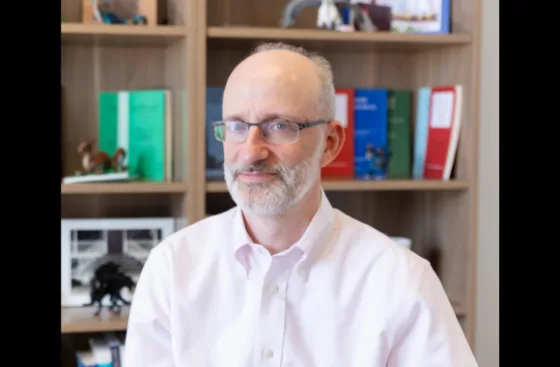
Scholars don’t want people contacting them to share their thoughts about taxes
At least one college professor thinks California independent candidate Richard Lucas is a “clown” – and he wants him to stop criticizing him for promoting a tax on billionaires. However, a legal expert says that Dick Lucas would likely prevail in a lawsuit against the professors’ cease and desist threats.
Lucas, who recently lost in a primary for a state assembly seat, focused his campaign on economic and crime issues, while also criticizing a billionaire’s tax that is on the ballot in November.
As part of his campaign, Lucas highlighted what he calls the “looter dream team,” his name for four professors and two union leaders who support taxing billionaires.
The four members are David Gamage from University of Missouri, Brian Galle and Emmanuel Saez from UC Berkeley, and Darien Shanske from UC Davis – and Lucas posted their publicly available contact information.
Galle, a UC Berkeley law professor, called Lucas “a clown and a malicious liar,” when reached for comment by The Fix.
He (pictured) further went on to direct The College Fix to the four professors’ lawyer for further questions. Catha Worthman, the attorney, did not respond to multiple emails within the past few weeks. The Fix asked if there were any concerns that the professors would be criticized for attemping to limit Lucas’ free speech rights.
The other three professors did not respond to several emails over the past few weeks. The Fix asked about personal concerns with the criticism and doxxing, as well as what responses would be given against the argument that Lucas is exercising free speech rights.
First they say the billionaire tax is one time. Now the main architect is already talking about making it permanent.
Next it will be a seizure of YOUR wealth. pic.twitter.com/gVzoqd9NR9
— Dick Lucas 🇺🇸 Running for CA Assembly (@dickclucas) May 10, 2026
They sent two cease and desist letters to Lucas, requesting that he remove their names and contact information from his website, and threatened him with criminal charges. Specifically, their names and contact information are listed on Lucas’ “California Wealth Exodus” website.
However, Alliance Defending Freedom responded with its own letter, noting that Lucas’ speech is protected by the First Amendment.
Spokeswoman Jacqueline Ribeiro pointed The Fix to a news release and letter from ADF which said “it’s perfectly acceptable for proponents of high taxes to advocate publicly for the Billionaire Tax Act, [and] it’s equally lawful for individuals to voice concerns and encourage others to do the same, as Mr. Lucas has done.”
The legal group threatened the professors and two union leaders with an anti-SLAPP suit, or Strategic Lawsuit Against Public Participation, if they continued. This means that ADF believes the professors are trying to use legal means to prevent Lucas from participating in matters of public concern.
An expert on anti-SLAPP laws says that Lucas would have a strong case.
“Mr. Lucas’s speech clearly is on a matter of public concern and sits within the First Amendment’s protections for political speech,” Ryan Riedmueller told The Fix on a phone interview. He is a legal fellow at Vanderbilt Law School’s First Amendment clinic.
“In California, a party moving for relief under the Anti-SLAPP statute must first show they are engaged in protected activity,” he said. “Mr. Lucas’s speech at issue here involves debate on California tax policy, and as a candidate for public office, this sort of speech falls squarely within the First Amendment’s core protections for political speech.”
Not only is Lucas’ speech public and legal, but neither does it categorize as doxxing, according to Ryan Riedmueller’s analysis. He explained to The Fix the two issues with the doxxing claim against Mr. Lucas.
He said it is “unclear” that Lucas is acting with “malicious intent.”
“Second, the information he shared about the six individuals appears to be public,” he said, which would undermine claims of doxxing.
“Given those problems, it might be a difficult claim to prove in court.”
MORE: New Missouri antisemitism law draws free speech concerns

