
 FIX EXCLUSIVES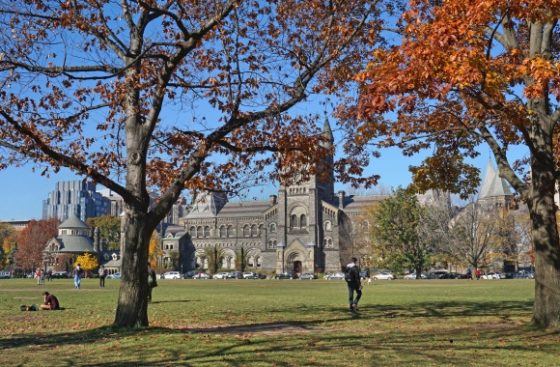
“In an era marked by unprecedented scrutiny of higher education, the stakes have never been higher.”
That is according to Heterodox Academy, a nonprofit coalition of scholars dedicated to intellectual diversity and free inquiry on campus, which met recently for its annual summer conference to discuss concerns over a decline in public trust in higher education.
Blaming the decline on perceived institutional corruption, ideological uniformity, and political interference from both the left and right, panelists debated the precarious position of universities and potential paths forward to restore their purpose and public standing.
A recurring theme among scholars and students at the late June event held in New York City was the truculent relationship between universities and the rest of society. Complicating matters, there’s an overcorrection on the right.
“We’re finding ourselves at the intersection of two compelling claims about the ways in which academic freedom are being attacked,” said William Patterson University Professor Colleen Eren when introducing a panel discussion titled “The Duties & Responsibilities of Scholars.”
“On the one hand,” she said, “we’ve seen the ways in which progressive ideological capture and dogma…has led to self-censorship and actual censorship and a narrowing of the range of topics that are permissible targets for our inquiry.”
“But, at the same time, we are now faced with overt political interference from the right that further delegitimizes, censors, and threatens to wrest control of teaching and inquiry away from us, away from academics,” she added.
The panel was comprised of several public intellectuals, including University of Chicago evolutionary biologist Jerry Coyne, Columbia University linguist John McWhorter, University of Tulsa philosopher Jennifer Frey, and Harvard English professor Louis Menard.
Regarding the general public’s distrust of universities, Frey noted “only 30 percent of taxpaying citizens in this country trust higher education. Administrators need to take that seriously and they by and large do not.”
Broadly, presenters on many panels gave a sense that this distrust was self-inflicted and well-earned even if some did not say so explicitly or appear to admit it to themselves.
Coyne noted how following the events of Oct. 7, 2023, he saw his university’s norms of academic freedom and freedom of speech “immediately violated en masse.”
“Speakers were shouted down,” he said. “People violated the time, place, and manner regulations for demonstrations. Speech was chilled terrifically…Nobody dared to speak up against the many protests.”
Additionally, he said, norms of institutional neutrality were “violated right and left by departments posting statements on their view of the war.”
Harvard biochemist Frank Laukien, who partook in a separate panel, stated, “Parts of universities, certain fields, certain initiatives, have moved away a little bit from this Harvard telos of veritas…and some of them have moved more to a greater degree towards advocacy.”
The corruption of STEM
Several panels at the conference specifically dealt with how moves toward advocacy, in conjunction with the illiberal actions of scientific institutions, have shaped science and medicine in recent years and helped fuel distrust of experts in those fields.
“Biology has possibly been one of the most affected disciplines within STEM that, you know, became somewhat ideologically captured in many ways,” said Williams College evolutionary biologist Luana Maroja while partaking in the panel, “STEM Strikes Back.”
“I think that the sex binary might be one of the most obvious aspects in which you see that,” stated Maroja.
“Many biologists,” she said, “they started to embrace this idea that there is somehow a [sex] continuum.”
She cited an evolutionary biology conference that offered “a whole symposium on teaching sex and gender in science education in which they say…you’re going to cause harm [to trans students] if you say sexes are binary and therefore you can’t say sexes are binary. …[Instead] you have to look at all the ways in which sexes are not binaries.”
At a session titled “Physician Perspectives on Scientific Truth,” University of South Florida psychiatrist Kristopher Kaliebe acknowledged a growing distrust of medicine.
“I mean, our system is a mess,” he said. “There’s lots of scams everywhere. We’re not doing a good job. And we’re spending a ton of money. So, it’s not surprising that people don’t really trust who’s running medicine.”
Kaliebe’s co-panelists, University of Texas, Southwestern Medical Center psychiatrist David Atkinson and Johns Hopkins University School of Medicine assistant professor of psychiatry Carol Vidal discussed how the actions of scientists and medical institutions during the COVID pandemic likely harmed those fields and contributed to the erosion of the public trust they once enjoyed.
Atkinson talked about what he described as an “omertà” on the discussion of the lab leak hypothesis, stating there were concerns among scientists that if the lab leak hypothesis was deemed credible by the public, this could hurt their trust in science. Ironically, though, he noted, “The lack of debate and the cover up, I think, has hurt us more than the actual event.”
“I mean, the political capital to go through NIH with a chainsaw,” he added, “that probably comes from these things like the suppression of the lab leak.”
Other panels focused on policy-driven science in fields ranging from climate science to psychology and how this influences what research is carried out and what results are considered acceptable for publication in peer-reviewed journals.
Regaining public trust
As for how universities could reconcile themselves to the rest of society or at least make some internal improvement, there were no definitive answers put forth, although several potential avenues were discussed.
Those on the “STEM Strikes Back” panel discussed how a greater involvement of STEM faculty on committees governing campus life could temper the activist impulses of their colleagues from other departments.
Some of the participants on “The Duties & Responsibilities of Scholars” panel, although unwilling to support requirements for faculty to directly engage with the public through podcasts and Substacks, argued that faculty should not be discouraged from public outreach.
HxA president, John Tomasi in his “State of the Academy Address” suggested universities should reconcile themselves to society “by making a contribution that is essentially cultural.”
“There’s a certain cultural contribution that our universities can make to our wider society,” he said. “Our universities, I think, should seek to be exemplars of the highest values of western civilization.”
MORE: Universities in 2025 to enter period of disruption and opportunity, says Heterodox Academy president
IMAGE CAPTION & CREDIT: A college campus / Spiro Inc., Shutterstock

