FEATURED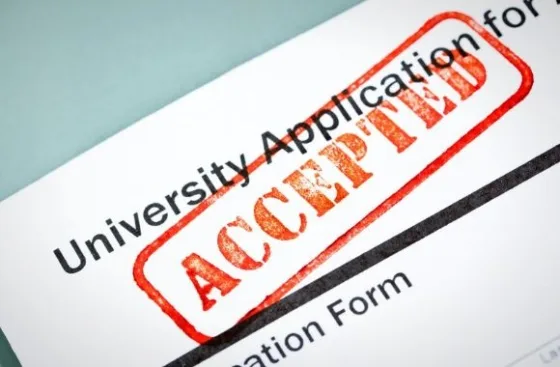
Direct admissions lower academic standards, policy analyst says
Hundreds of U.S. colleges are sending admissions letters to students who never applied, according to a recent report from the Wall Street Journal.
Through “direct admissions,” schools bypass standard application requirements, including essays, test scores, and extracurricular questions. Schools accept students based primarily on their high school transcripts.
“On the Common App, the number of participating institutions has more than tripled since 2023-24, representing about a fifth of the app’s partners, said Chief Executive Jenny Rickard,” the WSJ reported.
University of Nevada-Reno Director of Admissions Steve Maples told The College Fix that direct admissions are a way to increase diversity on college campuses.
“Every school seems to have a diversity, equity, and inclusion statement about their school . . . yet very little of the college application process has anything to do with equity or diversity or inclusion or any of those concepts,” he said.
“I’m more interested in finding students, especially underrepresented students, that might not think they can even get into college and bypassing that, like, you’re qualified,” he continued.
He added that while the school uses direct admissions, it hasn’t lowered its standards.
“All we’ve done is tried to get out there and promote it to students that are definitely admissible to our university and try to make it as easy as possible,” he said.
Maples also pointed to other similar methods the school has used. He said UNR will reach out to certain counties in the state “to get all of the will-be seniors in high school and evaluate every transcript.”
The school reaches out to the “admissible” students to let them know the school will accept them.
Research Fellow at the Cato Institute Andrew Gillen believes that direct admissions may be a way for colleges to fulfill enrollment in light of shrinking graduating classes, especially amid growing concerns of a college education’s utility.
“There’s increasing concerns about the polarization of higher education. There’s concerns about the kind of return on investment for higher education,” he shared in an interview with The College Fix.
“So there’s all sorts of reasons that students are a little bit more skeptical of going to college now than they have been historically. And I think direct admissions might be one of the many things that colleges are doing to try to make sure that they have full classes,” he continued.
Contrary to Maples’ justification for direct admissions, Gillen stated he does not believe that direct admissions are being used to advance DEI on college campuses.
“Colleges that are really putting their thumb on the scale in terms of DEI stuff, they have much more direct ways to than with this direct admissions stuff,” he said.
“So the demographics of who’s enrolling in these institutions are basically going to be determined entirely based on who lives in the area. And so going from a more arduous application process to direct admissions isn’t really going to change that (diversity).”
However, Heritage Foundation Policy Analyst Madison Doan strongly condemns direct admissions. She believes it lowers academic standards and aims to increase diversity on campus.
Doan told The Fix, “By not including standardized testing or essays as part of the college admissions process, it [direct admissions] degrades academic standards, impairs institutional accountability, and can mask gaps in K-12 education.”
She also cited an article from The Heritage Foundation highlighting grade inflation at U.S. high schools, saying that standardized testing and college essays can provide a baseline standard for academic readiness.
Doan also said the increase in direct admissions reflects “the financial pressure facing tuition-dependent colleges.”
This is particularly true of “less-selective private institutions that need a larger pool of prospective students to sustain enrollment,” she said.
“Institutions that can’t attract students should instead consider winding down low-enrollment programs, merging with other institutions, or closing,” she said.